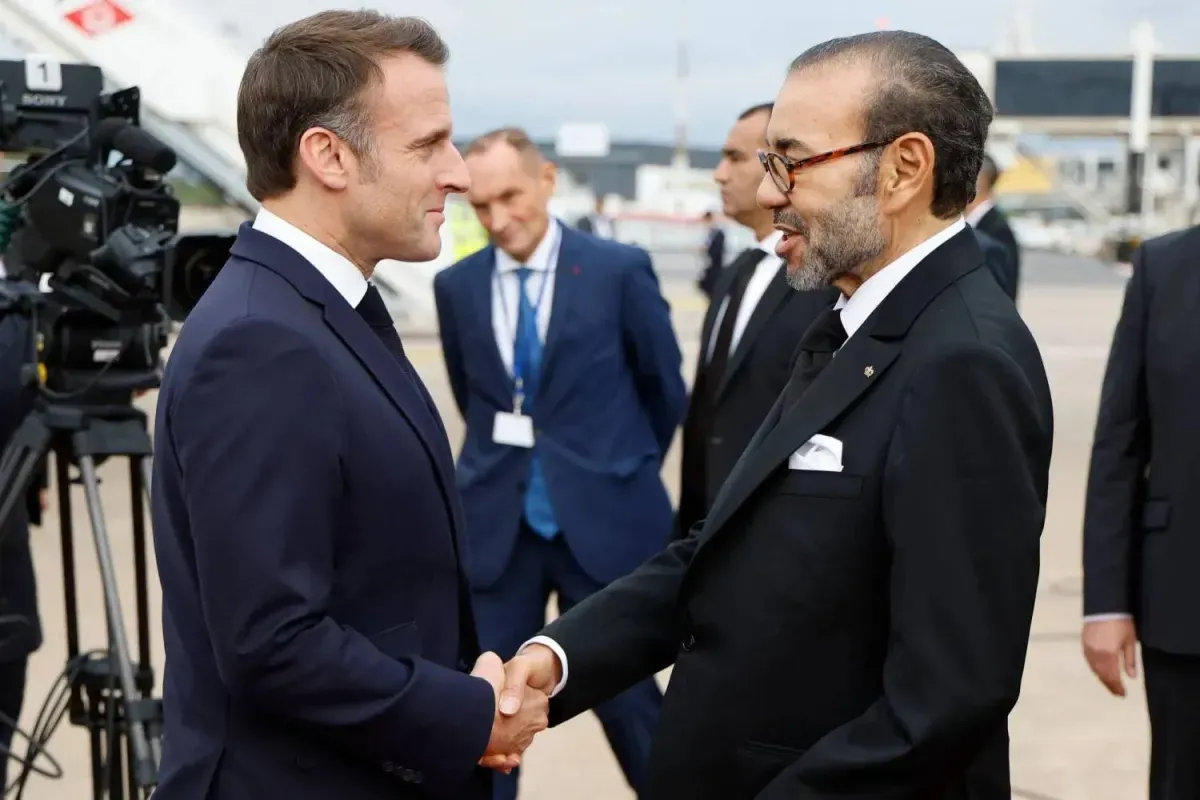
The bid for the 2030 FIFA World Cup, initially thought to be solely Iberian, took a significant turn when Morocco officially joined Spain and Portugal in March 2023. This announcement was made by King Mohammed VI during FIFA's Congress in Kigali, Rwanda, where he unilaterally declared Morocco's intent to collaborate on a joint proposal. The following day, both the Spanish and Portuguese football federations had to publicly confirm this agreement, later explaining that Morocco's inclusion would garner the unanimous support of the African Football Confederation (CAF). However, beneath the surface of official statements and diplomatic photographs lies a different narrative. Secret negotiations to share the tournament's hosting duties with Morocco began years earlier, specifically in the summer of 2018, as exclusively revealed by THE OBJECTIVE in 2024 through messages exchanged between Spain's Prime Minister, Pedro Sánchez, and then Spanish Football Federation President, Luis Rubiales.
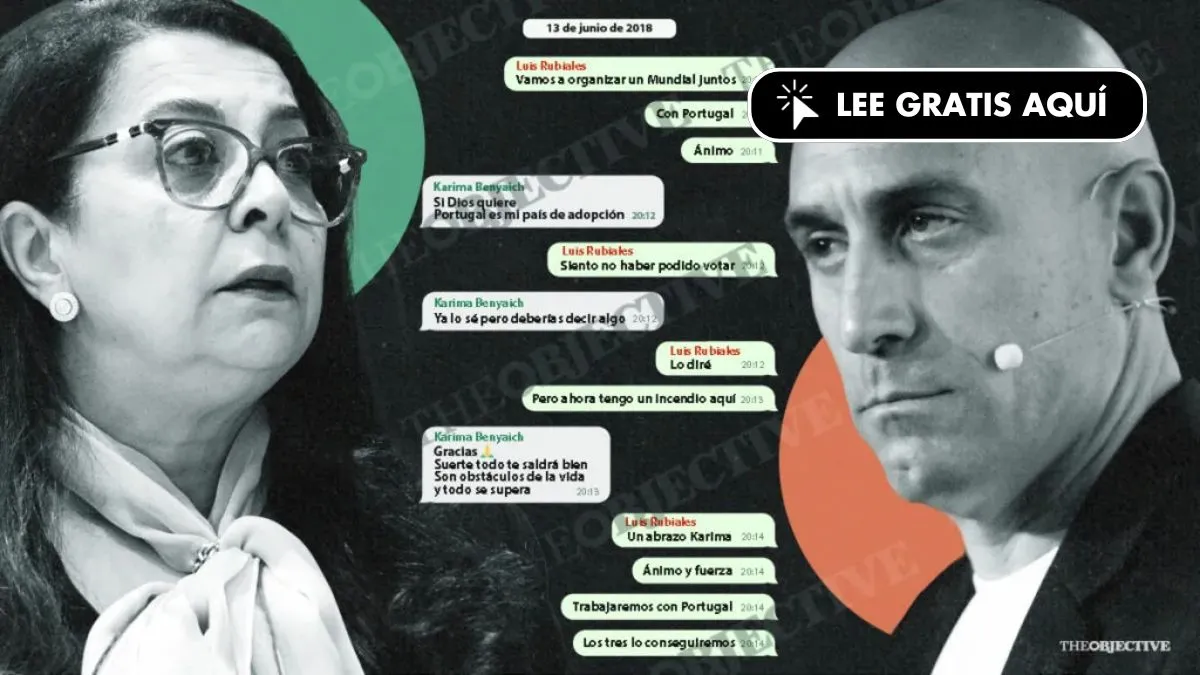
This initial revelation highlighted that the threads of sports diplomacy had begun to weave a complex fabric well before any official acknowledgment. Recently, exclusive access to a parallel negotiation line has surfaced, involving direct communications between Morocco's Ambassador to Spain, Karima Benyaich, and Rubiales. These exchanges illustrate a coordinated and clandestine strategy aimed at securing Morocco's participation in the World Cup bid, a move that was managed behind the scenes with utmost secrecy.
Negotiations with the Moroccan Ambassador
The timeline of events reveals how this concession took shape. Just a week after Sánchez assumed office in June 2018, Rubiales initiated a close relationship with Ambassador Benyaich. The ultimate goal of these behind-the-scenes maneuvers was to ensure that the 2030 World Cup would not solely take place in the Iberian Peninsula—except for the opening matches assigned to Uruguay, Paraguay, and Argentina in celebration of the tournament's centenary—by coercing Morocco's entry into the equation, thereby diminishing the prominence of Spain and Portugal in favor of Moroccan demands. Diplomatic efforts and informal concessions progressed at a remarkable pace. On June 10, 2018, just days after Sánchez's installation, Rubiales sent a direct message to the Moroccan ambassador, expressing his personal commitment: "I have already given you my word, as long as you keep yours. I am a man of my word." In the same exchange, he reflected on the challenges and pressures surrounding the tournament's designation, hinting at his role as an ally to Moroccan interests against FIFA's established system: "I know it’s difficult to fight against a giant; I’ve done it. I understand the challenges in garnering public support; I believe that will be your greatest enemy. I hope you can change that system before the vote. Regardless, I always keep my word, whether openly or secretly."
The response confirming Morocco's success in achieving its objectives with minimal institutional resistance came shortly after. On June 13, Rubiales reached out again to Benyaich to solidify their transcontinental agreement, stating emphatically, "We are going to organize a World Cup together. With Portugal. Let’s go!" To which Benyaich affectionately responded, celebrating the progress of their ambitions: "If God wills it. Portugal is my adopted country." These conversations, obtained exclusively by THE OBJECTIVE, indisputably show that the roadmap that materialized in 2023 had been agreed upon and handed over to Moroccan authorities five years earlier, stripping the Iberian bid of its exclusivity from the outset.
Sánchez's Role in the Process
While Rubiales was in Morocco, he communicated with Sánchez, who not only embraced the idea but also began to work on formalizing the agreement with Morocco. On that day, at 8:25 p.m., Rubiales, having been in charge of the RFEF for only a month and a half, texted Sánchez, seeking "help" for what he described as more than just a "sports operation" but actually a "matter of state." From this point onward, Sánchez took over the management of the World Cup's allocation to Morocco, and Rubiales ceased his direct dealings with the Moroccan ambassador. The message read: "Dear President!!! My dear Pedro, I wanted you to know that, confidentially, we are working on a future bid to organize the 2030 World Cup alongside Morocco and Portugal. I will discuss it with Minister Guirao to receive feedback from the government, which I hope will be positive before we advance and announce it publicly. This operation will be more than just a sports issue... it will be a matter of state, and we will need to collaborate together. Big hug!!” To which the Prime Minister replied promptly, assuring him of his support: "Of course! We can discuss it whenever you like. A big hug, Luis!!!"
Thus began the unprecedented conversations from La Moncloa with Morocco for a unique candidacy, marking the first time a World Cup will be hosted across three continents. Sánchez expressed enthusiasm for the project to Rubiales, who relayed that FIFA President Gianni Infantino was interested in proposing this joint candidacy with Lisbon and Rabat. As communications typically involved Minister Guirao, Sánchez requested Rubiales keep him updated. "Talk to him and then to us," the Prime Minister conveyed. After Infantino and Rubiales presented the plan to Sánchez, he communicated positive feedback from Rabat. By October 27, just a month and a half after their meeting, Sánchez informed Rubiales that Portugal had agreed to the project, pending Morocco's confirmation. "The Moroccans are on board to kick off the project for the World Cup together!" he texted Rubiales. On that day, Sánchez traveled to Morocco and officially invited the neighboring country to join a joint bid with Portugal and Spain for the 2030 World Cup. However, these discussions had commenced much earlier, at least in October, when Sánchez informed Rubiales that they were awaiting King Mohammed VI's approval.
As reported by theobjective.com.