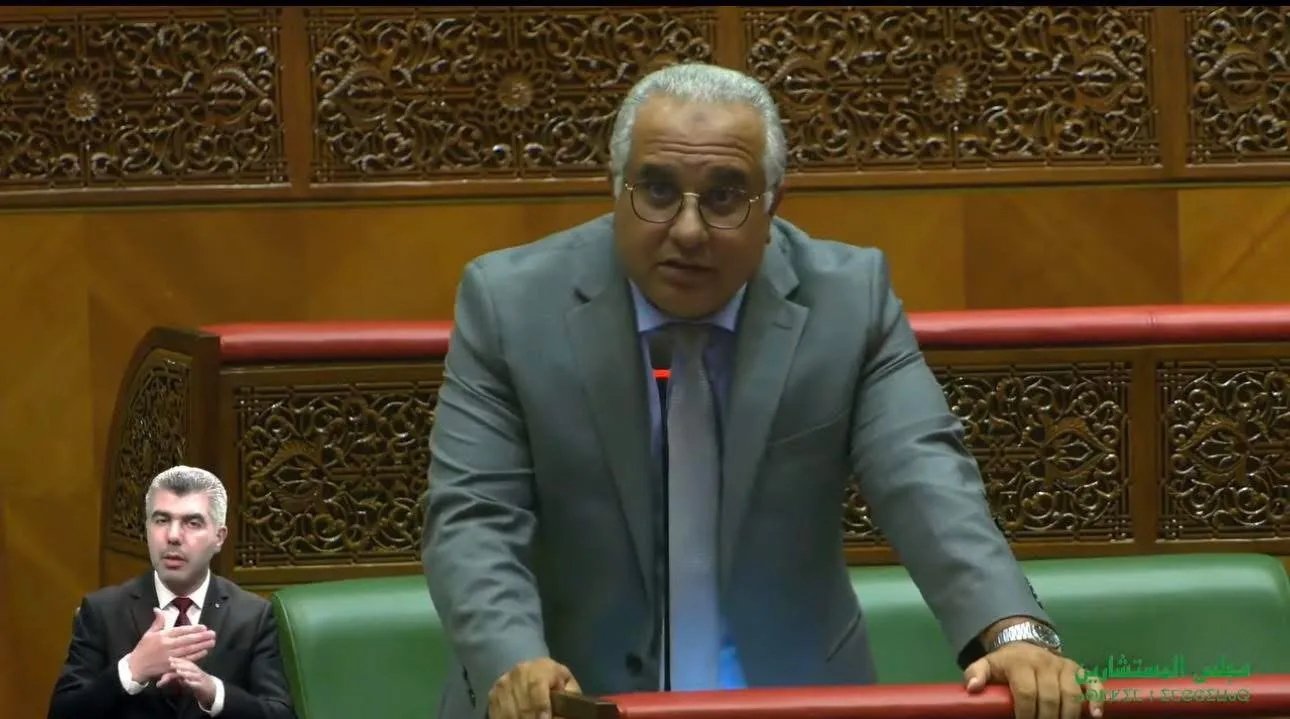

Hassan Chamis, the President of the Traditional Industry Chamber for the Marrakech-Safi region and parliamentary advisor, has called for the expedited implementation of a comprehensive employment framework for the personnel within the chambers of traditional industry. He emphasized that this initiative has become an urgent necessity aimed at improving their professional and social conditions while ensuring they receive rights and incentives that align with the significant roles they play in serving the sector.
This call was made during his remarks in a session of oral questions at the Council of Advisors, which took place on Tuesday, June 2. Chamis praised the centralization of salaries for employees in the traditional industry chambers, describing it as a significant achievement that could enhance the administrative and financial stability of these institutions while ensuring timely salary disbursement.
The speaker underscored that such a measure would contribute to creating a more stable working environment for employees, reflecting positively on the performance of professional chambers and the quality of services provided to artisans across various regions of the kingdom. He also acknowledged the clarifications presented by the Secretary of State responsible for traditional industry and social and solidarity economy, expressing appreciation for the support offered to the traditional industry chambers in the Marrakech-Safi and Casablanca-Settat regions during the Moroccan Traditional Industry Week held in Athens, Greece. He regarded this initiative as pivotal in showcasing the richness of Moroccan craftsmanship and promoting traditional national products in international markets.
Chamis highlighted the crucial role played by the employees of professional chambers in implementing sectoral programs, supporting artisans, and executing various projects linked to the development of the sector. He stressed the necessity of providing them with a clear legal and organizational framework that guarantees their rights and enhances the attractiveness of working within these institutions.
In this context, he called for a review of the compensation system related to responsibility, mobility, and productivity, advocating for additional incentives that correspond to the nature of the field and technical tasks performed by employees, especially given the expanding responsibilities of professional chambers and the increasing expectations of professionals.
Moreover, Chamis raised concerns regarding the shortage of human resources and the slow pace of hiring within the traditional industry chambers, noting that this situation limits the ability of these institutions to fulfill their responsibilities effectively. He called for a new approach to strengthen human resources and benefit from the expertise and competencies available within the sector.
In conclusion, he commended the efforts made by the members and employees of the traditional industry chambers in successfully launching the National Register of Traditional Industry and establishing artisan bodies, asserting that these initiatives represent a significant milestone in the structuring and qualification of the sector. He affirmed that achieving further gains is contingent upon improving the conditions of human resources and providing suitable working conditions that serve the interests of artisans and enhance the sector's contribution to economic and social development.
As reported by marrakechpost.com.