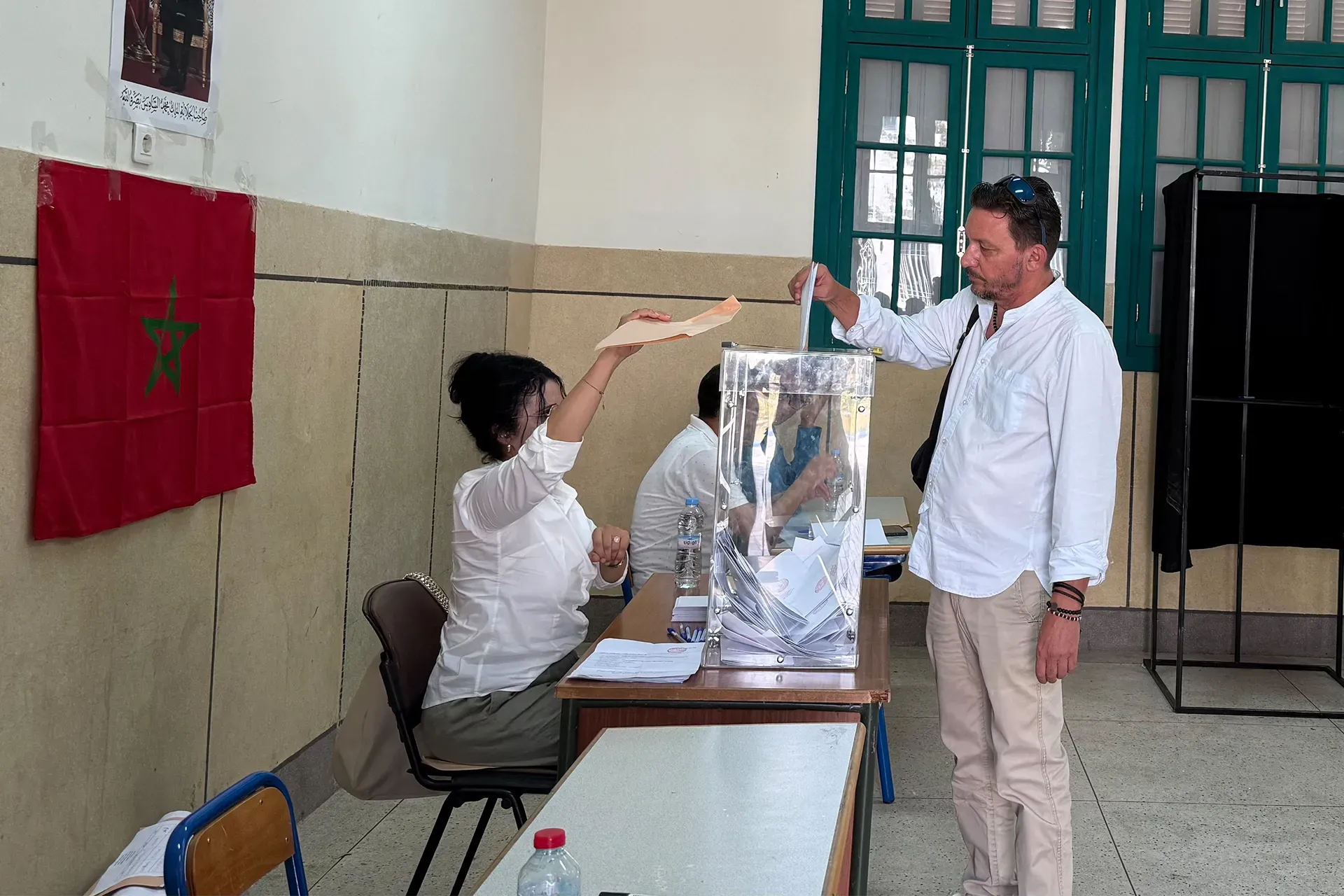

In the Hassan II High School located in the Hassa neighborhood of Rabat, voters of various ages have been arriving since the early hours of the morning to participate in the electoral process. Observations made by Al Jazeera from morning until noon captured the voting atmosphere in cities like Rabat, Skhirat, Temara, Marrakech, and the outskirts of Ourika. In Rabat, voter turnout appeared moderate across different polling stations, particularly among senior citizens and women. Meanwhile, Marrakech experienced a quiet day with a smooth voting process unfolding in the polling locations.
The Ministry of the Interior announced that by 3 PM GMT, the voter participation rate stood at 21%, with analysts anticipating an increase in turnout later in the afternoon as employees and workers finish their jobs and seek to exercise their voting rights. The Moroccan government had encouraged public institutions to facilitate employees' participation in the elections, urging private sector employers to allow their workers the opportunity to vote. Polling stations opened their doors today at 8 AM and will remain operational until 7 PM, accommodating a total of 15.8 million voters, of whom 46% are women.
This election marks the twelfth of its kind since Morocco's independence, featuring the participation of 27 parties (including two that formed a coalition for the elections) and two lists of independent candidates. A total of 7,288 candidates are competing across 1,850 lists for 395 seats in the House of Representatives.
Quiet and Orderly Voting Atmosphere
In the heart of Marrakech, the election day began calmly. Initially, polling stations were nearly empty, but voters gradually started to arrive without forming long queues or experiencing congestion. Young volunteers greeted incoming voters at the entrances, verifying their national identification cards, directing them to their respective voting stations, and noting their numbers on small slips of paper. Inside the polling stations, the process was clearly defined and precise: the national ID was checked, followed by marking the voter's finger with ink after casting their vote. An official at one polling station remarked, "Everything is going very smoothly," while security personnel monitored the flow of individuals entering and exiting the stations, ensuring order was maintained.
Outside the polling centers, the electoral atmosphere permeated the streets of the city. Public transport vehicles displayed banners urging citizens to participate in the elections, while cafes and shops continued their regular operations. Omar, a young man working in a cafe, was busy during the lunch hour and had yet to vote, but he expressed his intention to visit the polling station before it closed at 7 PM. In one polling station, there were only three party representatives present out of the 18 competing lists. Throughout the observations, no election monitors were encountered in the polling stations visited, indicating limited party presence, while the voting process continued in a tranquil environment.
Hope for Change
After leaving the polling station at Hassan II High School, Khalid Nasiri told Al Jazeera that he came to fulfill his civic duty filled with optimism that the party he voted for would live up to the trust he placed in them, advocating for citizens' rights and addressing issues such as rising costs of living, declining purchasing power, and unemployment. This was not Khalid's first time voting, as he has participated in several previous legislative elections, but he expressed a sense of relief seeing new, serious, and youthful faces entering the political arena, alleviating the despair he felt in past years. Meanwhile, 22-year-old Marwa Karim participated in the elections for the first time, sharing with Al Jazeera her sense of significant responsibility while casting her vote, as it represented her choice and her hopes for change in the future.
Marwa is among 632,000 young individuals aged 18 to 24 registered to vote. She recently obtained a master's degree in electrical engineering and expressed her choice to support a candidate from a party whose ideas and programs resonated with her ambitions, particularly concerning youth issues, unemployment, and education. She hopes that the promises made will materialize post-election, stating, "I hope my expectations are not dashed and that I will see tangible change and results in the next five years."
Not far from the polling station at Hassan II High School, a civil society network set up an operations room in a hotel in Rabat to monitor the legislative elections. Dozens of young volunteers sit in front of computer screens receiving data from observers stationed at various polling stations and handling urgent technical issues. Youssef Laarej, the head of the network, indicated that this operations room communicates throughout the day with both local and traveling observers to gather their feedback. He elaborated that this process enables the network to extract key data and results to be announced the day following the voting.
The network comprises approximately 80 associations and civil networks covering economic and social rights, youth, women, and disability issues. The special committee overseeing the accreditation of election observers has approved 26 NGOs and national institutions and 30 international organizations, mobilizing a total of 3,006 observers. The committee confirmed that delegations representing 20 NGOs, international and regional organizations, and national networks concerned with democracy, human rights, and electoral processes are participating in monitoring the legislative elections.
As reported by ajnet.me.