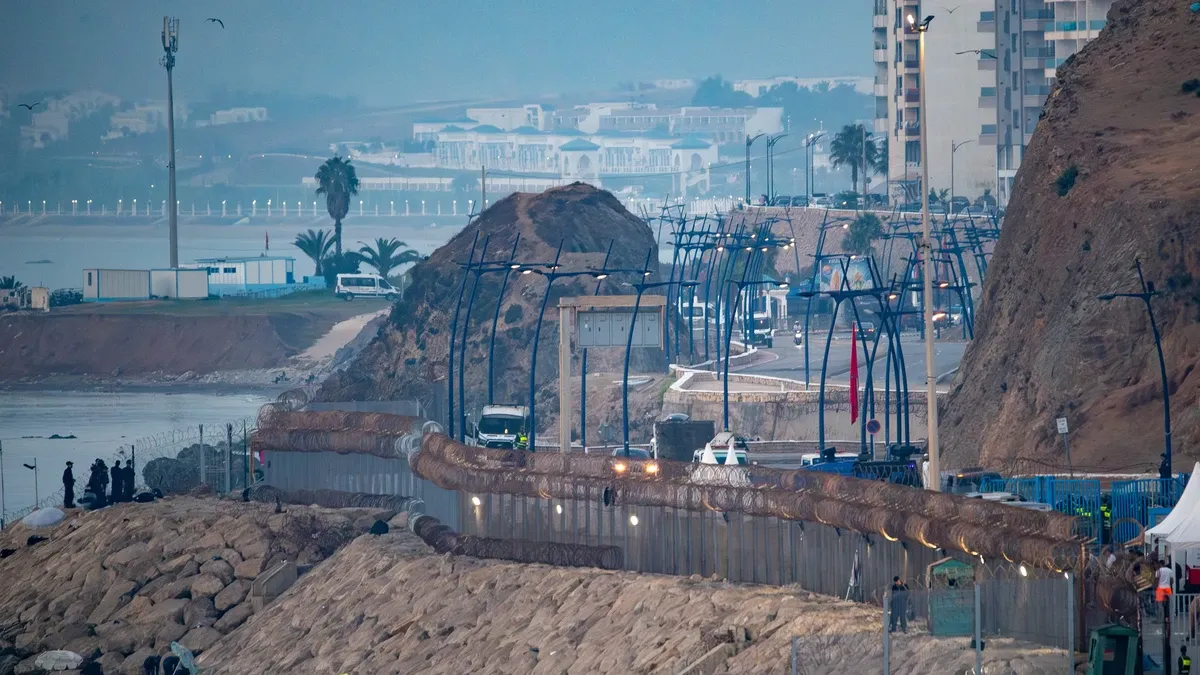

Concerns regarding a new surge of migrants attempting to cross into the Spanish North African enclave of Ceuta have so far proven unfounded. In Morocco, hundreds of migrants were intercepted before they could reach the border. Despite calls on social media for a repeat of the mass border crossings witnessed at the end of July, the situation at the border and within the enclave remained calm throughout the day. Both Spain and Morocco had significantly ramped up their security measures in anticipation of potential unrest.
On the morning of the anticipated crossings, a reporter from dpa in Ceuta described an atmosphere of absolute silence at the border. "In the city center, it feels almost idyllic; you hardly notice anything unusual. Occasionally, you see police and military personnel patrolling, but otherwise, it is quite peaceful," he reported. In the outskirts, however, groups of young migrants were spotted, although Spanish media, including the state broadcaster RTVE, also reported a largely relaxed situation in the enclave.
Spanish Minister: Mass Influx is Unlikely to Recur
With the bolstering of security protocols, authorities from both countries aimed to prevent a repeat of the events from late July, when estimates suggested that as many as 80,000 migrants reached Ceuta. Spanish Interior Minister Fernando Grande-Marlaska reiterated in recent statements that the mass arrival of migrants was an "extraordinary" event that is not expected to happen again. Just days before, the Moroccan Interior Ministry announced the arrest of a group suspected of inciting new attempts to illegally enter the Spanish enclaves of Ceuta and Melilla. Social media had seen calls circulating for coordinated mass crossings on August 15.
Increased Security Measures Along the Border
Eyewitnesses noted a significant presence of Moroccan security forces around Ceuta and Melilla, who were proactive in preventing possible border crossings. Hundreds of migrants, many hailing from sub-Saharan countries, were stopped near the border town of Fnideq, roughly 20 kilometers from Ceuta, and prevented from attempting to cross. Citing security sources, the Moroccan portal "Le360" reported that 294 individuals without valid documents were detained in Fnideq and its surroundings.
In recent days, Morocco has notably intensified its security measures, erecting additional barbed wire and NATO wire barricades in Fnideq according to RTVE. Patrol boats have been deployed to monitor the coastline, while water cannons are stationed at the border. Numerous checkpoints have also been established on access roads. Spain, in response to these concerns, has increased its security presence, with 880 National Police officers deployed in Ceuta—270 more than at the end of July. They are supported by approximately 2,000 soldiers and around 700 Guardia Civil officers.
The unprecedented surge of migrants two weeks ago saw tens of thousands reaching Ceuta, primarily by swimming. Tragically, dozens lost their lives during this attempt; according to the latest official reports from Madrid, 83 bodies have been recovered from the sea, while NGOs estimate the death toll to be well over one hundred. Most of the new arrivals returned to Morocco within hours or days, with Spanish government data indicating that around 5,000 migrants still remain in Ceuta. Minister Grande-Marlaska acknowledged that it would take some time to return to total normalcy.
As reported by watson.ch.