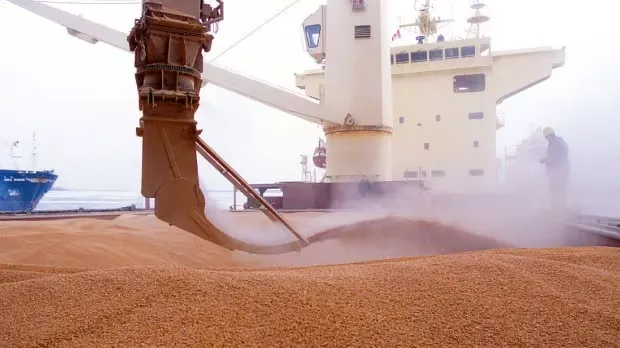

The Casablanca port, Morocco's primary gateway for cereal imports, is currently experiencing an unparalleled level of congestion. This predicament stems from a sudden spike in wheat imports, driven by operators who are anticipating the implementation of a new customs duty on soft wheat and its derivatives. This regulatory measure, intended to safeguard domestic production and facilitate the collection of local harvests, has ironically led to port bottlenecks, causing delays in logistics operations and an increase in costs across the entire supply chain, as highlighted by the daily newspaper _Assabah_ in its weekend edition of May 23-24, 2026.
In the lead-up to the enforcement of the soft wheat customs duty, set at 280 dirhams per quintal for the period from June 1 to July 31, 2025, importers significantly ramped up their purchasing volumes. Enticed by lower purchasing prices abroad, which are substantially below national reference prices, these importers flooded the Moroccan market with cereals in hopes of influencing prices and facilitating the sale of local stocks at rates lower than the reference price.
This tactic has been made feasible through the utilization of a favorable subsidy and reference pricing system, according to _Assabah_. Importers have benefited from storage subsidies estimated at 2.50 dirhams per quintal every two weeks, alongside a reference price for locally produced soft wheat set at 280 dirhams per quintal. This situation presents a lucrative opportunity for traders, allowing them to import quantities far exceeding their usual needs, thereby overwhelming port infrastructure.
Moreover, the current situation is exacerbated by administrative and logistical dysfunctions. Key factors include the lack of continuity in services provided by several crucial administrations. While the Moroccan Customs ensures a steady flow of services, other stakeholders—such as the Ministry of Industry and Commerce, the National Office of Agricultural Council, the National Office for Food Safety, and customs brokers—do not guarantee consistent availability. Consequently, customs declarations pile up, further delaying the processing of files and the movement of goods.
The statistics are telling: between midnight and 7 a.m., only about fifteen declarations are handled daily, compared to several hundred during the day. This disparity in service availability creates bottlenecks that are particularly critical during peak periods.
Additionally, there is an insufficient logistical capacity to handle the influx of goods. Transporters, overwhelmed by demand, are forced to select their clients, thereby extending delivery times and exacerbating port congestion.
Official data confirms a concerning trend, as noted by _Assabah_: importers have become the primary beneficiaries of public subsidies allocated for cereals. The cereal sector in Morocco remains characterized by a high concentration of power. A few players control the entire value chain, from importation and storage to collection from farmers, milling, and distribution. These large, often vertically integrated groups possess logistical infrastructures and transportation fleets that allow them to dominate the market. This situation raises questions about the efficacy of public policies aimed at supporting local agriculture and ensuring fair competition.
As reported by fr.le360.ma.