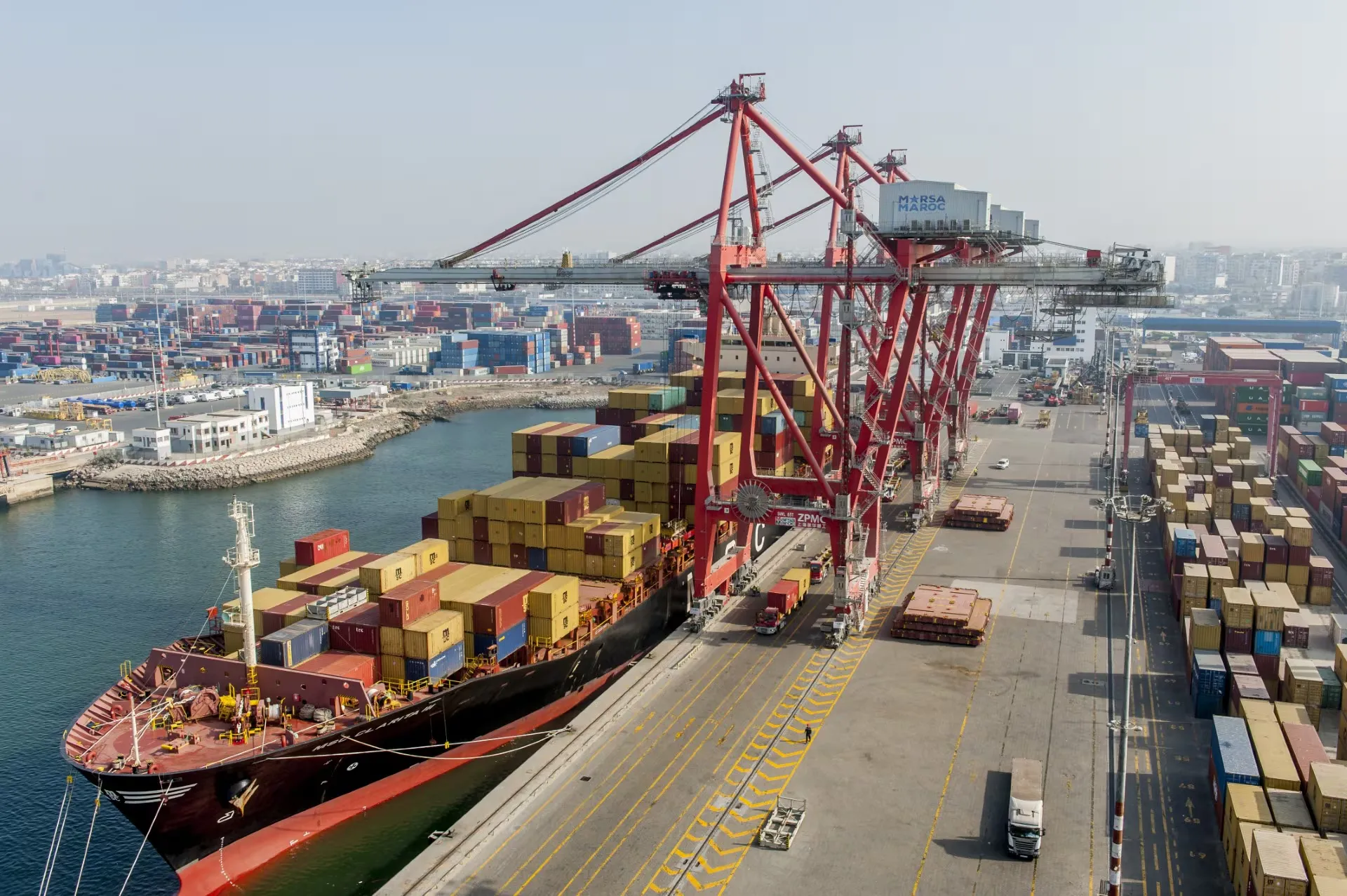

Enhanced Operational Hours at Casablanca Port
The recent decision to extend the operational hours of Gate 4 at the Port of Casablanca, effective September 18, marks a significant attempt to alleviate congestion at the country’s primary maritime hub. This initiative, which allows access from 9 PM to 7 AM as per a decree from the Casablanca-Anfa prefecture, is the result of extensive consultations among the National Ports Agency, local authorities, security services, and industry operators. The extension provides an additional ten hours of daily access aimed at distributing heavy truck traffic more evenly, reducing peak congestion during the day, and mitigating the challenging coexistence between trucks and urban traffic. However, this flexible schedule does not imply that the port will now operate around the clock; rather, it transforms the nature of the logistical challenge at hand, as indicated in the September 23 edition of _Les Inspirations Eco_.
Last spring, the situation was dire at sea, with around sixty vessels stranded and waiting times extending from ten to fifteen days, particularly affecting grain carriers, bulk carriers, and container ships. Fortunately, Mohamed El Jaouadi, the president of the Moroccan Shipowners Association, asserts that the maritime situation has significantly improved, with the number of ships waiting now reduced to about ten to fifteen.
Challenges in Land Logistics
While the relief on the maritime front is undeniable, it has shifted the bottleneck to land operations. Trucks are still experiencing delays of eight to nine hours within the port before they can collect their cargo. This waiting time highlights the limitations of merely extending operational hours if the broader logistics ecosystem does not adapt accordingly. Industry professionals argue that increasing access points or extending operational hours will not resolve structural issues if internal capacities remain stagnant. The overall performance will continue to be constrained as long as weighing equipment, scanners, and terminal capacities are not scaled to handle the increased traffic.
This need for operational coordination extends well beyond the port area, affecting the entire logistics chain, from customs to regulatory agencies, freight forwarders, transporters, importers, and manufacturers. Unloading a container in the middle of the night loses its effectiveness if the destination warehouse is closed. As emphasized by _Les Inspirations Eco_, congestion merely shifts downstream while unproductive waiting times persist, which can be detrimental to operations.
Achieving the desired fluidity in logistics is crucial for Morocco's economy. While there are no consolidated official figures quantifying the overall cost of congestion, some estimates indicate the significant financial burden involved. For instance, demurrage fees for bulk carriers and grain ships can reach between twenty thousand to twenty-five thousand dollars per day once the free period has lapsed, costs that are directly borne by shippers and importers.
Moreover, uncertainties linger regarding additional charges imposed on containers by certain shipping companies during high-tension periods. Therefore, reducing waiting times is essential for optimizing equipment turnover, minimizing fleet immobilization, and alleviating additional costs across the supply chain.
In light of these challenges, stakeholders at the port emphasize the need to frame this initiative within a long-term perspective, potentially maintaining it for a period of one to six months, alongside rigorous technical monitoring of delays and costs. Among the complementary solutions proposed for sustainably improving operations is the implementation of an appointment system to prevent simultaneous congestion at access points.
Looking further ahead, some experts suggest that the current limitations of the Port of Casablanca, due to its water depth and multipurpose nature accommodating various traffic types, including phosphate transport, necessitate a fundamental reevaluation. This could involve redistributing certain activities or developing new deep-water infrastructure to maintain the country’s logistical competitiveness.
As reported by fr.le360.ma.