
Revolutionizing the Moroccan Financial Landscape
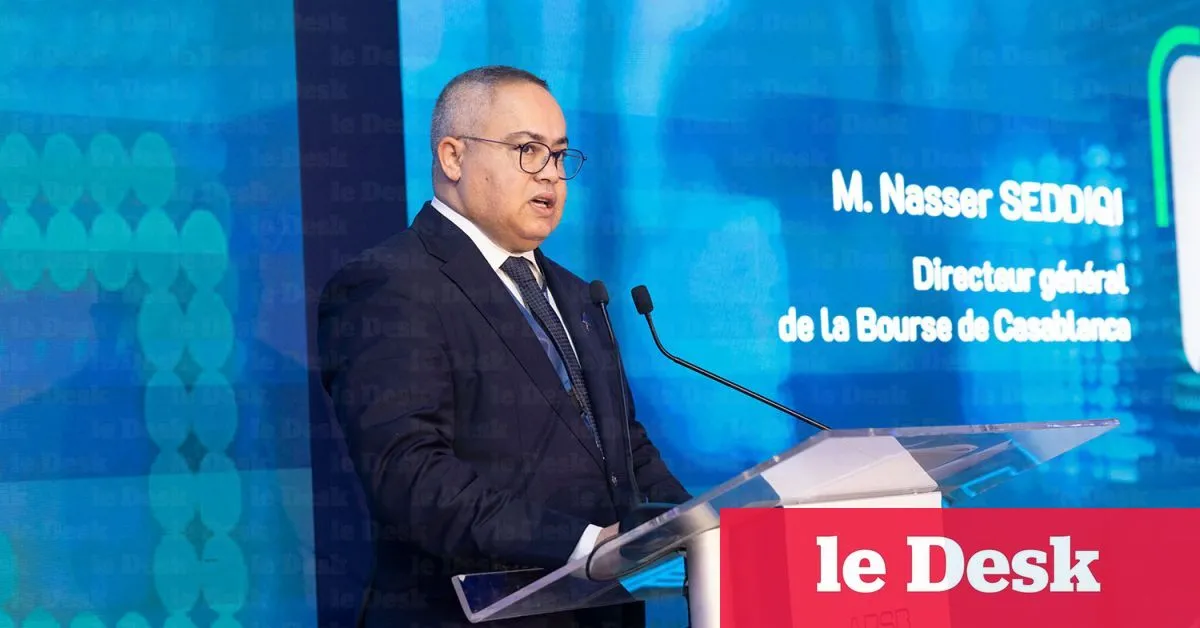
The Casablanca Stock Exchange has officially launched its Futures Market and Clearing House on April 6, marking a significant milestone in Morocco's financial evolution. Nasser Seddiqi, the general director of the Casablanca Stock Exchange, emphasized the historic nature of this event, stating, "We are not just introducing new instruments; we are establishing a new market with infrastructure that meets international standards, enhancing the resilience and competitiveness of our economy." This endeavor is not merely about adding a product to a catalog; it is about constructing a completely new market architecture that will shape Morocco's financial future.
The announcement regarding this launch was made earlier on February 9 during the annual conference of the Professional Association of Brokerage Firms (APSB). At that conference, Nadia Fettah Alaoui, the Minister of Economy and Finance, confirmed the launch date, characterizing it as a "structuring step" for the financial marketplace. She promised new hedging tools, improved price formation, and a comprehensive enhancement of liquidity. Amine Maamri, president of APSB, encapsulated the paradigm shift, indicating that the Moroccan market is transitioning from a primarily directional logic focused on holding cash assets to a more dynamic approach that actively manages exposures.
Understanding the Futures Market and Its Implications
To grasp the significance of this launch, one must understand the fundamentals of a futures market. This concept, rooted in antiquity, allows the buying or selling of an asset today, with delivery or settlement occurring at a future date, and at a price established at the contract's inception. Originally developed in agricultural contexts to help producers lock in selling prices, this mechanism has expanded to include stock indices, currencies, interest rates, and commodities. In Morocco, the futures market operates under Law No. 42-12 and its implementing texts, created collaboratively with all stakeholders involved.
There are three primary uses for a futures market: hedging, investment, and arbitrage. Hedging enables an investor with a stock portfolio concerned about a decline to sell futures contracts, thereby neutralizing potential losses—akin to financial insurance. Investment through leverage allows investors to control significant amounts with only a fraction of the capital, albeit with amplified risk of loss. Finally, arbitrage exploits price discrepancies between the spot and futures markets, contributing to overall market efficiency.
The first tradable instrument introduced is a firm futures contract—referred to as a "future"—linked to the MASI.20 index, designed by the Casablanca Stock Exchange to reflect the performance of the twenty most liquid companies among the top forty by market capitalization. This choice is strategic, as the Casablanca market, with a market capitalization exceeding 1,041 billion dirhams by the end of 2025 for eighty listed companies, has shown consistent growth in trading volumes in recent years. Each contract represents 10 dirhams per index point, meaning if the MASI.20 is at 1,000 points, the notional value of a contract is 10,000 dirhams. However, investors are only required to put down a margin deposit of approximately 1,500 dirhams per contract to take a position, with quarterly expirations aligning with March, June, September, and December, culminating on the third Friday of the expiration month. Settlement occurs in cash, with the difference between the agreed price and the market price being settled at expiration.
The introduction of the futures market is intended to be gradual. Following the launch of index futures, the offering will expand to include interest rates and other products according to the needs of the economy and operators. The legal framework also allows for a broader range of instruments, including options (American, European, or binary), interest rate swaps, currency or credit swaps, over-the-counter forwards, and indexed certificates, all of which will enrich the market architecture over time.
Understanding the futures market would be incomplete without acknowledging the role of the Clearing House, which serves as the backbone of this infrastructure. The private entity, CCP Maroc, intervenes in the post-market phase, acting as the intermediary between buyers and sellers after a transaction is concluded. It guarantees the smooth execution of operations under all circumstances, even if one party defaults, thus eliminating counterparty risk—a significant concern in financial markets where one party might fail to meet its obligations.
CCP Maroc ensures this mission by demanding margin deposits, continuously monitoring price fluctuations, conducting daily margin calls, verifying payment accuracy, and organizing settlements at contract expiration—whether through asset delivery or cash settlement. This architecture, aligned with international standards, is essential for attracting foreign institutional investors accustomed to environments where risk is managed centrally.
Ahmed Arharbi, the executive director of market operations at the Casablanca Stock Exchange and general director of CCP Maroc, highlighted the depth of the structure established. The launch on April 6 represents not just a derivative product but the introduction of two complete market infrastructures, each with its governance—SGMAT for trading and CCP for risk management. The specifications outlining their obligations to regulatory authorities have been signed, completing the regulatory framework.
The launch of these two entities also signifies the establishment of a comprehensive institutional ecosystem. The Ministry of Economy and Finance oversees regulatory matters and prepares the necessary texts, while the AMMC supervises operational aspects. Bank Al-Maghrib ensures the security of clearing and payment systems. The Joint Market Coordination Body (ICMAT), a collaborative effort between AMMC and BAM, handles licensing applications, evaluates general regulations, and supervises prudent measures.
The governance of these two new entities reflects diverse stakeholder representation. The board of directors of SGMAT, led by Nasser Seddiqi, includes members from various sectors, while the CCP Maroc board, chaired by Rachid Kamal, comprises representatives from banking, insurance, and asset management, ensuring that all market components are represented.
In practice, the process unfolds in four stages for investors. Initially, positions are opened when a buyer and seller meet on the market, with one taking a "long" position and the other a "short" position, both depositing an initial margin. The second stage involves daily adjustments where the CCP recalibrates positions based on the day's settlement price and issues margin calls if necessary. The third stage allows for premature closure, where investors can unwind their positions before expiration by taking an opposite position on the same contract. Finally, if a position is maintained until expiration, settlement occurs—cash for the MASI.20 future.
To illustrate the practical benefits of these instruments, SGMAT has published an educational guide detailing two scenarios. The first scenario involves hedging, where an investor with a portfolio valued at one million dirhams anticipates a downturn and sells futures contracts identical to their portfolio's value. The second scenario depicts speculative investment, where an investor purchases futures contracts at a specific index value, benefiting from price fluctuations. These examples highlight the leverage's power and the associated risks, including market volatility, liquidity issues, operational risks, and counterparty risks, which remain a concern for over-the-counter instruments.
Initially, institutional investors such as banks, insurance companies, and pension funds will likely dominate the market, utilizing these tools to diversify portfolios and manage exposure to interest rate, currency, and equity market risks. Companies will also find value in securing their operations by locking in future prices, while individual investors will need to tread cautiously, entering these complex instruments only if they possess adequate experience.
However, the indirect effects could be even more substantial. The emergence of more ETFs, index funds, or structured products built from these new tools is expected to democratize access to the benefits of futures markets without imposing operational complexity on individual investors. This launch marks the first phase of transforming the Casablanca Stock Exchange into an integrated group structured around three pillars: the cash market, the Futures Market, and Clearing. A complete value chain from trading to settlement, including centralized risk management, is now in place.
As reported by ledesk.ma.