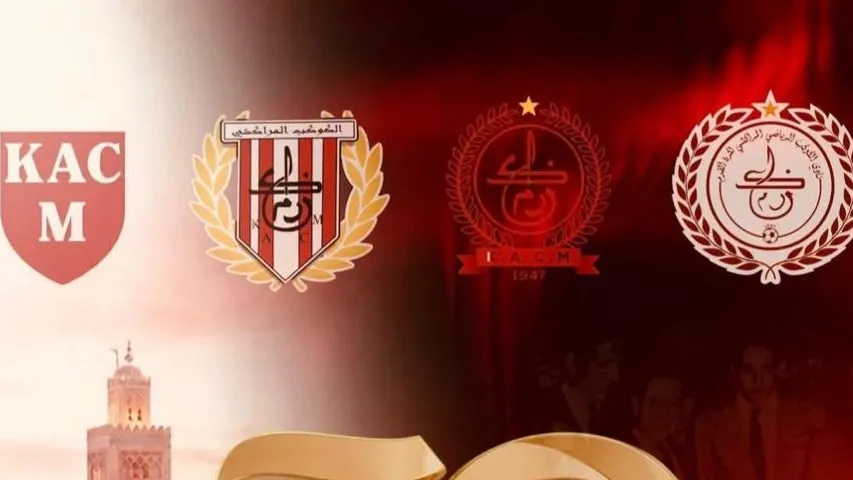

A Historic Journey of the Kawkab Athletic Club
On September 20, 1947, Marrakech witnessed the inception of an adventure that would indelibly mark its sporting history. Following the establishment of the Anajah Club a few years prior, fueled by the enthusiasm of Idriss Talbi, the Kawkab Athletic Club of Marrakech (KACM) laid down its foundational stones. This initiative, driven by fervent football enthusiasts, aimed to create a legacy that would transcend generations, deeply rooting itself in the cultural fabric of the city.
The Resilience and Future Aspirations of KACM
Fast forward seventy-nine years, the KACM stands resilient, having navigated through peaks and valleys, celebrated glorious victories while also enduring disheartening defeats, and witnessed both the rise of formidable teams and periods of rebuilding. Generations of players have donned its colors, contributing to the club's storied legacy. The enduring connection with the local populace has been vital to this survival. For many Marrakchis, the club is intertwined with cherished memories—attending their first match at the stadium, receiving a jersey from a father, celebrating victories with friends, or engaging in lengthy discussions about defeats. While one may express frustration or temporarily turn away from the KACM, remaining indifferent to its fate is nearly impossible.
The club's return to the Botola was celebrated as much more than a mere promotion; it symbolizes years of effort, sacrifices, and reconstruction. This resurgence signifies the return of a historic club to the stage where its supporters believe it rightfully belongs. Under the leadership of Idriss Hanifa, KACM has gradually regained stability and rejoined the elite ranks of Moroccan football. However, this is only a step in a larger journey. The real challenge now lies in confirming this comeback and ensuring that it is sustainable.
The club's ambitions are clearly articulated. Berada Selouane, the interim spokesperson and treasurer, outlines the roadmap: “We have an excellent team this season. Our ambition is to play a leading role this year, aiming for titles next season.” These aspirations must now translate into performance on the field. With a significantly revamped squad, coach Youssef Safri will need to quickly establish team dynamics, impose a distinctive playing identity, and convert individual talents into a cohesive force. The supporters are not merely waiting for promises; they expect tangible results, strong character, and visible signs of progress.
New partnerships announced this season provide additional hope, potentially offering the club vital resources to support its growth. Nonetheless, success in football is not secured through press releases or declarations; it is ultimately determined on the pitch. The issue of the stadium capacity remains crucial. If El Harti Stadium is to be retained with a limited capacity of around 7,000 spectators, many supporters may find themselves unable to attend matches. This scenario would be particularly tragic: reclaiming a place in the Botola after years of hardship but being unable to fully share the joy of this revival with those who stood by the club during its toughest times.
The Kawkab is more than just eleven players and a coach; it thrives within its stands, its chants, and its community of families and fans, both young and old. This fervor is a tremendous asset, yet it also imposes a responsibility: to build a robust, ambitious club worthy of the affection it receives from its entire city. As the KACM celebrates its 79th anniversary, it finds itself at a pivotal moment. The club must honor its past and acknowledge the efforts that brought it to this point, but nostalgia alone will not propel KACM forward. It must now solidify its return, reinforce its foundations, and firmly establish itself among the elite of Moroccan football.
The challenge is significant. It falls to Youssef Safri and his players to perform on the field, to the club's leadership to continue the work and transform ambition into a sustainable project, and ultimately, to the supporters to continue uplifting this team as they have always done. The Kawkab is not returning to the Botola merely to participate; at 79 years old, it looks ahead with the ambition of writing a new chapter in its history and reigniting the pride of an entire city. Happy 79th anniversary to KACM, and especially, happy anniversary to all those who, generation after generation, continue to carry the Kawkab in their hearts.
As reported by lopinion.ma.