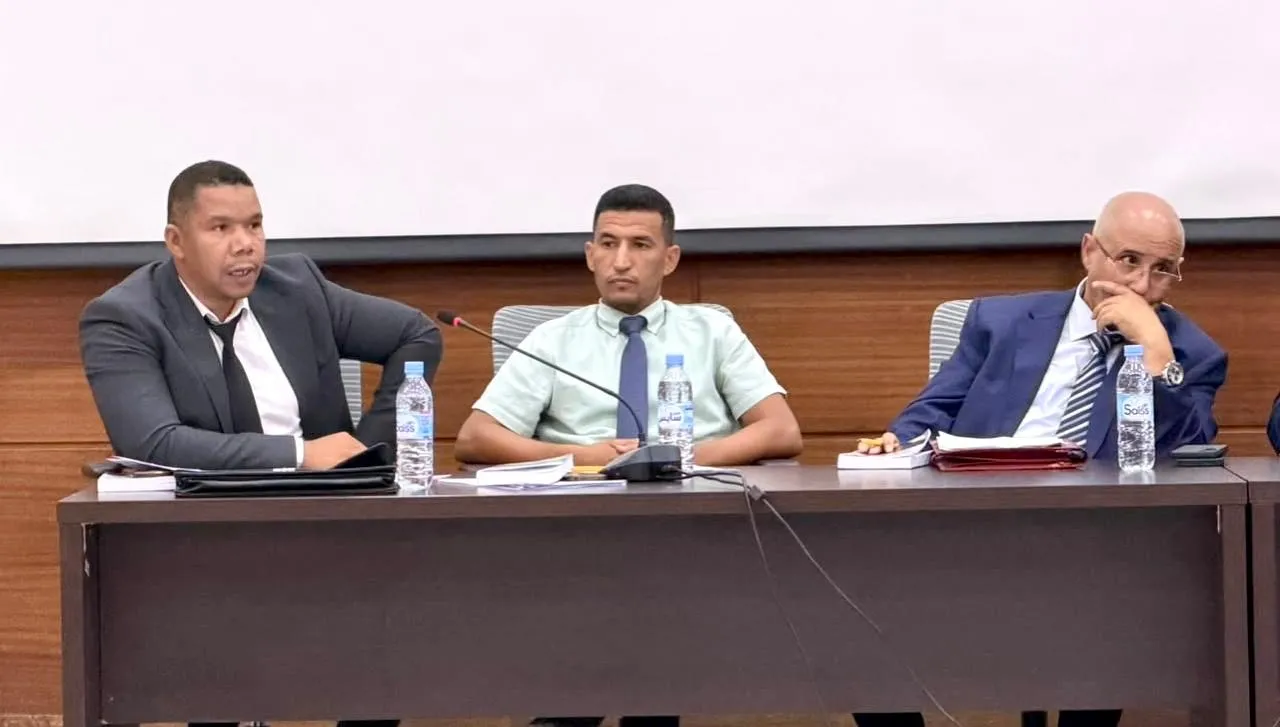
The Abu Dhabi Forum for Peace recently celebrated the tenth anniversary of the "Historic Marrakech Declaration on the Rights of Religious Minorities in the Islamic World" in a grand international event held in Casablanca, Morocco. This significant occasion was organized in collaboration with the Moroccan Ministry of Endowments and Islamic Affairs, drawing participation from a diverse array of attendees, including a delegation from the International Religious Freedom Summit, scholars, religious leaders, diplomats, decision-makers, and representatives from international institutions and civil society across various countries.
The event was marked by the presence of the three former U.S. ambassadors-at-large for international religious freedom, highlighting the ongoing interest and support for the Marrakech Declaration from institutions and individuals dedicated to religious freedom through successive U.S. administrations. The celebration featured numerous speeches and discussions that showcased the intellectual, institutional, and field impact of the declaration over the past decade. Additionally, several individuals who have significantly contributed to promoting its principles and transforming them into practical initiatives in the realms of citizenship, coexistence, and religious freedom were honored.
The Foundation of Inclusive Citizenship
During the event, Sheikh Abdullah bin Bayyah, President of the Abu Dhabi Forum for Peace, emphasized that commemorating ten years since the declaration's issuance is a blend of celebration and the responsibility to evaluate its impact. He recalled the historic gathering in Marrakech in 2016, where over 250 scholars, thinkers, and religious leaders from diverse backgrounds convened. He explained that the declaration was rooted in the prophetic tradition of the "Constitution of Medina," drawing its central idea from the belief that inclusive citizenship is the foundation for a prosperous life in contemporary Muslim societies, and that safeguarding the rights of religious minorities is a fundamental requirement of Islamic law and its core values. He expressed gratitude for the high patronage of His Majesty King Mohammed VI of Morocco, under which the founding conference took place.
Sheikh Abdullah bin Bayyah praised the steadfast support from the United Arab Emirates, which has allowed the declaration to transition from concepts to impactful programs. He remarked that as they celebrate a decade since the Marrakech Declaration, it is essential to acknowledge that without the unwavering backing from His Highness Sheikh Mohammed bin Zayed Al Nahyan, President of the UAE, and the guidance from His Highness Sheikh Abdullah bin Zayed Al Nahyan, Deputy Prime Minister and Minister of Foreign Affairs, initiatives like this would not have seen the light of day nor reach their intended horizons. He noted that the declaration has become a significant reference in international discussions surrounding citizenship and religious freedom, with its principles included in the final communiqué of the 13th session of the Organization of Islamic Cooperation held in Istanbul in 2016. The declaration has also received accolades from the late Pope Francis and the then President of the United States, has been studied in universities and intellectual institutions, and translated into several languages.
Furthermore, he pointed out that the Marrakech Declaration has opened up a pathway for numerous initiatives inspired by its spirit, including the "American Peace Convoys," the "New Alliance of the Virtuous," the "Abu Dhabi Declaration on Inclusive Citizenship," the "African Conference for Peace Promotion," among others, which have collectively worked towards rectifying misconceptions and fostering greater understanding, coexistence, and cooperation among followers of different religions.
Pluralism and Ijtihad
Dr. Ahmed Toufiq, the Moroccan Minister of Endowments and Islamic Affairs, reaffirmed that Islam, since its inception, has established clear principles centered around the acceptance of pluralism, ijtihad, and constructive dialogue, underscoring the principle of "There is no compulsion in religion." He recalled the royal message directed to the founding conference of the Marrakech Declaration, which emphasized that religious laws should be accompanied by a refined civilized conduct that translates them into practice and achieves the goals of shared living.
Similarly, Ambassador Saeed Ahmed Al Dhaheri, UAE Ambassador to Morocco, highlighted that the Marrakech Declaration has become a global beacon of tolerance and coexistence, asserting that Moroccan-UAE relations transcend traditional partnerships and are based on a shared vision that values intellectual security and the role of culture and religion in shielding societies from extremism and isolation. He praised the efforts that accompanied the launch of the Marrakech Declaration, considering it a successful model for enhancing human commonalities and reinforcing values of mutual respect among various religious and cultural components.
In a video message, Reverend Bob Roberts Jr., founder of the "Multi-Faith Neighbors Network," commended the Marrakech Declaration, stating, "I have attended many gatherings and events addressing peace, coexistence, and human rights, and I can say unequivocally: no document compares to the Marrakech Declaration." He elaborated that initiatives inspired by the declaration have expanded the activities of the "Multi-Faith Neighbors Network" to include 25 cities in the United States and 15 other countries, alongside organizing peace missions and humanitarian work, as well as launching training programs for religious leaders and building bridges between communities. He added that the declaration will continue to resonate and influence how we coexist as followers of different faiths for many years to come, appreciating Sheikh Abdullah bin Bayyah's scholarly and practical role in translating theoretical ideas into actionable initiatives.
Dr. Mohammed Al-Sanousi, a member of the Forum's Board of Trustees, attributed the broad international acceptance of the declaration to a combination of factors, notably its foundation on the universally agreed principles of the "Constitution of Medina," the institutional support from the UAE, the royal patronage of King Mohammed VI, and the scholarly leadership of Sheikh Abdullah bin Bayyah. The event concluded with a reaffirmation that the Marrakech Declaration has evolved into a sustainable civilizational project, alongside a call to develop a strategic work plan for the coming decade that transitions from merely disseminating its principles to expanding practical applications by incorporating values of citizenship and coexistence into educational curricula, designing training programs, developing guides and public policies, and building the capacities of young religious and community leaders to serve as ambassadors for a culture of peace and shared living.
It’s worth noting that the Marrakech Declaration was issued at the end of an international conference held in Marrakech from January 25 to 27, 2016, under the royal patronage of His Majesty King Mohammed VI and organized by the Moroccan Ministry of Endowments and Islamic Affairs and the Abu Dhabi Forum for Peace, calling for the establishment of inclusive citizenship and the implementation of constitutional and legal measures to safeguard the rights of religious components.
As reported by alkhaleej.ae.