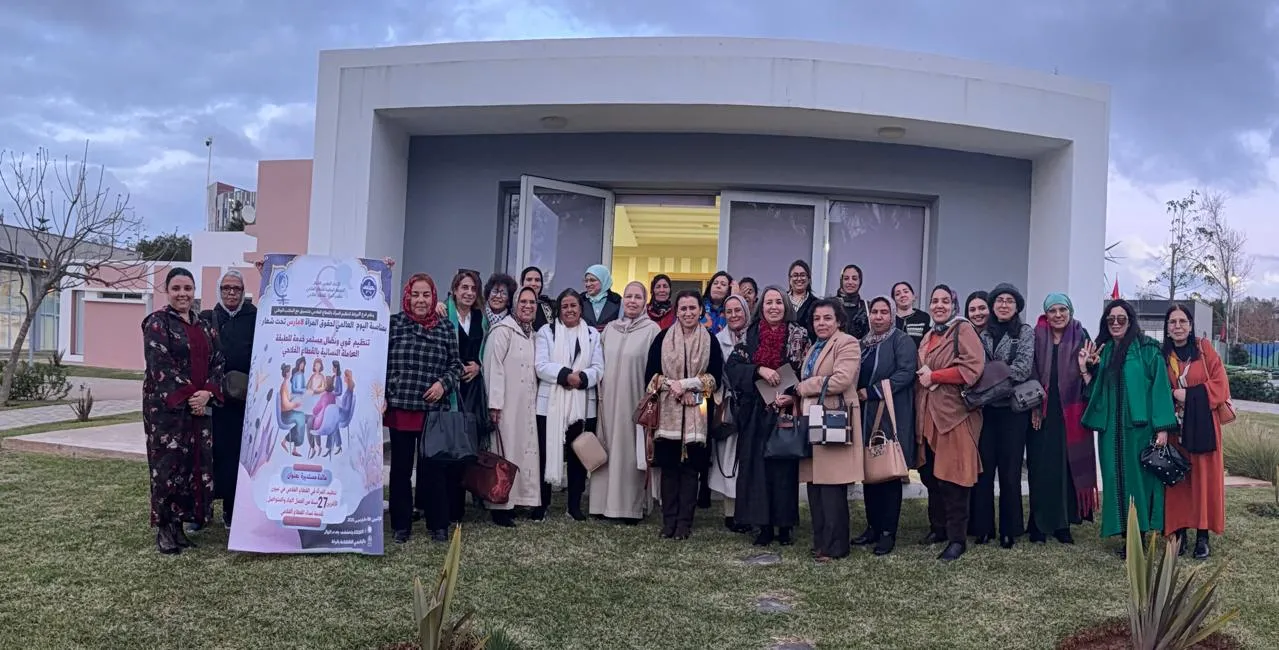

Empowering Agricultural Women in the Face of Ongoing Struggles
On the occasion of International Women's Rights Day, the Agricultural Women's Organization (FNSA) commemorates this significant day with the powerful slogan: "A strong organization and a constant struggle in service of working women in the agricultural sector." This observance occurs amidst a backdrop of relentless imperialist attacks and wars against peoples worldwide, most notably the extermination campaign against the resilient Palestinian people. Various forms of weaponry have been employed in attempts to obliterate their existence; however, the steadfast resistance of this proud nation has consistently defied expectations, showcasing their strength, determination, and unwavering attachment to their land and ancestral heritage. Palestinian women have played a pivotal role in this ongoing resistance, exemplifying courage and resilience.
The situation is further compounded by climatic disruptions, as our country has recently faced severe flooding and storms in various cities, particularly in the northern regions. The most devastating incident occurred in Ksar El Kebir, where living conditions became untenable, forcing residents to evacuate and seek refuge in Larache for over a week. This turmoil is mirrored by a significant deterioration in the global status of women, exacerbated by political, economic, and social upheavals, alongside climate change, which continue to have adverse effects on women worldwide, worsening their living conditions.
Addressing Inequalities Faced by Women in Morocco
Nationally, despite considerable efforts to shift the stereotypical image of women in society and achieve genuine equality in professional, economic, and political spheres, the plight of women remains marred by a persistent disregard for the demands of feminist and labor movements. This occurs within a context of exorbitant price increases for essential goods necessary for a dignified life, assaults on rights related to land, health, education, and employment, and the economic and social precariousness faced by women as a result of systemic discrimination—whether economic, social, or legal. The deterioration, discrimination, marginalization, exclusion, and violence experienced by women continue to worsen, deepening class inequalities and further degrading the situation, especially for wage-earning women.
Legally, a significant gap persists between the rights enshrined in international treaties and the Constitution, and the national laws that fail to align with these standards, including the Family Code, the Penal Code, the organic law related to the Authority for Parity and the Fight Against All Forms of Discrimination against Women, Law 103-13, and the Labor Code, among others. These legal texts are deemed discriminatory and reflect a lack of political will to establish true gender equality.
In everyday reality, the circumstances faced by women working in the agricultural sector—be they officials, employees, agricultural laborers, or farmers—are not dissimilar to those of women in various other sectors. Many encounter multiple forms of violence on a daily basis: economic, psychological, sexual, professional, and even digital, which is rapidly escalating in the absence of effective measures to protect them and ensure their safety. This situation is further aggravated by the lack of ratification of International Convention No. 190 concerning a world of work free from violence and harassment, the ratification and implementation of which we have consistently demanded alongside other organizations advocating for women's rights, to ensure the respect for their dignity and the provision of decent working conditions.
This dire situation persists despite the prolonged struggles undertaken both within the Agricultural Women's Organization and our women’s organization, the Progressive Union of Women of Morocco, affiliated with the Moroccan Workers' Union, in advocating for common and specific demands of wage-earning women.
On this International Women's Rights Day, we, the Agricultural Women's Organization, extend our greetings to all women across the globe and declare the following:
Finally, we call upon all women in the agricultural sector to unite around their organization, the framework that articulates and defends their legitimate demands, in order to ensure the respect and implementation of the demands of women linked to the agricultural sector and to achieve dignity, equality, and social justice, in line with our motto: "A strong organization and a continuous struggle in service of working women in the agricultural sector."
Long live the Agricultural Women's Organization!
Long live the women working in the agricultural sector!
As reported by viacampesina.org.