
Embracing Diversity at the National Festival of Popular Arts
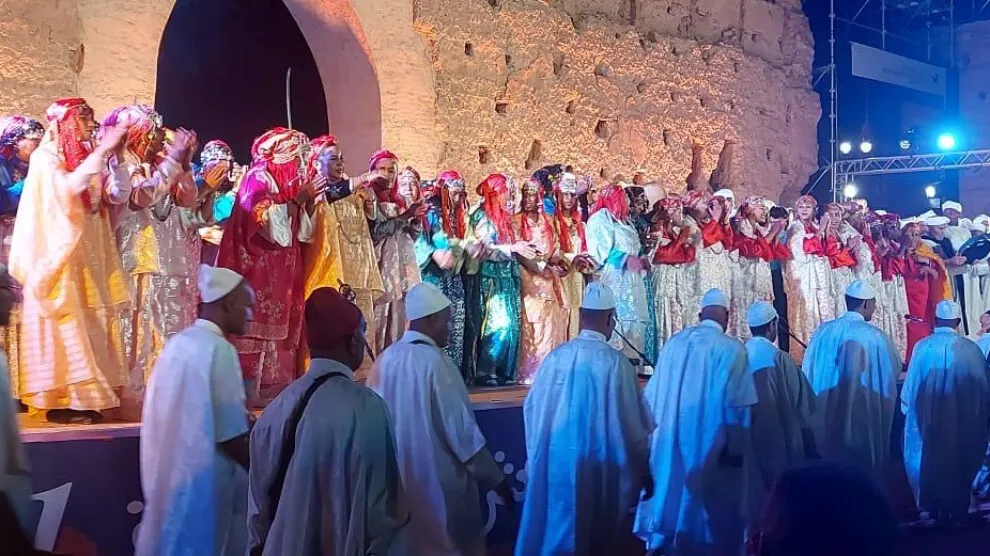
The 22nd edition of the National Festival of Popular Arts in Marrakech concluded with a vibrant celebration, attracting large crowds eager to experience folkloric performances from various regions of Morocco. These performances beautifully showcased the rich tapestry of the nation's cultural heritage and highlighted the vital role of women in the dances and songs that reflect the unique identities of each area.
In a festive atmosphere, participants in the folkloric groups made their mark at the festival, emphasizing through their dances and songs the significant contributions of women in preserving cultural heritage and maintaining identity. Their presence resonated symbolically, enhancing the aesthetic expression of the festival and promoting values of cohesion within society.
A Rhythmic Journey Through Moroccan Traditions
The festival wrapped up on the evening of Monday, July 6th, featuring a closing ceremony led by popular artist Zina Daoudia alongside folkloric groups who presented artistic showcases that blended rhythms and dance, embodying the diversity of Moroccan cultural heritage. Over the course of four days, audiences were treated to artistic performances and songs from various regions across the country. The involvement of women added a special touch to the dances they performed and the traditional attire they wore, reinforcing their connection to Moroccan cultural identity. Each artistic display represented the uniqueness of its region, characterized by distinct rhythms, songs, and dances prominently featuring women, who demonstrated their deep connection to the local culture and environment.
One notable performance came from the "Tzawit" group (meaning "bee" in Amazigh), hailing from the rose capital of Kelaa M’gouna in southeastern Morocco. Their captivating "bee dance" received enthusiastic praise from the audience at the historic Palais Badi, which hosted a variety of folkloric performances. Saadia Al-Asri, a member of the troupe, elaborated that the region is renowned for its bee dance, where the group’s leader embodies the queen bee, surrounded by women representing the bees, moving in harmonious choreography guided by his gestures. Meanwhile, male members of the group perform rhythmic movements in sync with the women, portraying the role of the hive's soldiers.
Al-Asri explained that the performance is not limited to the "bee dance" but also includes the "Ahidous," an Amazigh art form showcased during weddings and special occasions, emphasizing that the presence of women in the troupe is essential. Women adorn themselves with garlands of roses, symbolizing the region's identity known for rose production, and represent the Amazigh woman as a custodian of heritage and culture, passing this legacy through generations.
From the "Wadi Noun" region, known as the gateway to the desert, Leila Zahrawi, a member of the "Kadira" group specializing in Hassani music and dance, shared that their participation in the festival has become a family tradition, bringing along their children. She highlighted that the festival, now in its 55th edition, is one of the most prestigious artistic events in Morocco. The "Kadira" dance is a distinctive marker for the region of Guelmim, symbolizing Hassani culture, an intrinsic part of the desert inhabitants' identity. This dance features the "Kadira" drum, played by hand, with women encircling the musician, performing rhythmic movements with an emphasis on head, shoulder, and hair motions while dressed in traditional desert attire called "melhafa." The audience interacts by clapping along, with men joining the women in songs that express pride, love, and welcome.
The "Kadira" dance carries deep cultural and social significance, serving as a means of expressing joy and desert identity while reflecting values of solidarity and communication within the community. The central positioning of women in the dance circle exemplifies their status in desert society as a focal point of movement and aesthetic expression during celebrations. The unity of men and women around the dancer symbolizes social cohesion and the unity of tribal members.
This festival of popular arts highlights the cultural diversity and richness found across Morocco, showcasing various forms such as "Ahwash" and "Ahidous" from mountainous regions, Hassani heritage from desert areas, the "Aita" art from the plains, and the African-rooted "Knafa". It also accentuates the symbolic status of women within society.
As reported by jinhaagency.com.