
The Political Turmoil in Ceuta
The ongoing chaos in Ceuta has plunged the leftist minority government in Madrid into a significant crisis. Just weeks after a massive influx of migrants from Morocco, Prime Minister Pedro Sánchez has decided to take decisive action following his return from summer vacation in the North African enclave. In response to accusations from Ceuta's conservative government leader that Madrid has "abandoned" the city, the central government has opted for a sudden strategic shift, taking control of the situation.
For weeks, ministers in Madrid appeared to believe that the remaining migrants would return home on their own, much like the over 70,000 individuals who swam to Spain in late July and subsequently returned to Morocco voluntarily. However, the National Security Council has declared a "situation of interest for national security" during an extraordinary meeting regarding Ceuta. Following a cabinet decision, Minister of Territorial Affairs Ángel Víctor Torres has been appointed to oversee the entire crisis management effort. Supported by a committee that includes eleven ministers and representatives from the regional government of Ceuta, Torres aims to restore "full normalcy" as swiftly as possible.
The Immigration Debate Intensifies
This consolidation of command had been demanded by the President of Ceuta and the conservative People's Party (PP) since the end of July. On Tuesday evening, hundreds of demonstrators in Ceuta accused the Madrid government of having "abandoned" their city. Defense Minister Robles admitted to shortcomings in front of a parliamentary committee, expressing apologies to those in Ceuta who may have felt "abandoned or insufficiently supported." The government stands with them, sharing in their suffering. Six additional ministers are expected to address Parliament by Monday as part of a communication offensive, with Sánchez scheduled to follow on September 3.
With the ongoing loss of control in Ceuta, internal political pressure on Sánchez's leftist minority government, which has made the most liberal migration policy in Europe its hallmark, is mounting. The government has focused on integration rather than isolation through ongoing mass regularization initiatives. According to El País, immigration is poised to be a critical topic in the upcoming parliamentary elections, which must occur by summer 2027.
The opposition PP accuses the government of "failure" in its migration and security policies amidst the "invasion" in Ceuta, demanding stricter border controls and proposing to complicate the regularization of foreigners in Spain. The migration crisis has led to an alarming surge in xenophobic hate messages online, with the state's observatory for racism and xenophobia reporting over 3,000 incidents daily.
New government coordinator Torres stated that repatriating migrants from Morocco is the government's priority. The PP insists that all migrants, including unaccompanied minors and potential asylum seekers, must return. Torres dismissed this demand as populist, arguing that it is not legally feasible.
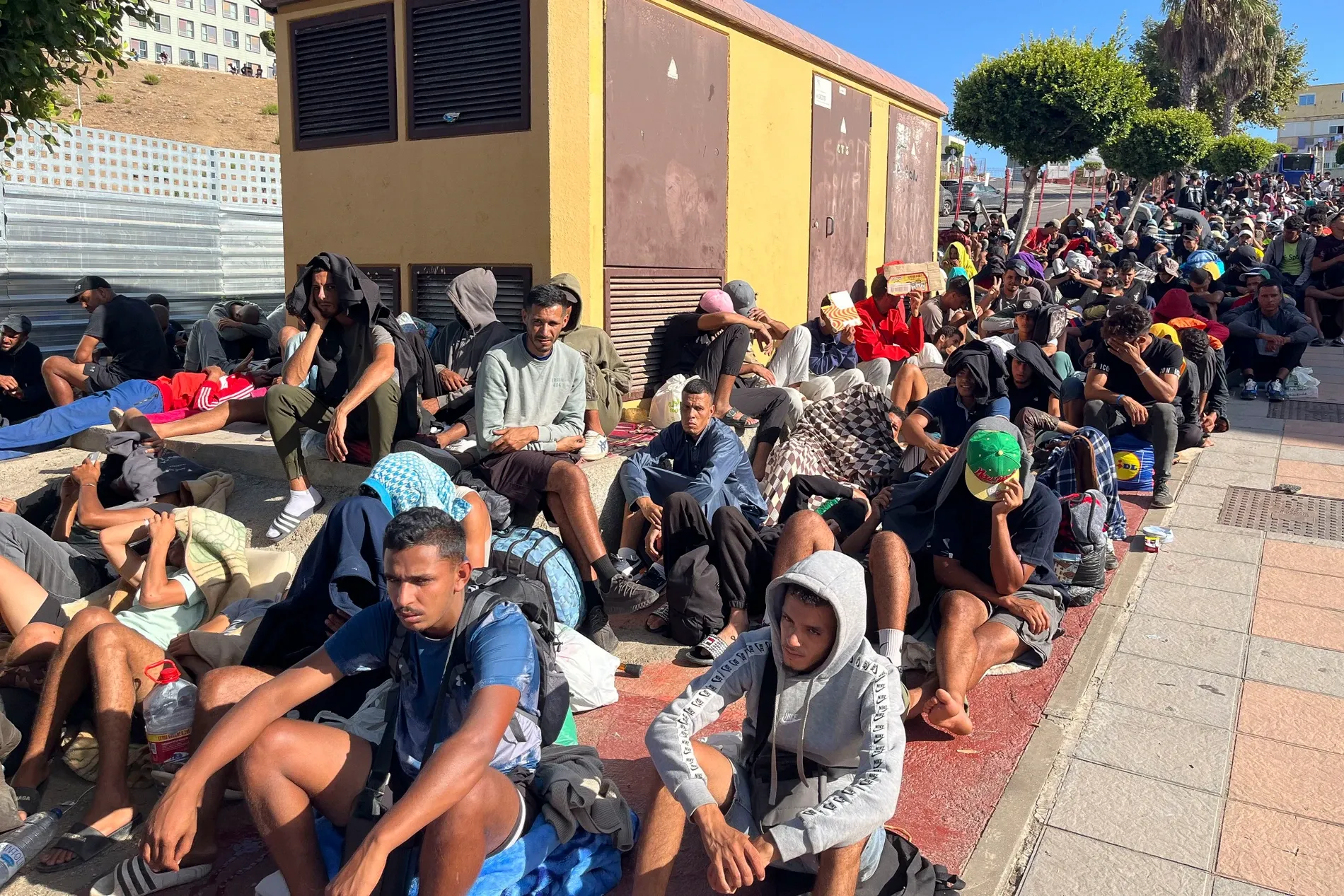
As of now, the central government has been unable to provide reliable statistics on the number of migrants, minors, and asylum seekers currently residing in Ceuta since the end of July. The regional government estimates approximately 10,000 individuals in the city, which has a population of 84,000. In Madrid, officials highlight that 90 to 95 percent of the more than 70,000 people who arrived in Ceuta have voluntarily returned to Morocco.
According to Minister Torres, about 1,400 minors have been registered thus far. However, Economic Minister Carlos Cuerpo reported that 2,900 children and adolescents have already been identified. Approximately 1,800 adults have been housed in two military tent camps since Friday, while around 4,000 are receiving humanitarian aid, which is becoming increasingly critical as cases of scabies and tuberculosis emerge.
A collective expulsion is legally impossible without individual case reviews, yet authorities are ill-equipped to handle the thousands of cases and have struggled to remove individuals from the streets. Several sports stadiums are being repurposed for this effort. For minors, age verification often requires medical assessments, followed by detailed individual reports. Before returning to Morocco, legal guardians must be identified, and another report must confirm that they do not pose a danger to the minors and that there are no fears of persecution, which would constitute grounds for asylum.
As per the latest available figures from the Attorney General's Office, over 16,000 unaccompanied minors were in Spain at the end of 2024. Four were repatriated to Colombia, three to Romania, and one to France—none have been returned to Morocco since 2021. Following the last major influx into Ceuta five years ago, several hundred minors were sent back to Morocco, a move later deemed illegal by the Supreme Court.
As reported by faz.net.