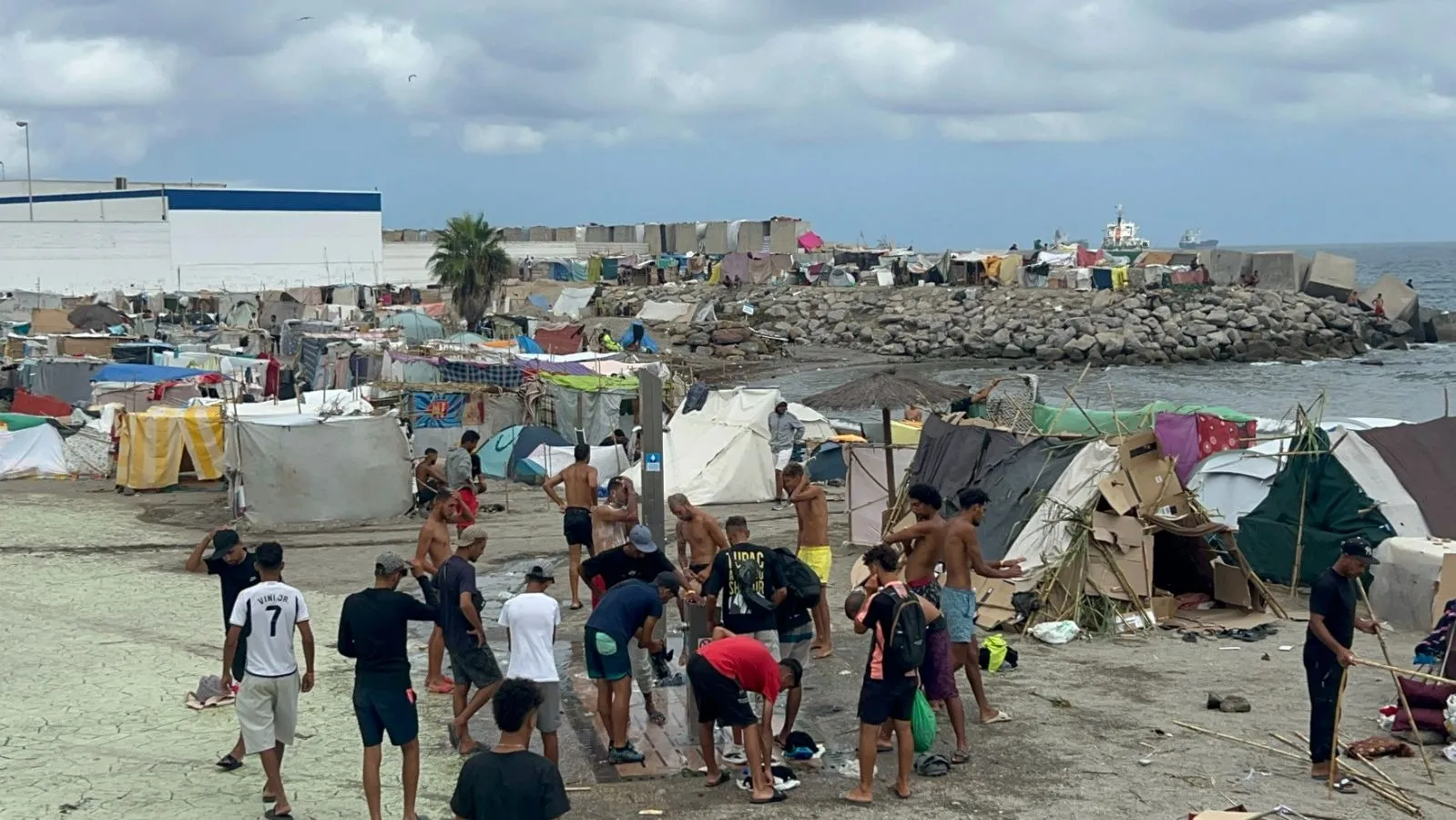

Escalating Migrant Crisis in Ceuta
In a dramatic turn of events, the Spanish exclave of Ceuta in North Africa has witnessed a significant influx of migrants, prompting urgent discussions among European leaders regarding Spain's place within the Schengen Area. Danish Prime Minister Mette Frederiksen has suggested that the European Union consider suspending Spain from the Schengen agreement, emphasizing the need for immediate and comprehensive action to address uncontrolled immigration, which she described as a threat to both Europe and Denmark. Her comments reflect a growing concern among EU leaders about the implications of recent events in Ceuta, particularly after shocking images surfaced, showcasing the dire circumstances faced by those attempting to cross borders.
Frederiksen, alongside Italian Prime Minister Giorgia Meloni, is advocating for a summit of European heads of state to discuss the escalating situation. Meloni was the first to propose Spain's potential exclusion from Schengen, a notion that was swiftly dismissed by Madrid, which summoned the Italian ambassador for a formal reprimand. Meanwhile, Finland has joined the call for action, echoing sentiments from German leaders who attribute part of the responsibility for the crisis to Spain's socialist government. German CDU politician Günter Krings criticized Spain's recent decision to grant citizenship to 500,000 undocumented immigrants, arguing that such actions have created incentives for further illegal crossings.
Political Responses and International Support
The British government has also offered support to Spain in light of the crisis, with Prime Minister Andy Burnham acknowledging the situation as primarily Spain's concern but expressing the UK's readiness to assist in understanding and addressing the repercussions of the migrant surge. This situation has led to a broader debate within the EU about border security and the responsibilities of member states in managing migration effectively.
According to the Spanish government, the recent surge in migrants is linked to rumors propagated by human smuggling networks following a recent Supreme Court ruling that complicates the immediate deportation of migrants arriving via sea. Tragically, at least 34 migrants have lost their lives in attempts to cross from Morocco to Ceuta. The Spanish Interior Ministry reported that thousands of migrants have already returned to Morocco, highlighting the rapid response to the ongoing crisis. Prime Minister Pedro Sánchez has labeled the influx as an attack on Spain's territorial integrity, stressing the need for decisive action to regain control of the situation.
The European Commission President, Ursula von der Leyen, has condemned the recent events as "unacceptable" and reiterated the importance of adhering to EU rules regarding migration. She has called for a concerted effort to dismantle smuggling networks and ensure that return processes are swift and in accordance with established regulations. The sheer number of migrants—approximately 60,000 in just a few days—represents a staggering 70% of Ceuta's population, underscoring the extreme pressure the region is facing.
As discussions continue among EU leaders, there is a consensus that protecting the external borders of the EU is crucial in combating illegal migration. The call for solidarity and cooperation among member states is more vital than ever to address this pressing humanitarian and political issue.
As reported by t-online.de.