
Ceuta's Migrant Surge and European Hypocrisy
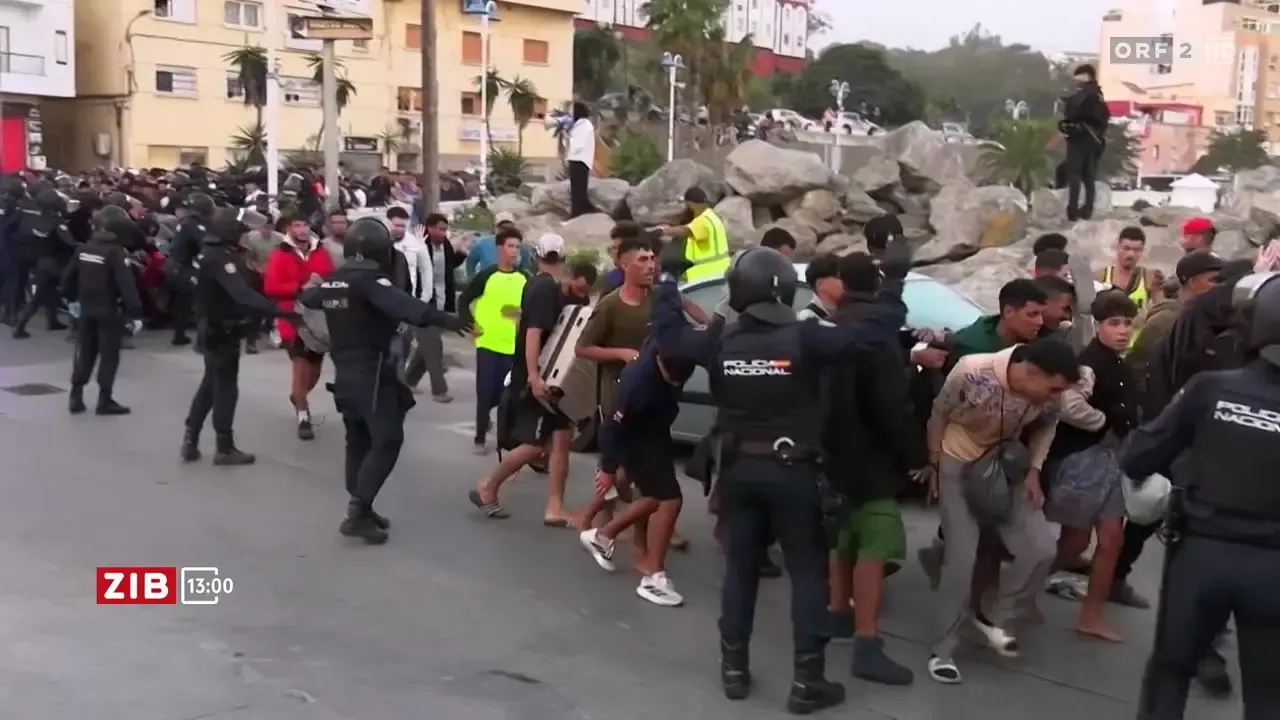
Recently, the residents of the small Spanish town of Ceuta, located by the Mediterranean, were taken by surprise by a massive influx of irregular migrants, estimated to be over 60,000 from Morocco. This dramatic event has brought to light the complexities and contradictions within European migration policy, particularly highlighting its absurdities and hypocrisy. Since the onset of the refugee crisis in 2015, significant developments have occurred in the EU's approach to migration; however, the current trajectory is unsustainable and must be reevaluated.
Among the stark contradictions is the left's admiration for Spanish Prime Minister Pedro Sánchez, a central figure in this unfolding drama. He portrayed the sudden arrival of thousands of migrants as a mere mishap that was quickly addressed through professional intervention. The Spanish government asserted that nearly all migrants had left Ceuta by the following day, despite thousands still remaining in the area. Following a brief visit to the city, Sánchez jetted off on vacation, sharing a playlist of his holiday hits, seemingly indifferent to the concerns of Ceuta's 85,000 residents. His political message was clear: "Nothing has happened; we have everything under control." Many of his supporters seemed to accept this narrative, which shines a spotlight on the current state of European migration policy.
Pushbacks and Political Responses
The events in Ceuta signal a significant shift in the treatment of migrants, a change that has gone largely unnoticed by many. Sánchez, a self-identified socialist, allowed migrants—many of whom were minors—to suffer in the heat without access to water, food, or shelter. Just as quickly as they arrived, most were pushed back across the border by police and military under a Spanish emergency law enacted in 2015. Such a response would have triggered outrage across Europe had it been implemented by the national-conservative government of Viktor Orban at the Hungarian border in 2015. At that time, German Chancellor Angela Merkel stepped in, welcoming the migrants, who were then universally referred to as refugees, to humane Germany, leading to hundreds of thousands following suit. Today, the Spanish pushbacks are met with silence, and Sánchez is granted a free pass.
There is a palpable relief regarding Sánchez's efficiency; one can only imagine the chaos that would have ensued had he followed Merkel's example and welcomed the migrants. Some NGOs rightly point out that these actions may constitute violations of EU and international law, yet these voices are scarcely heard in mainstream media. The success of these pushbacks is conveniently ignored, as they contradict the official narrative of European migration policy. This hypocrisy obscures potential solutions to the ongoing migration crisis.
Moreover, the criticism from the right towards Spain is equally hypocritical. When Giorgia Meloni promptly ordered checks on travelers from Spain at the Italian border, she must have known these were unnecessary, as Ceuta is not part of the Schengen Area, and rapid onward travel for the 60,000 migrants was not anticipated. Additionally, more migrants arrive in Italy than in Spain, many of whom continue northward without being repatriated by Italy, a fact that Meloni conveniently overlooked. Her primary concern seemed to be sending a political signal to her national-conservative supporters.
Strikingly, the confirmed deaths of at least 88 individuals in Ceuta, many of whom were minors, are scarcely discussed. While accountability lies primarily with the individuals themselves or their families, and the traffickers, it is also a tragic outcome of misguided European migration policies that incentivize perilous journeys toward Europe without offering the promised opportunities. Such inhumane incentives must be urgently addressed.
In response to the crisis, the EU hastily convened a meeting of its 27 interior ministers, downplaying internal tensions, as it typically does. Nevertheless, the events in Ceuta mark a significant moment in migration policy that will not go without consequences. The lessons learned are clear: numerous right-wing politicians have seized the opportunity presented by the crisis to advocate for a radically different migration policy. French presidential candidate Marine Le Pen called for identity checks at intra-European borders, pledging to end this "madness" by 2027. The AfD leader Alice Weidel insisted that Germany must prevent "further, sometimes violent and uneducated migrants" from entering its social systems at all costs. Meanwhile, the UK opposition party Reform UK announced plans to deploy the Royal Navy to push back boat migrants in the English Channel under their governance.
The reactions to the surge in Ceuta indicate that European migration policy is indeed shifting. However, the pace of change is alarmingly slow, raising the question of whether the political center will continue to shape this transformation or if it will soon be overtaken by its opponents.
On the streets of Ceuta, police and migrants engage in high-speed chases, creating an atmosphere of fear among residents. Many suspect that the Moroccan government is behind the chaos. The events in Ceuta create an impression of a new wave of migration; however, irregular border crossings into Europe have been declining for years. In 2026, Spain recorded the lowest figures among major Mediterranean states, unlike France, Greece, and Italy. Within hours, tens of thousands arrived at the Spanish enclave of Ceuta, with satellite images documenting the gathering at the beach and the authorities' immediate response.
As reported by nzz.ch.