
Understanding the Ceuta Crisis: A Geopolitical Perspective
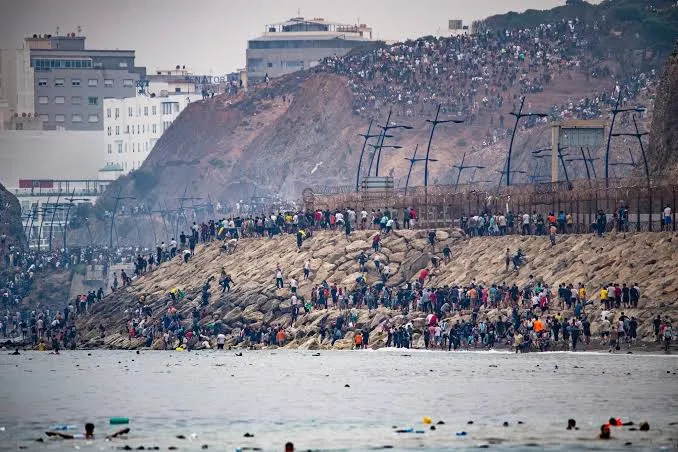
In late July 2026, the Spanish enclave of Ceuta witnessed an unprecedented surge of migration as approximately 60,000 individuals crossed the border from Morocco within a matter of days, marking the largest influx since 2021. While most of these migrants returned to Morocco shortly thereafter, the political ramifications of this event were far-reaching and have continued to resonate. Leaders in Washington and Israel seized upon the dramatic images of the crossing to launch critiques against Spanish Prime Minister Pedro Sánchez, further complicating Spain's international relations. Italy even took the step of suspending certain aspects of the Schengen Agreement with Spain, while comments from an Israeli diplomat reignited disputes over the sovereignty of Ceuta itself. This article seeks to chronologically reconstruct the events surrounding this crisis while evaluating four competing theories: the idea of spontaneous disorder, the notion of Moroccan overload, the theory of Moroccan tolerance, and the concept of a coordinated operation involving the U.S., Israel, and Morocco. Ultimately, this analysis determines that there is no substantial evidence to support claims of a coordinated effort; rather, it suggests that Ceuta acted as a geopolitical pressure point, where various actors, each harboring grievances regarding Sánchez's foreign policy towards Iran, Gaza, and Algeria, capitalized on a situation that had not been orchestrated in conjunction.
The Political Landscape and Historical Context
To understand the political significance of the Ceuta crisis, it is essential to consider the historical context, particularly the events of 2021. In May of that year, Spain's decision to admit Brahim Ghali, the leader of the Polisario Front, for medical treatment without notifying Morocco, led to a significant relaxation of Moroccan border enforcement. This resulted in over 8,000 migrants entering Ceuta in just two days, including a considerable number of minors. The Spanish government accused Morocco of leveraging migration for political gain, although Rabat denied any such intentions. The fallout from that incident led to Spain's notable shift in its stance on the Western Sahara issue, aligning more closely with Morocco’s interests. As the 2026 crisis unfolded, it became evident that the vulnerabilities exposed in 2021 had not been adequately addressed. By then, Spain had become increasingly estranged from both the United States and Israel, partly due to Sánchez's independent foreign policy decisions that diverged sharply from those of its traditional allies. In February 2026, Spain publicly condemned U.S. military actions against Iran, leading to a cooling of relations and raising questions about the reliability of Spain as a NATO ally.
Moreover, Sánchez's recent pivot towards Algeria, a key rival of Morocco, further complicated diplomatic relations. Just days prior to the mass crossings, Sánchez had visited Algiers, describing Algeria as a strategic partner and signaling a potential shift in Spain's foreign policy dynamics in the region. This visit occurred against a backdrop of heightened tensions between Spain and Morocco, leading to speculation about whether the Moroccan authorities perceived this as a provocation, although no evidence directly links the visit to the subsequent migration surge.
The events of July 2026 were catalyzed by a series of factors, including socio-economic conditions in Morocco, where youth unemployment rates were alarmingly high, leading many to seek better opportunities abroad. The role of social media also played a critical part in the migration wave, as misinformation spread rapidly, creating a false narrative that Ceuta's border was open. The convergence of these factors culminated in a rapid influx of migrants, overwhelming Spanish authorities and prompting a swift military response. Despite Morocco's assertion that it did not intend for the crisis to unfold, the country's initial lack of intervention raises questions about potential tolerance of the situation.
In summary, while the Ceuta crisis of 2026 was characterized by a significant but temporary migration event, it also unveiled broader geopolitical tensions and vulnerabilities within Spain's foreign policy framework. The implications of this incident are profound, illustrating how a short-lived border shock can translate into enduring diplomatic challenges. Moving forward, it is imperative for Spain and the European Union to establish independent monitoring mechanisms and protocols to better manage similar crises in the future, ensuring that political fallout does not overshadow the humanitarian dimensions of such events.
As reported by mepei.com.