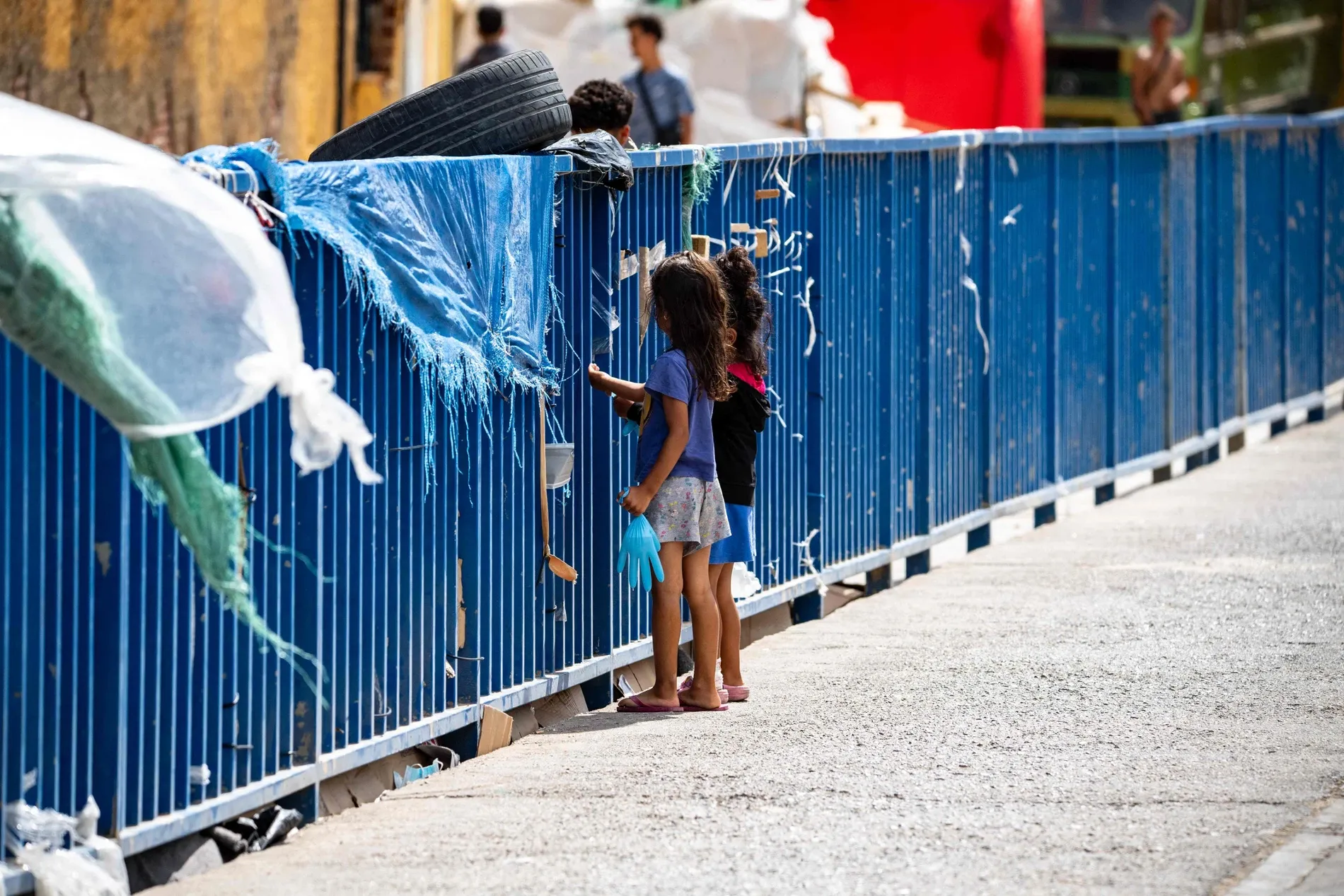

Ceuta's Struggle with Migrant Overcrowding
In Ceuta, a Spanish exclave located on the northern coast of Africa, the migrant crisis has escalated to alarming proportions, leaving many individuals without proper shelter even six weeks after their arrival. Migrants roam the streets in search of food, while local residents express feelings of fear and abandonment amid the ongoing turmoil. The scene is stark and unsettling; children attending the Juan Carlos Primary School are greeted by soldiers armed with machine guns stationed at the school’s entrances, a stark reminder of the precarious situation that has unfolded in the area.
The school’s entrances were previously breached by migrants who forced their way inside, seeking refuge in a place meant for learning. This desperate act came after a massive influx of over 80,000 people stormed the border between Spain and Morocco at the end of July, with many attempting to swim to safety or climb over barriers. Spanish Prime Minister Pedro Sánchez described the situation as an "invasion," a sentiment echoed by the residents of Ceuta who witnessed the chaos unfold. Tragically, around 100 individuals lost their lives during these attempts to reach Spain, highlighting the desperate measures taken by many in search of a better life.
While international attention on the crisis has waned, the situation in Ceuta remains dire. The government struggles to provide accurate estimates of the number of migrants currently residing in the city, with figures ranging from 5,000 to 20,000. These individuals share a densely populated area with 85,000 residents, creating a complex and challenging living environment. Although the immediate vicinity of the border has calmed, the impacts of the crisis continue to resonate throughout the city as families grapple with the changes brought about by this sudden influx of people.
The Strain on Ceuta's Community and Infrastructure
As the first week of school after summer break commenced, parents dropped their children off at school amid the presence of soldiers and security personnel. The atmosphere was heavy with uncertainty, as many families struggled to navigate the new reality where migrant camps have sprung up around the school grounds. These makeshift encampments were established due to the authorities' inability to accommodate the influx of people upon their arrival, forcing many to seek shelter wherever they could find it, including classrooms and hallways.
Teachers, like David Navas, have witnessed the chaos firsthand, noting that police responses were inadequate and often overwhelmed. The school grounds bore the remnants of the disorder, with debris left by the migrants who had taken refuge there. Parents began to rally to protect the school, concerned for their children’s safety amidst the tumult. Meanwhile, the school has established direct lines of communication with military forces for emergencies, bypassing the overwhelmed police forces.
As the city grapples with the ongoing crisis, some locals have opted to leave Ceuta, retreating to safer areas as makeshift settlements of migrants grow. The Playa Del Trampolín, a favored beach area, has transformed into a temporary home for thousands of migrants, with makeshift tents and shelters lining the shore. NGOs and local residents estimate that around 10,000 migrants are currently living in this area, struggling to meet basic needs as they await the opportunity to apply for asylum.
Despite the proximity of Europe, the migrants find themselves trapped in a bureaucratic limbo, unable to leave Ceuta without permission. Many resort to desperate measures, including attempting to swim to the mainland, a perilous journey that has claimed countless lives. Among them is Sohayla, a 34-year-old woman from Morocco who has been living in a tent near the CETI, the city’s only official migrant reception center, which is already overcrowded. She dreams of a better future in Europe, motivated by the lack of opportunities in her home country.
The community's frustration continues to grow as they demand swift action from the central government in Madrid to alleviate the burden of the ongoing crisis. Many residents are calling for a more organized response to the migrant situation, including proper housing and adequate food supplies, to restore a sense of normalcy in their community. The complexity of this crisis underscores the urgent need for a comprehensive approach to migration that addresses both the humanitarian needs of migrants and the concerns of local residents.
As reported by faz.net.