
Ceuta's Ongoing Migration Emergency
In the wake of a significant migrant crisis, the Spanish enclave of Ceuta is currently home to between 3,000 and 5,000 migrants, as stated by the region's leader, Juan Jesús Vivas. This alarming situation follows the arrival of approximately 78,000 migrants from neighboring Morocco within just a few hours last week, leading to a humanitarian disaster that claimed the lives of 100 individuals. During a recent session of the European Parliament, Vivas expressed his profound sorrow regarding this "irreparable tragedy," while also highlighting the growing calls for mass crossings circulating on social media platforms, as reported by various Moroccan news outlets.
The crisis has sparked tensions among EU nations, particularly those sharing open borders, and has drawn criticism toward the Spanish government's handling of the situation. In contrast, the EU Commission has lauded Spain's swift response, which has included the deployment of armed forces to Ceuta and Melilla, another Spanish territory on the North African coast. However, Vivas, who holds conservative views, criticized the national government's response, indicating that it was both delayed and inadequate. He emphasized the lack of resources available to manage the situation effectively, stating, "The fact that we don't have numbers on how many are still in Ceuta shows how few resources we have to deal with this situation."
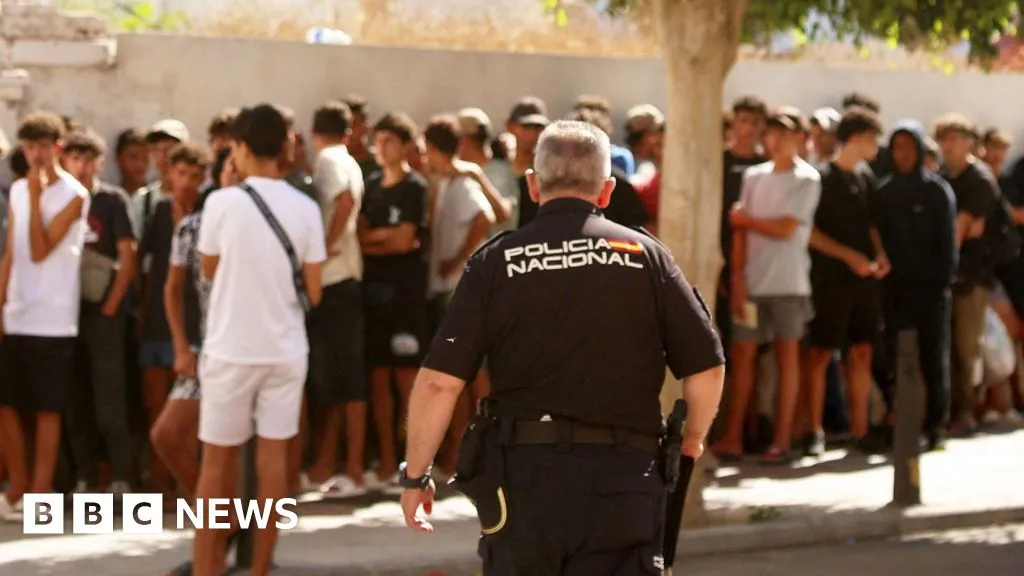
Despite the return of nearly 75,000 migrants to Morocco providing some relief, Vivas noted that Ceuta has not yet returned to normalcy. The territory continues to grapple with a humanitarian emergency, compounded by public order disturbances. The mayor-president pointed out the challenges surrounding the return of minor migrants, as such actions require their consent. In response to the ongoing crisis, Spain's interior minister has allocated €25 million to assist minors in Ceuta. However, reports from the Spanish newspaper El Mundo indicate that around 4,860 migrant children have been registered by volunteer organizations, which is significantly higher than official estimates, and the situation on the ground has become increasingly unsustainable as local residents take in these children.
Continued Challenges and Diplomatic Tensions
Currently, no migrant children have been transferred to mainland Spain, partly due to the reluctance of right-wing local authorities to accept them, as highlighted by El País. While some right-wing factions point to an agreement with Morocco that facilitates the return of migrant children to their families, leaders in Melilla are urging their mainland counterparts for a "gesture of solidarity" in addressing the crisis. The reasons behind the sudden surge of migrants attempting to cross into Ceuta remain unclear, but the EU's Migration Commissioner, Magnus Brunner, has suggested that criminal networks may be spreading misinformation to instigate such movements, an assertion that aligns with the views of Spanish Prime Minister Pedro Sánchez.
The surge in crossings coincided with a ruling from Spain's Supreme Court, which stated that migrants intercepted at sea while attempting to reach Ceuta or Melilla could not be summarily returned to Morocco. This decision has reignited diplomatic tensions between Spain and Morocco, as the latter does not recognize Spain's sovereignty over these exclaves. Vivas characterized the mass crossings as an "unequivocal attack," expressing the deep anxiety and fear felt by the local population regarding potential future incidents of this nature. The Spanish interior minister has assured that efforts are underway to collaborate closely with Morocco to prevent any future violations, asserting that all migrants still in Ceuta will be returned as soon as feasible.
Brunner has indicated that the EU is prepared to take further actions in Ceuta, although the Spanish government has not yet made an additional request for EU border guards. As the situation continues to unfold, Moroccan media reports suggest that new calls for mass border-crossing attempts are gaining traction online, with posts circulating on social media encouraging individuals to join closed WhatsApp groups dedicated to migration to Spain. This ongoing crisis not only highlights the urgency of the humanitarian needs in Ceuta but also underscores the complexities of migration policies and international cooperation in addressing such challenges.
As reported by bbc.com.