
Ceuta's Evolving Migration Crisis
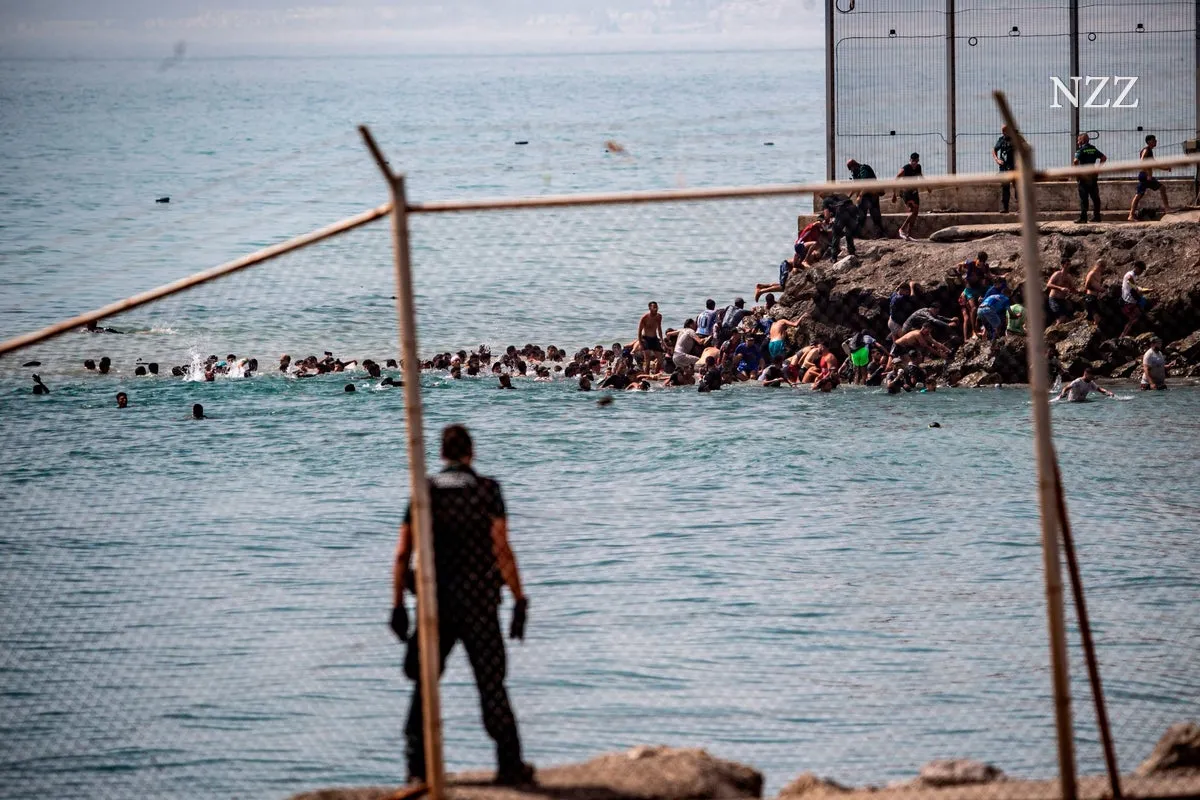
The coastal city of Ceuta, located near Morocco, is currently experiencing an unprecedented surge in migrant arrivals, prompting local officials to request the Spanish government declare a national emergency. This situation is reminiscent of the 2021 crisis when numerous individuals tragically lost their lives while attempting to reach European soil. On Thursday afternoon, several hundred migrants crossed from Morocco into Ceuta in a matter of hours, many swimming across the short distance that separates the two territories. Video footage captured the moment of their arrival, showcasing a mix of drenched yet jubilant faces celebrating their passage.
Ceuta, a Spanish territory, has become a focal point for migrants seeking irregular entry into the EU. Despite being fortified with extensive border security measures, the sheer number of individuals attempting to cross via water has overwhelmed local police forces. Reports from Spanish media describe the situation on the ground as 'critical and chaotic,' with at least seven individuals tragically perishing during the crossing.
In recent days, pressure at the Moroccan-Spanish border has surged dramatically. According to the regional government, over 1,500 migrants have arrived in Ceuta within the last ten days alone. Regional President Juan Jesús Vivas noted that the reception centers are currently operating at over 200% capacity, with around 1,000 individuals occupying facilities designed for 500, while an additional 1,000 are left waiting outside.
Government Response and Historical Context
The exact number of migrants that arrived on Thursday remains unclear, but Spanish media have indicated that this may be the largest migration crisis in Ceuta since 2021. President Vivas has called for calm among the city's 83,000 residents, reminding them that this is not the first time they have faced such a crisis. He referred to the last significant influx in May 2021 when more than 8,000 migrants stormed Ceuta's borders and beaches within just 48 hours, leading to chaos and violence, resulting in at least 24 fatalities. This year alone, over 30 individuals have already died attempting to reach Ceuta by sea.
In light of the escalating situation, Vivas has urged the central government in Madrid to declare a state of emergency and take charge of the coordination efforts. He has also called for military assistance, and by Thursday evening, the Interior Ministry announced the deployment of 60 soldiers to assist local police in managing the crisis. Interior Minister Fernando Grande-Marlaska is expected to visit the region on Friday. Vivas has further demanded that the socialist government in Madrid expedite the deportation of recent arrivals.
However, recent legal changes complicate immediate deportations. In early July, Spain's Supreme Court ruled that migrants who arrive in Ceuta by swimming cannot be swiftly returned to Morocco, as they have not crossed the border violently, unlike those who scale fences or other barriers. This ruling may have contributed to the increase in individuals opting for the sea route this year.
Additionally, Spain's relatively lenient immigration policy may have also attracted more migrants. The government has recently initiated a large-scale regularization process for undocumented immigrants, with 1.3 million irregular migrants applying for legal status by the end of June.
Spanish media speculate that the fluctuating diplomatic relationship between Spain and Morocco may also be influencing the rise in irregular migration. Spain has an agreement with Morocco to monitor and prevent migrants from attempting to enter the EU illegally. However, Morocco has occasionally relaxed border controls to exert pressure on Madrid, a tactic that also played a role in the 2021 crisis. The tensions originated from Spain's decision to allow Brahim Ghali, leader of the Western Sahara independence movement Polisario, to receive medical treatment in a Spanish hospital without notifying Morocco, leading to a significant diplomatic fallout.
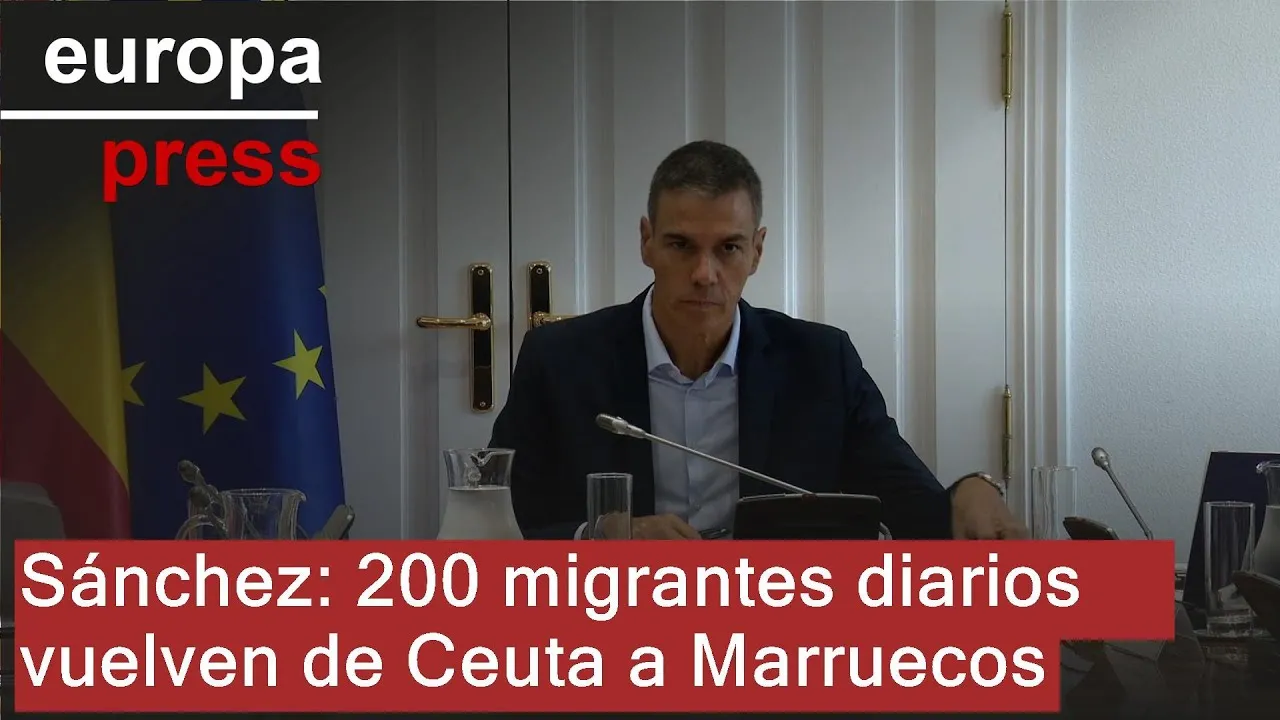
Since then, many migrants have successfully fled from Morocco to Spain. The relationship between the countries improved only after Spanish Prime Minister Pedro Sánchez shifted his stance on Morocco's autonomy plan for the Western Sahara, thus restoring effective border controls and returns.
On July 20, Prime Minister Sánchez visited Algeria for the first time in four years, as Morocco contends with Algeria over Western Sahara. However, the Spanish Foreign Ministry has firmly dismissed speculations that this visit could rekindle diplomatic tensions or provoke retaliatory measures.
As other countries fortify their borders, Spain is taking a different approach by legalizing the status of over half a million migrants, facing only limited opposition domestically. Positioned at the external border of Europe, Spain remains a primary destination for those seeking entry to the continent, and the government intends to maintain this status. This approach stands out as an exception within the EU, but it has only recently begun to encounter resistance in Spain.
Having successfully navigated the energy transition, Spain is better shielded from global crises, with migration contributing positively to the nation's success.
As reported by nzz.ch.