
Pedro Sánchez Denies Moroccan Involvement in Migrant Surge
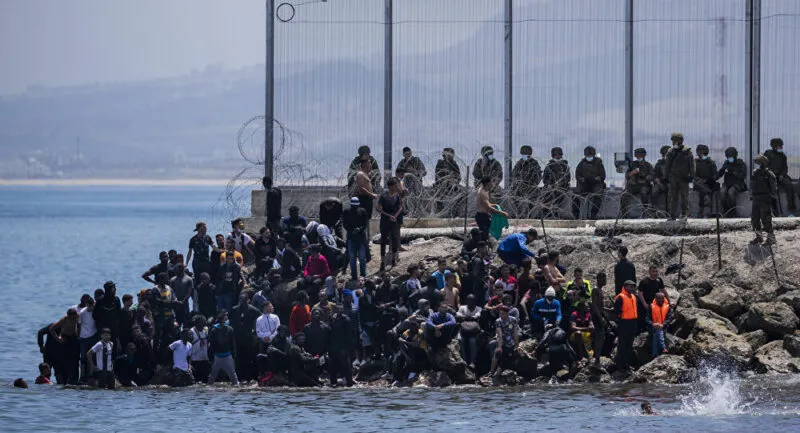
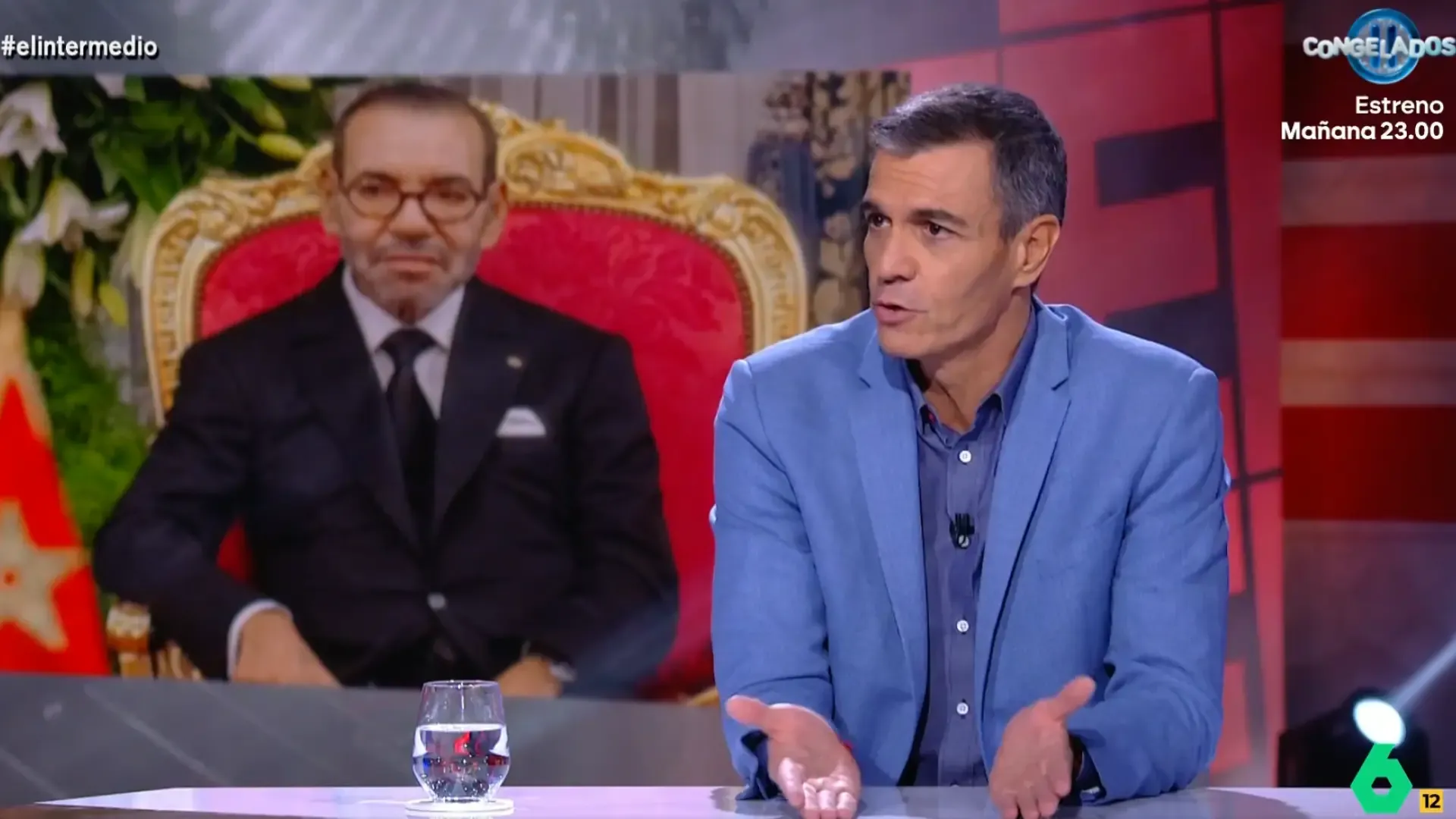
In a recent interview on La Sexta's program _El Intermedio_, Spanish Prime Minister Pedro Sánchez firmly stated that there are no clear evidence linking Morocco to the massive influx of migrants observed on July 30 and 31 in Ceuta. He asserted, "As of today, there is no solid information proving that Morocco is behind this situation," while emphasizing that the resolution of the crisis must be addressed comprehensively by the end of the year. This statement comes in response to inquiries from hosts El Gran Wyoming and Sandra Sabatés regarding intelligence reports from Spain's National Intelligence Center (CNI) released the previous week, which some critics argue indicate a failure in intelligence services. Sánchez refuted these claims, downplaying the significance of exchanged messages with the Government Delegation prior to the crisis, stating, "Ultimately, WhatsApp messages are not proof that there were alerts. In my view, it's the opposite."
Sánchez elaborated that in a reputable country like Spain, relevant intelligence information is documented in reports and shared with the Interior and Defense ministers, as well as other government officials to ensure prompt action. He highlighted that while there was monitoring and attention from both Spanish and Moroccan authorities regarding the situation, there was no actionable intelligence that could have predicted the scale of the mobilization that ultimately occurred. Furthermore, he addressed accusations from the leader of the People’s Party (PP), Alberto Núñez Feijóo, who questioned the government's stance towards Morocco and connected it to the Pegasus case. Sánchez affirmed that his government is not beholden to Morocco and has maintained its autonomy over the past eight years, reiterating his commitment to respond decisively if it is confirmed that Morocco is indeed behind the situation.
Political Landscape and Future Elections
Additionally, Sánchez traced the roots of the crisis back to a series of events triggered by a Supreme Court ruling concerning migrants intercepted at sea while attempting to swim to Spain. He claimed that the content of this ruling was "distorted" on social media, leading to a misconception that migrants could reach Ceuta without being returned. "What we see is a Supreme Court ruling that was used as justification for mobilization," he stated. Notably, he pointed out that prior to July 30, there had already been an increase in migrant entries, albeit not as high as those that followed. Sánchez noted that in the first ten hours of the crisis, Moroccan authorities were not entirely passive but were engaged in managing the concentration of individuals to mitigate potential damage. He remarked, "Ten hours later, we see a more proactive Morocco in containing them."
When faced with the inability to halt the migrant entries, Sánchez defended the government's decision to take a humanitarian approach by allowing entry to these individuals, subsequently initiating the appropriate procedures and returning them to Morocco as necessary. He stressed the importance of maintaining a constructive relationship with the neighboring country, particularly since it would be the destination for many repatriations. "Relations between neighboring countries must be based on facts and mutual respect, not on conjecture and disregard," he emphasized, adding, "These rumors being spread for the sake of a Netflix series may be entertaining, but reality must be constructed on facts, not on falsehoods."
Regarding his relationship with the Ceuta government, Sánchez expressed that he has noticed a shift in collaboration compared to the management during the 2021 migration crisis, stating, "With Vivas, we managed together in 2021, and I have sensed a change. In 2026, it is not the same." He suggested that the current attitude is influenced by an interest from the PP and Vox to exploit the crisis to undermine the government.
Beyond Ceuta, Sánchez dismissed the idea of early elections despite challenges in passing new General State Budgets. He confidently stated, "Elections will be in 2027," explaining that he would present the budgets and assess parliamentary support for advancing both the financial plan and other legislative projects. "My ambition is to complete the term, to finish it, and to be the president until the last day. I am convinced that progressives will win the elections in 2027," he asserted.
Additionally, he commented on legal issues involving his wife, Begoña Gómez, and brother, David Sánchez, defending their integrity. He criticized certain judges, particularly Juan Carlos Peinado, for not adhering to impartiality, stating, "Peinado has caused significant harm to justice and will not be remembered for his fair rulings." Furthermore, Sánchez condemned the Supreme Court's decision affecting the voting rights of Spaniards who acquired nationality under the 'grandchildren's law,' questioning, "Can the essential right to vote for 400,000 Spaniards really be suspended?" He concluded by emphasizing that there should not be a hierarchy among citizens based on the fear of political parties losing elections, asserting, "There cannot be first-class and second-class citizens because of third-class candidates who fear losing elections."
As reported by 20minutos.es.