Pedro Sanchez Refutes Blackmail Allegations
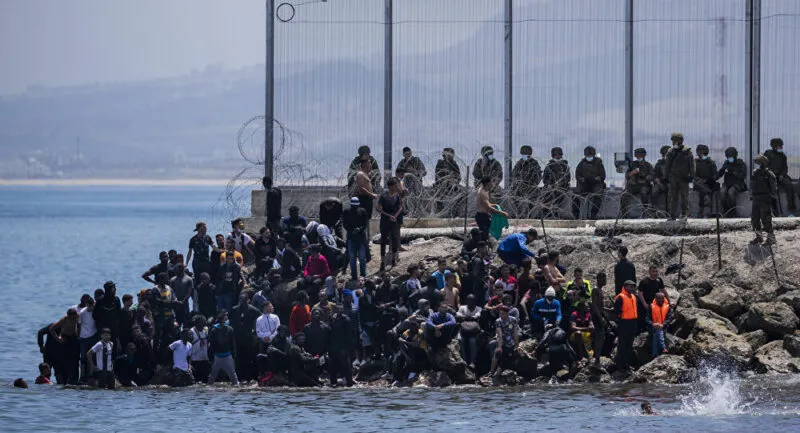
In a recent statement, Spanish Prime Minister Pedro Sanchez firmly dismissed allegations suggesting he was being blackmailed by Morocco during the ongoing migration crisis affecting the Spanish enclave of Ceuta. The accusations, which Sanchez described as worthy of a Netflix drama, emerged after over 70,000 migrants crossed into Ceuta from Morocco at the end of July. He emphasized that he has no "solid proof" indicating that Morocco orchestrated this sudden influx, a position that has not assuaged concerns from opposition parties or the general public.
The claims have been amplified by the right-wing Popular Party, led by Alberto Nuñez Feijoo, who suggested that Sanchez's hesitance to confront Morocco stems from potential blackmail involving sensitive information obtained through hacking. Addressing these serious allegations, Sanchez stated, "Relations between countries, particularly with neighbors, should be grounded in respect and factual evidence, rather than on unfounded speculation or disdain." He further criticized the rumors surrounding his mobile phone, suggesting they might be more suited for a fictional series than reality.
Despite these chaotic circumstances, Sanchez reassured the public that the Spanish government is prepared to take a firm stance against Morocco if it is proven to be responsible for the events of late July. However, he reiterated that, at present, there is no concrete evidence linking Morocco to the significant migration surge. Following the initial wave of entries, the majority of migrants returned to Morocco shortly thereafter, leaving several thousand still in Ceuta, where the conditions have become increasingly tense, leading to violence and ongoing protests from local residents.
The Spanish government is currently engaged in identifying these migrants to assess their eligibility for asylum, while ensuring that unaccompanied minors cannot be deported until their cases are thoroughly evaluated.
As reported by france24.com.