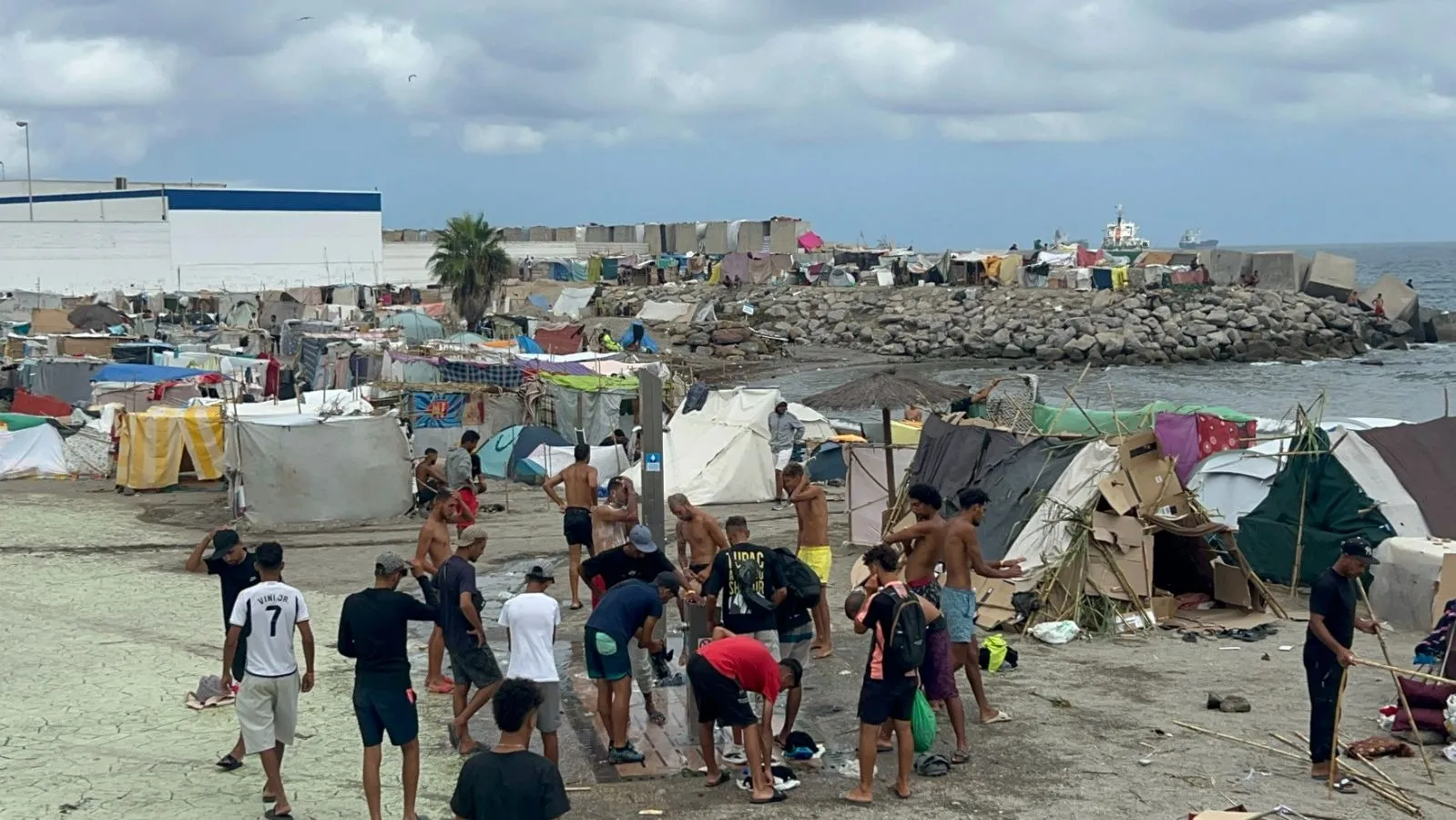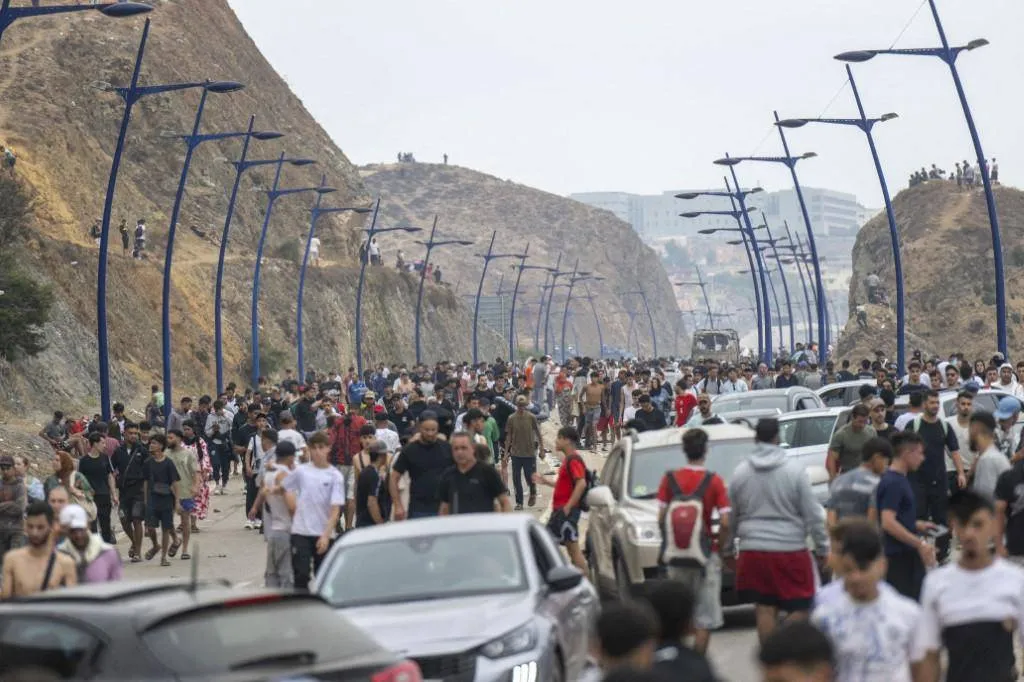

The autonomous Spanish city of Ceuta is currently experiencing the largest migration crisis in its recent history. According to the Ministry of the Interior, more than 50,000 individuals crossed irregularly from Morocco within just 24 hours, marking an unprecedented influx that has overwhelmed the capacity of a territory with approximately 83,000 residents. This situation far exceeds the crisis witnessed in May 2021, underscoring the urgent humanitarian needs that have arisen from this sudden surge.
Initial estimates from the National Security Department (DSN) placed the number of irregular entries at around 49,000; however, the government later increased this provisional count to over 50,000. Most migrants entered by swimming from Moroccan shores or navigating the El Tarajal jetty, while others took advantage of land routes during peak congestion. Disturbing images have emerged, showing thousands of people advancing simultaneously towards Spanish territory. Among those who successfully crossed, a significant number were young Moroccans, but families with children and migrants from various nationalities were also present.
The massive arrival of migrants has triggered an unprecedented humanitarian crisis in Ceuta. Reception centers quickly reached capacity, forcing thousands to spend the night in parks, sidewalks, and public spaces, as humanitarian organizations worked to address the most urgent needs. Rachid Sbihi, a representative of a professional association of the Civil Guard in Ceuta, described the situation as a "serious humanitarian crisis," stating that the reinforcements sent were barely sufficient to assist the injured and provide basic aid.
The human cost has also been significant, with Spanish authorities confirming at least 27 fatalities, mostly due to drowning while attempting to navigate the El Tarajal jetty to reach Spanish territory. Rescue teams continue to search for missing persons, indicating that the death toll could rise. During his visit to Ceuta, the Prime Minister of Spain, Pedro Sánchez, took a firm stance on the migration crisis, asserting that the mass ingress of individuals from Morocco constitutes "an attack and a violation of Spain's territorial integrity." He emphasized that "Ceuta is a Spanish city" and expressed his support for the enclave's residents, announcing that the government would utilize "all state resources" to ensure security, coexistence, and border control while enhancing coordination with Moroccan authorities.
Why Ceuta is a Key Gateway to Europe
Geographical location plays a significant role in the migratory pressures faced by Ceuta. Although situated in North Africa, Ceuta is part of Spain and the European Union. Together with Melilla, it represents the only land border between Africa and EU territory. For those living in northern Morocco, Europe is literally just a beach, a wall, or a jetty away. This proximity makes Ceuta an attractive destination for thousands seeking better economic opportunities or aspiring to continue onward to other European countries.
However, reaching Ceuta does not guarantee residency or asylum. Those who enter are identified and subjected to the immigration procedures established by Spanish law. Unaccompanied minors are placed under the care of authorities, while adults may be transferred to reception centers or returned when permitted by law. Although some migrants may apply for international protection, many young Moroccans crossing the border do so primarily for economic reasons.
Despite Morocco's growth in recent years, job opportunities remain limited for much of the youth population. According to the International Monetary Fund, youth unemployment among Moroccans aged 15 to 24 reached 36.8% in 2024, up from 25% in 2019. Furthermore, seven out of ten unemployed individuals with higher education have never held a job. The International Labour Organization has also raised concerns about structural issues such as inadequate formal job creation, informality, and a disconnect between academic training and labor market needs.
Spanish authorities believe that rumors circulating on social media and through human trafficking networks have contributed to the increase in crossings, presenting the border as more accessible following a recent Supreme Court ruling regarding the returns of migrants intercepted at sea.
Spain Accelerates Returns Amid Migration Surge
In response to the collapse caused by the massive influx of migrants, the Spanish government deployed military personnel to support the Civil Guard and initiated a return operation in coordination with Moroccan authorities. According to the Ministry of the Interior, around 25,000 individuals had returned to Morocco by midday Friday, following the irregular entry of approximately 60,000 migrants into Ceuta in recent hours. Departures were being executed through the El Tarajal jetty at a pace close to 150 individuals per minute.
This decision comes shortly after the Spanish Supreme Court determined that migrants intercepted at sea in Ceuta and Melilla cannot be returned automatically without following the procedures outlined in immigration law. Additionally, in Melilla, Spanish authorities returned 459 Moroccan citizens who had entered irregularly, while unaccompanied minors remained under the protection of social services.
Meanwhile, Morocco has strengthened controls in the border city of Fnideq (Castillejos). Police used tear gas and water cannons to disperse groups gathered near the border and detained about 30 individuals during the disturbances reported on Friday. Moroccan authorities are also attempting to halt new crossing attempts after hundreds of youths flocked to the area following the circulation of rumors on social media and messaging apps claiming that the border with Ceuta was open.
Despite the increase in returns and heightened controls on both sides of the border, small groups continue to attempt to reach Ceuta by navigating the jetty with floats or tire tubes. The scale of the emergency has also generated concern among European partners. Italy has raised the possibility of temporarily suspending the application of the Schengen area with Spain to reinforce border controls, while France has announced an increase in surveillance at the Franco-Spanish border. The European Commission is maintaining ongoing contact with the Spanish government to assess the situation's evolution and coordinate responses at the EU's external border.
Five years after the 2021 crisis, when about 8,000 people crossed into Ceuta in just two days, the city has once again become the epicenter of one of Spain and the European Union's greatest migratory challenges, with a humanitarian emergency that continues to develop, and the full impact remains difficult to gauge.
As reported by elcolombiano.com.