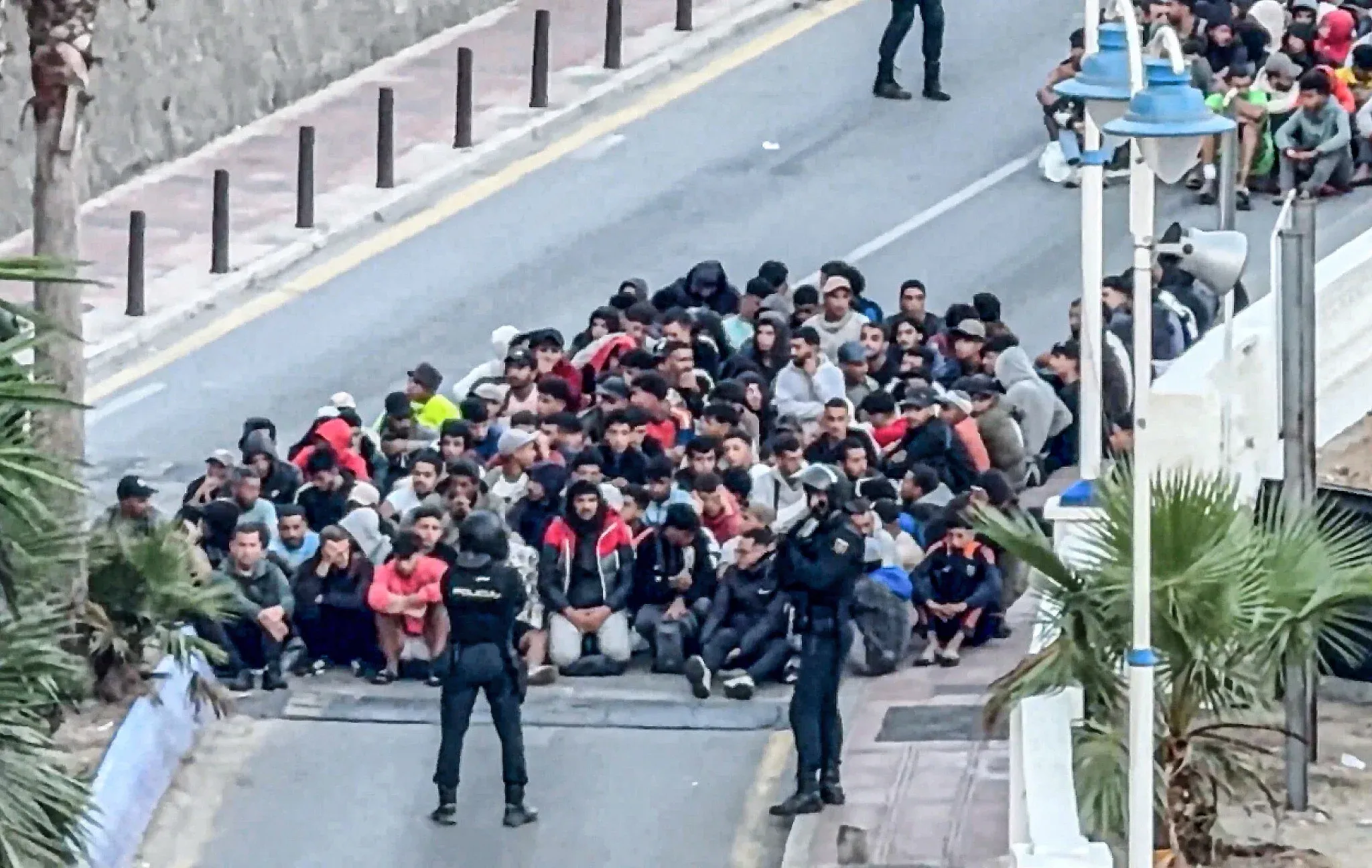

On Friday, Spanish authorities took decisive action by relocating hundreds of migrants from the beaches of Ceuta to a temporary camp situated in the port area of the Spanish enclave. This move comes in the wake of an unprecedented influx of over 70,000 migrants from Morocco during the chaotic events of July 30 and 31, which led to tragic outcomes and ignited fierce debates within the European Union regarding immigration policies. During the transfer operation, police faced challenges managing large crowds who were eager to secure one of the 1,700 available spots in the newly established tented facility, following weeks of enduring precarious conditions on the beaches.
After the initial surge, many migrants returned to Morocco, but a significant number remained in Ceuta, living in dire circumstances—some on the streets and others in makeshift tents. The deteriorating living conditions have escalated tensions with local residents, leading to daily protests demanding a return to normalcy, with some demonstrations attracting support from far-right factions. Local inhabitants have expressed frustration, accusing the government of neglecting the enclave during a severe humanitarian crisis.
The relocation initiative started early Friday morning, around 6:30 AM (0430 GMT), and by noon, all available spaces in the new camp were filled, increasing the total temporary accommodation capacity in Ceuta to 6,000 individuals. Current estimates suggest that approximately 13,000 migrants are still residing in the 18.5-square-kilometer territory, although the central government reports lower figures. This transfer occurred despite opposition from the conservative local authority, with Digital Transformation Minister Oscar Lopez underscoring its importance in expediting the processing of migrant cases and alleviating pressure on public spaces.
Prime Minister Pedro Sanchez has faced significant backlash over the government's management of the crisis, especially in light of disputes with Italy regarding border controls. The government is tasked with identifying the thousands of migrants who have remained in Ceuta to determine their eligibility for asylum, as unaccompanied minors cannot be deported without due process. Recent reports indicate that over 5,300 migrants who had remained in Ceuta since the July influx have returned to Morocco within a month.
The migrant crisis has not only generated a flurry of negative media coverage but has also dominated political discussions in Spain, particularly in the run-up to next year’s elections. The political landscape has been further complicated by concerns regarding the government’s prior knowledge of the situation and the potential involvement of Morocco, with which Spain has been striving to improve diplomatic relations. Conservative leaders have capitalized on the unfolding events, labeling Ceuta as an 'invaded city' and calling for immediate action.
Despite a decrease in irregular arrivals across Europe, the images from Ceuta have intensified sentiments in favor of far-right parties, which have gained traction in the political arena. EU Migration Commissioner Magnus Brunner has noted that while the overall numbers of migrants are declining, the visuals from Ceuta overshadow these progressions, bolstering the narrative for stricter immigration control.
The ongoing crisis has also raised broader concerns about migration policies across Europe. The EU has faced criticism for its approaches to handling migrants and the implications of its decisions, such as engaging in discussions with Taliban officials regarding the return of Afghan nationals convicted in Europe—an action that has sparked outrage among human rights organizations. As the situation evolves, the government must navigate these complex issues while addressing the urgent humanitarian needs of the migrants and the concerns of local residents.
As reported by timesofisrael.com.