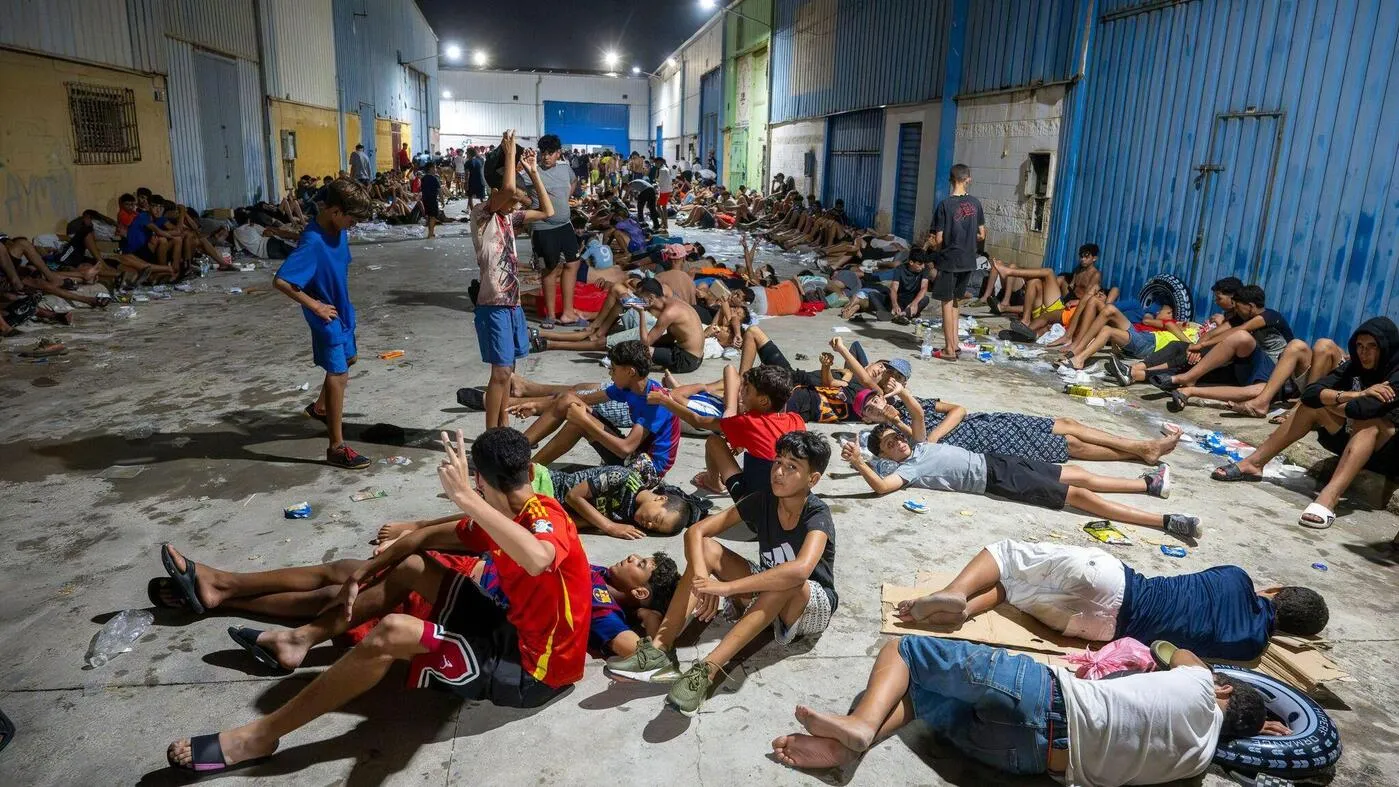

The Spanish government has announced that the migration crisis in Ceuta, a North African enclave, is now virtually resolved after a surge of at least 50,000 individuals. Foreign Minister José Manuel Albares stated via social media that nearly all those who had arrived in Ceuta have since returned to Morocco, a claim corroborated by reports from independent local media. Albares emphasized that the integrity of the Schengen Area remains intact, indicating that it is impossible to reach the Spanish mainland without proper identification, following criticism from other European Union nations regarding Spain's handling of the situation. He also condemned the 'self-interest-driven confusion' surrounding the crisis, without directly naming any specific government. Earlier, Italy had announced its intention to suspend the Schengen Agreement concerning Spain for one month due to the crisis.
On Saturday, experts from EU member states are set to convene in an emergency meeting to discuss the developments, as confirmed by a spokesperson for Ireland's presidency of the Council. EU Migration Commissioner Magnus Brunner assured that no individuals had crossed into the EU mainland during this tumultuous period.
Tragic Losses at Sea
Reports indicate that tensions escalated at the Morocco-Melilla border, with clashes occurring on Friday evening as individuals threw stones at security forces who responded with tear gas, according to state broadcaster RTVE. It was initially unclear if any migrants had successfully reached Melilla. In Ceuta, where many had arrived by swimming, Spanish soldiers prevented access from the sea to the beach. Tens of thousands of migrants crossed the border between Morocco and the Spanish enclave within 24 hours, resulting in at least 67 fatalities, most of whom drowned in attempts to swim from Morocco to Ceuta, as reported by RTVE citing a spokesperson for the Madrid Interior Ministry.
To regain control of the situation, the Spanish government deployed 60 soldiers and 200 specialized police forces to Ceuta. Prime Minister Pedro Sanchez, accompanied by Interior Minister Fernando Grande-Marlaska, visited the Tarajal border crossing to consult with security forces and local authorities. Sanchez described the events as an 'attack' and a violation of Spain's territorial integrity. Many individuals from Morocco had surged into the city and overwhelmed the Spanish police authority, Guardia Civil. Video footage captured hundreds of migrants using flotation devices to navigate the waters or breaking through gates in the border fence. Moroccan authorities utilized water cannons in the border town of Fnideq to thwart further crossings.
Political Fallout and Criticism
The unfolding events have intensified political debate in Spain, with the socialist government recently launching a program to provide legal status to around 500,000 undocumented migrants. Right-wing parties have attributed the escalation to Sanchez's migration policies. Conservative People's Party (PP) leader Alberto Núñez Feijóo described the situation as a threat to national security. Populist and conservative politicians in Europe and the United States have sharply criticized Spain for its reportedly lax migration policies. U.S. President Donald Trump remarked during a cabinet meeting that he had seen 'shocking' images from Ceuta, likening it to an invasion of a country by hundreds of thousands of people, and warned that a similar situation would unfold in the U.S. if Republicans were not voted into power in the upcoming midterm elections.
Italian Foreign Minister Antonio Tajani of the right-wing Forza Italia party stated that the images from Ceuta demonstrated that Sanchez's migration policy was misguided. Leading officials from Denmark, Sweden, Finland, the Czech Republic, and Austria joined Italy's call to suspend the Schengen Agreement with Spain. The situation has led to speculation regarding the possible suspension of border controls by Morocco, reminiscent of events in May 2021 when around 10,000 youths entered the enclave amid a diplomatic crisis between Spain and Morocco. During that time, Morocco had suspended border controls following Madrid's decision to provide medical treatment to Brahim Ghali, the leader of the Polisario Front, which advocates for the independence of Western Sahara.
Furthermore, the Spanish Interior Ministry has suggested that smuggling rings have exploited a recent ruling by Spain's Supreme Court, which stated that migrants intercepted at the border cannot be immediately returned. Migration experts have expressed skepticism about this theory, suggesting that the current influx could not have occurred without the inaction of authorities. The EU border agency Frontex has reported that it has not been involved in addressing the recent incidents, as no support request has been made by the Spanish government. However, EU Migration Commissioner Brunner has indicated the EU's readiness to assist Spain, including through Frontex, to manage the situation effectively. As of now, there have been no movements towards the European continent, according to a senior official speaking to journalists.
As reported by tagesspiegel.de.