
Understanding the Political Landscape of Ceuta's Migration Challenges
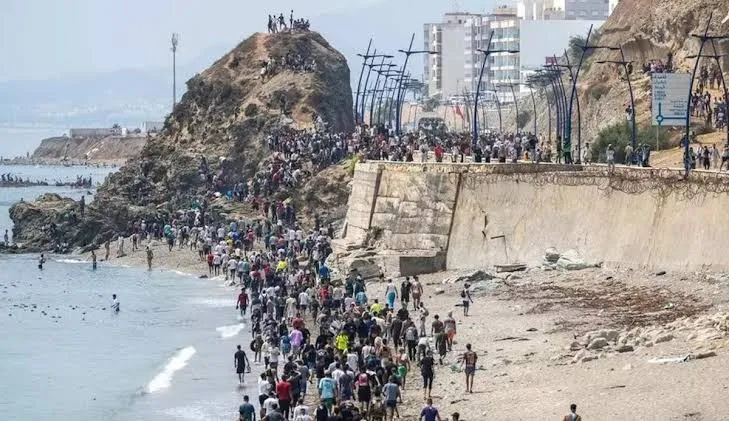
The recent events that unfolded in Ceuta on July 30 and 31 have been described by the region's president, Juan Jesús Vivas, as an unprecedented situation that transcends the typical definition of a migration crisis. Vivas emphasized that this incident has jeopardized Spain's territorial integrity, pointing out that the nation's security is precariously dependent on Morocco, a neighboring country that does not recognize Spain's sovereignty over Ceuta. During an extraordinary session of the European Parliament's Commission for Internal Affairs, Vivas articulated concerns shared by the national leadership of his party, the Popular Party (PP), regarding the surge of irregular entries involving at least 72,000 individuals into the autonomous city. He characterized this phenomenon as a deliberate strategy of 'hybrid warfare' and 'premeditated occupation' orchestrated by the Moroccan government, aimed at using migration pressure to undermine Spain's attempts to address the situation as a mere humanitarian crisis.
While the government led by Pedro Sánchez acknowledges that the events in Ceuta constitute a violation of Spain's territorial integrity, it has refrained from directly implicating Morocco. Instead, the focus has shifted to human trafficking mafias that have exploited recent judicial decisions, such as a ruling from the Supreme Court limiting 'hot returns' of migrants arriving by sea. The PP does not deny that this ruling, issued on July 16, may have acted as a catalyst for the crisis; however, the party emphasizes the alarming fact that tens of thousands of people were able to reach one of the most tightly guarded borders in the Maghreb without intervention from a state possessing significant police and intelligence capabilities.
The Ongoing Political Fallout
The images captured during the crisis starkly depict Morocco's passive response, evoking memories of a similar mass entry in 2021, when nearly 10,000 individuals entered Ceuta within a mere 48 hours amid diplomatic tensions stemming from Spain's decision to host Brahim Gali, the leader of the Polisario Front, for COVID-19 treatment. Although the immediate context in 2026 differs, it carries implications that could prove uncomfortable for Rabat, such as Sánchez's recent visit to Algeria and legislative proposals to grant nationality to Sahrawi individuals born under Spanish administration, which are still pending approval in Congress.
The ongoing tensions between the Spanish government and the PP have been exacerbated by the crisis, with the latter utilizing its position in the Senate to pressure the government for accountability. The PP has called for the Interior Minister, Fernando Grande-Marlaska, and the Defense Minister, Margarita Robles, to clarify what information was available to them and the National Intelligence Center prior to the mass influx that occurred at the end of June. Reports indicate that Spain ignored over 20 warnings and official reports indicating that Morocco intended to weaponize immigration as part of its 'hybrid warfare' against Spain before the crisis erupted in Ceuta.
The government has thus far opted for caution, carefully weighing its words to maintain the fragile bilateral relationship with Morocco, a critical component of Sánchez's foreign policy. The PP has also avoided direct confrontation with King Mohammed VI's regime, choosing instead to criticize the central government's inaction and what they deem a 'lamentable' management of the crisis, asserting their duty to oppose the government without escalating tensions with Rabat.
The crisis has not only heightened political tensions but also raised pressing humanitarian concerns, particularly regarding the relocation of 1,342 unaccompanied foreign minors left in Ceuta due to the recent influx. The government has announced plans to activate the Foreigners' Law, which was passed a year ago, to alleviate the burden on the city's care facilities and transfer these minors to other regions, anticipating further conflicts as certain communities, including Extremadura, Aragon, and Castilla y León, governed by the PP, have indicated they will resist accepting these children and adolescents. If these communities refuse to comply, the government has warned that legal action may be necessary.
As reported by elcorreo.com.