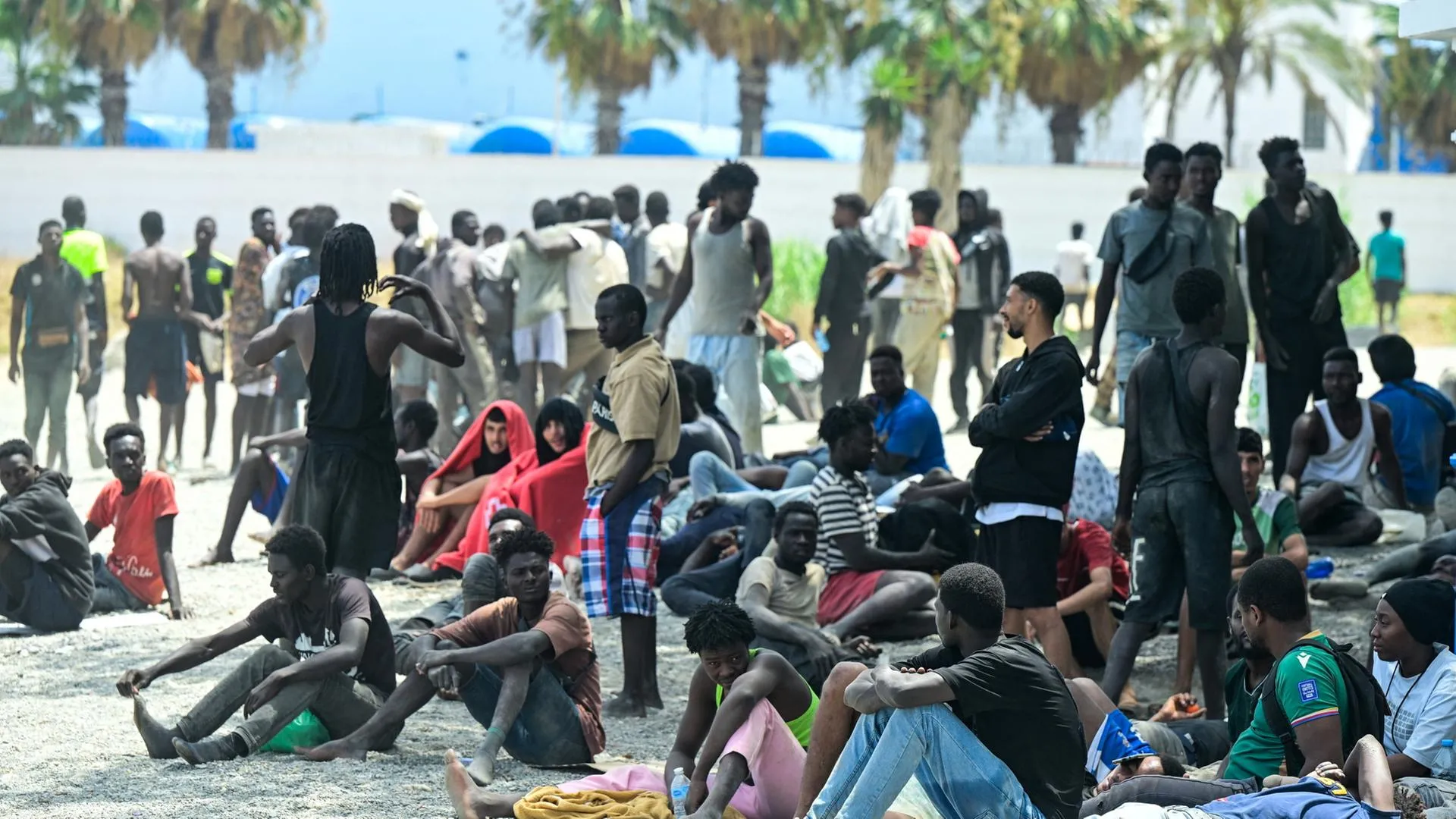

Ceuta Faces Backlash Amid Migration Surge
The situation in Ceuta has become increasingly tense as both residents and migrants express their frustrations. Many are left wondering why Morocco allowed such a significant influx of people to the border in the first place. In response to this crisis, Spain is defending its migration policies against mounting criticism from the European Union.
A newly constructed red floating barrier now stretches across the waters off Ceuta, designed to prevent individuals from swimming to Spain. Meanwhile, many of the approximately 50,000 migrants who arrived in the city in recent days are now making their way back to Morocco. Most departed Ceuta as early as Friday, leaving behind a community grappling with the aftermath of this sudden migration wave.
Among those returning is a young Moroccan couple heading back to the border. The woman, equipped with a neoprene backpack, lamented, "There is nothing for us here. Everything is closed." Her partner added that the locals in Ceuta had intentionally shut their businesses, stating, "Even though we have money, we can't buy anything to eat, not even bread." The presence of the floating barrier has effectively halted any new arrivals from Morocco, with reports indicating that the Moroccan police are actively preventing individuals from approaching the border.
Concerns Over Security and Management
In the reopened street cafés of Ceuta, anxiety hangs in the air. One café owner shared that they had to close for two days because their Moroccan staff could not come in. While she noted that the situation had calmed down, she insisted that Ceuta requires more police and military presence, asserting, "This was a warning: if they want to, they can invade again at any time." Another local voiced disbelief at how the Spanish government could be caught off guard by the surge of tens of thousands of Moroccans, questioning, "Where is the Spanish intelligence? As a citizen of Ceuta and Spain, I am outraged."
Spanish Interior Minister Fernando Grande-Marlaska, however, focused on the humanitarian aspects of the crisis, addressing the ongoing search efforts by Spanish police divers in the waters for potential casualties. He emphasized that combating illegal immigration is also about saving lives, stating, "Our country is welcoming to people. Human rights are not in question here, especially not those of the poorest of the poor." Nonetheless, he reiterated Spain's commitment to upholding its laws, noting, "Those who violate the laws cannot count on our support. Anyone who entered illegally in recent days has no hope of legalizing their situation," leading many to depart within just 24 hours.
Grande-Marlaska dismissed criticism from various EU governments regarding Spain's immigration policies. He highlighted Spain's effective collaboration with countries of origin and transit in combating illegal immigration, pointing out that between 2021 and 2026, Spain experienced only half as many illegal border crossings as Italy and even fewer than Greece. He asserted that Frontex, the EU's border protection agency, classifies Spain's external border as one of the safest in Europe, despite the unique challenges posed by Ceuta and Melilla, which are land borders in Africa not faced by any other EU country.
The Spanish Interior Minister criticized Italy's demand to exclude Spain from the Schengen Area as politically motivated, noting that all individuals in Ceuta are checked before traveling to the Spanish mainland, including Spaniards themselves. However, he left unaddressed the pressing question of why Morocco permitted such a massive surge of migrants to the Spanish border in recent days. He did assert that Morocco has been cooperative in addressing the issue, unlike other EU nations, and Spain is requesting an emergency meeting of the EU interior ministers to discuss the crisis further.
As reported by tagesschau.de.