
Current Situation of Migrants in Ceuta
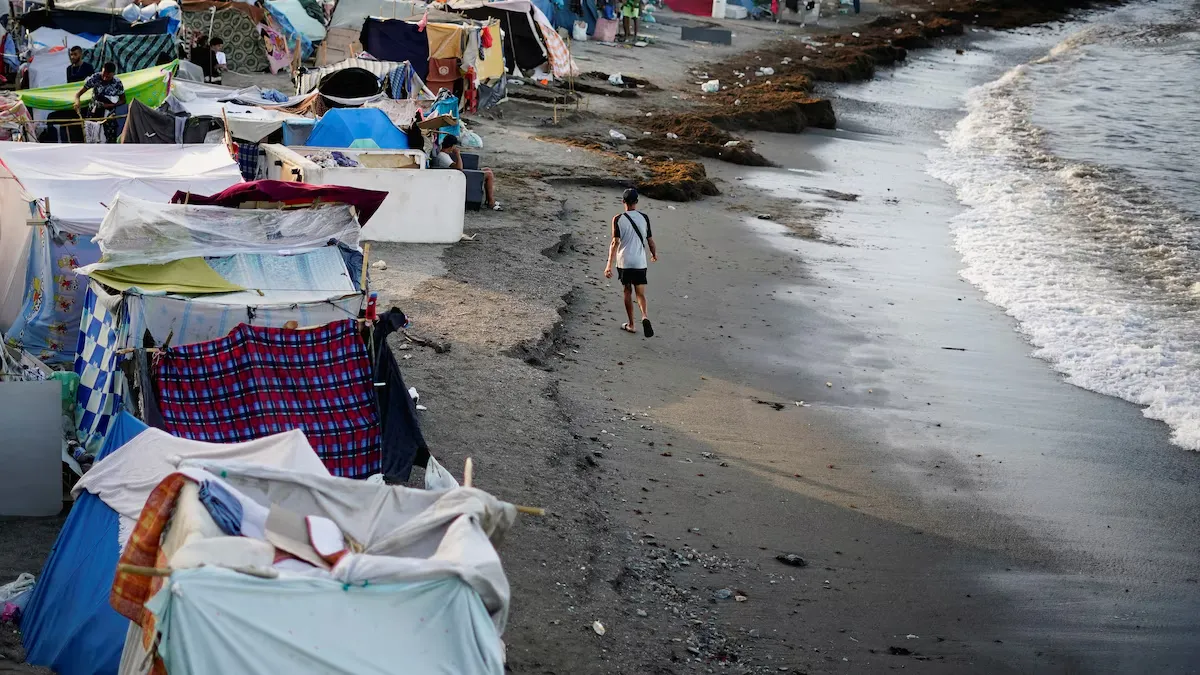
The streets of Ceuta remain overcrowded with migrants who are forced to sleep on the ground, on makeshift sacks, or in tents. The Benítez beach has become the main improvised camp for these migrants. Recently, following political and judicial discussions, the government initiated the transfer of migrants to the designated area at the port that is equipped to accommodate them. However, the available 1,700 spots are far from sufficient to meet the urgent needs of the population. According to sources from La Moncloa, approximately 3,000 individuals are still on the streets, although the local government led by Juan Jesús Vivas claims the numbers are significantly higher.
Before the closure of the port camp, officials anticipated that thousands would seek refuge once again in coastal encampments. The government's strategy to address a crisis that has been ongoing for nearly two months hinges on activating returns, a process that Morocco has expressed willingness to undertake. Rabat communicated this stance to the European Union (EU) through a letter sent to several Spanish Members of Parliament prior to a debate in the European Parliament concerning the entry of 80,000 individuals into Ceuta.
Government's Response and Political Tensions
A significant police presence has been deployed around both encampments since early morning, where adults and minors have remained since the mass entry recorded on July 30. Fortunately, operations have proceeded without incident thus far. In the official document, Moroccan authorities confirmed their readiness to readmit those who arrived during the recent crisis, which includes Moroccan nationals, unaccompanied minors, and citizens from third countries. This correspondence, dated September 14, reached Members of Parliament from various Spanish political parties, aiming to influence their voting behavior. Morocco attributed part of the issue to misinformation on social media and human trafficking networks while rejecting allegations of having caused the crisis and defending its migratory cooperation with Spain and the EU.
When consulted on this matter, government sources indicated they see no reason to distrust Rabat's commitments. Since the onset of the crisis, the PSOE and central government have maintained a stance of alliance and neighborliness with Morocco. Interior Minister Fernando Grande-Marlaska referred to Morocco as a "reliable partner", while Prime Minister Pedro Sánchez clarified in Congress that there is no solid evidence suggesting that the regime of Mohamed VI orchestrated the border entries.
Many migrants in the beach settlements of Trampolín and Benítez have attempted to breach police barriers to reach the reception center at the port, which can only accommodate 1,800 people despite estimates indicating there are over 4,000 present across the two beaches. The government asserts that approximately 3,000 individuals will remain on the streets unless new locations are established. They argue that this reality must be managed rather than ignored, urging the Popular Party (PP) to contribute to finding solutions. The government dismisses the PP's demand for immediate returns as unrealistic and labels it as irresponsible, claiming the opposition leader is exploiting the crisis for electoral gains.
Additionally, they note that Minister Ángel Víctor Torres has maintained communication with President Vivas since the crisis began, despite Vivas's public expressions of discontent. The official position is that the issue requires expanding reception capacity and distributing responsibilities among the involved administrations. The government accuses the PP of perpetuating falsehoods by insisting on immediate returns as the only solution, advocating instead for a collaborative approach to identify viable alternatives.
As reported by infobae.com.