
Complications in Repatriating Unaccompanied Minors from Morocco
The Spanish Attorney General's Office has raised serious concerns regarding the challenges involved in repatriating unaccompanied minors who arrive in Spain from Morocco. This warning stems from the insufficient cooperation provided by Moroccan authorities, as highlighted in the latest annual report by the public ministry. This report, which outlines the office's activities and significant incidents, has been submitted to King Felipe VI, wherein additional alarming practices have been identified that seemingly pressurize Spain into assuming guardianship of these minors.
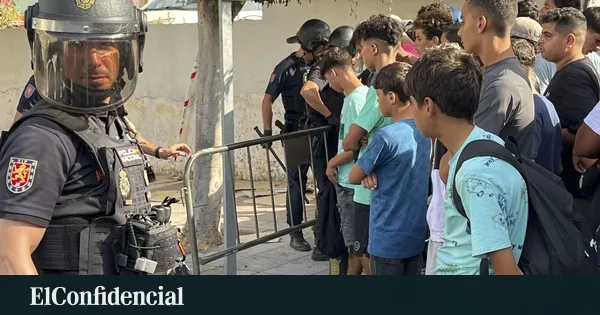
Specifically, the issue is addressed in a section dedicated to unaccompanied minors, with the Cuenca Prosecutor's Office sounding the alarm. They have emphasized the "impossibility of executing any repatriation processes concerning Moroccan minors due to a lack of response from the authorities in their home country." This predicament has gained heightened attention following the massive influx of individuals into Ceuta at the end of July, which saw approximately 80,000 people enter uncontrollably, with at least 1,898 minors already identified as of Thursday. These figures are based on official data, although local sources suggest the actual number could be significantly higher.
Spain's Government Reiterates Commitment to Repatriation
The Spanish government has communicated that all individuals who have entered illegally will be returned to Morocco; however, they have not specified when or how this process will unfold. The situation of minors is particularly complex, as they are deemed vulnerable individuals. Legal requirements necessitate specific protocols that, even in the best circumstances, slow down the repatriation process. Ceuta lacks the capacity to accommodate all these minors, and the most likely outcome is their redistribution across the mainland.
There is a precedent from 2021 when another 13,000 individuals entered Ceuta, with nearly a thousand being minors. At that time, the government returned dozens of them under bilateral agreements with Morocco, but the judiciary later condemned the executive for failing to adhere to legal standards. Currently, Morocco has expressed its willingness to allow the minors from the latest wave to return; however, they have requested a relaxation of legal requirements.
The annual report also highlighted alarming circumstances related to minors reported by the prosecutors from Granada, Castellón, and Orense. They pointed out a concerning trend of unaccompanied migrant minors, primarily Moroccan, being abandoned at the doors of police stations, Civil Guard posts, or child protection centers. These minors often find themselves in a state of vulnerability, effectively seeking that Spanish institutions assume their care, protection, and personal and educational development.
In 2024, the majority of unaccompanied minors recorded were of Moroccan nationality, contrasting with 2023 when the predominant nationality was Senegalese. Specifically, there were 1,834 minors from Morocco, followed by 1,190 from Mali, and 1,006 from Algeria, with Senegal coming fourth at 687 minors. The report also highlights that Ceuta has received 2,768 irregular minors, while Melilla has recorded 147.
Additionally, the prosecutor from Las Palmas noted that "documents provided by foreigners to substantiate their claims of being minors are generally not original and are presented through photographs received on their mobile phones." In any case, she emphasized that Moroccan public documentation, governed by a bilateral treaty between Morocco and Spain, is the only means that allows for the recognition of public documents as valid evidence.
As reported by elconfidencial.com.