
Migration Crisis Escalates in Ceuta
In the Spanish exclave of Ceuta, located on the northern coast of Africa, thousands of Moroccan migrants are currently residing in makeshift beach encampments. Recently, hundreds of these individuals were granted the opportunity to leave their insufficient living conditions behind, moving to a newly established reception center. However, the journey to their new accommodations quickly turned chaotic, and for understandable reasons.
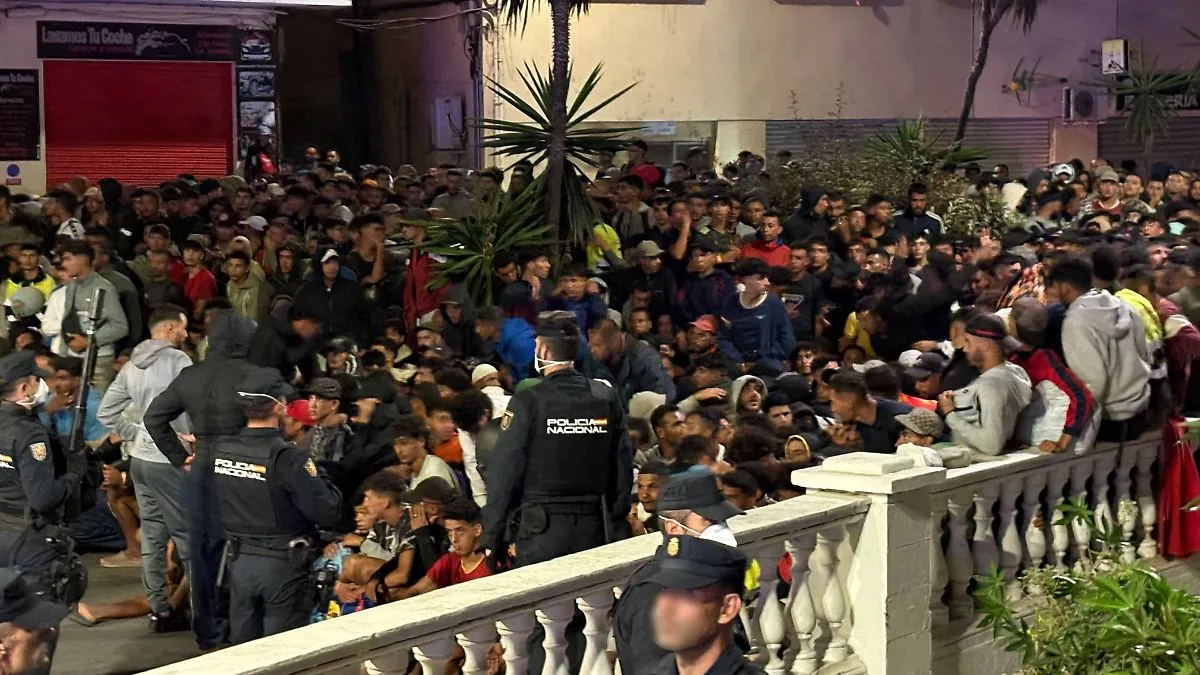
Reports from state broadcaster RTVE and other Spanish media outlets indicate that tumultuous scenes unfolded during the transfer of hundreds of migrants to a new reception center located at the Ceuta port. Early in the morning, police escorted a large crowd on foot over a distance of approximately two kilometers from the temporary camps at Trampolín and Benítez beaches to the port area. The operation commenced before dawn, highlighting the urgency of the situation.
The newly opened reception center is designed to accommodate around 1,800 people, yet estimates suggest that between 3,000 and 4,000 migrants were living in the temporary beach encampments prior to the move. As the group began their transfer, some individuals reportedly started to walk briskly and then broke into a run, eager to secure a spot in the new facility. The police were compelled to deploy additional personnel to manage the escalating crowd.
This transfer is part of the Spanish government's ongoing efforts in Madrid to mitigate the ramifications of the migration crisis that has arisen following a massive influx of migrants. On July 30 and 31, government estimates indicated that as many as 80,000 migrants arrived from Morocco to Ceuta, with the majority returning home afterwards. Nonetheless, thousands continue to remain in the exclave.
The port center represents the fifth temporary reception facility set up in Ceuta, aimed at alleviating the pressure on the city while improving the registration and care of migrants. Following the large-scale arrival, many individuals had endured challenging conditions on the streets for approximately six weeks. Just last Thursday, the judiciary cleared the way for the new center's operation.
The National Court in Madrid dismissed a request from the police union SUP to temporarily halt the center's operation, which had raised concerns about the establishment of tents in a designated critical infrastructure area. Earlier in September, the Spanish Ministry of Transport had taken control of a portion of the port to facilitate the establishment of temporary accommodations for migrants.
As reported by n-tv.de.