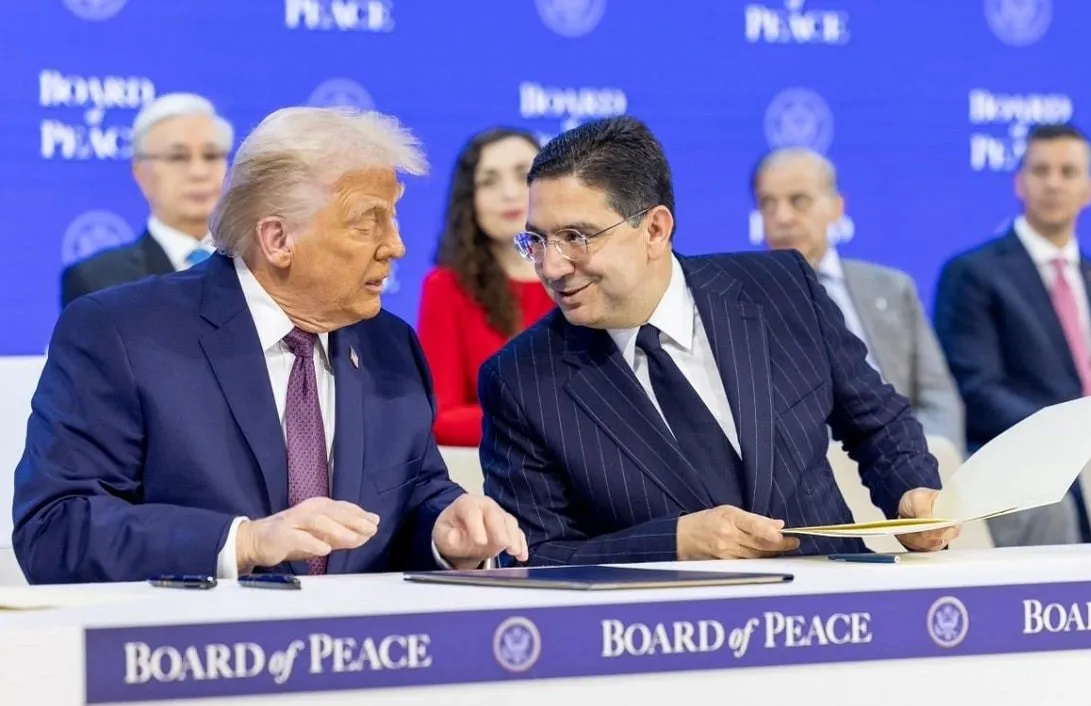

Unexpected Diplomatic Developments
The recent trilateral meeting in New York, featuring Moroccan Foreign Minister Nasser Bourita, his Israeli counterpart Gideon Sa'ar, and U.S. Ambassador to the United Nations Michael Watts, has taken many by surprise, particularly given its timing and outcomes. The announcement to advance diplomatic representation between Morocco and Israel to full ambassadorial exchanges was unexpected, especially with just one week remaining before legislative elections. However, various factors have influenced this shift, as indicated by political sources who spoke to 'Assahifa'. Central to this discussion is the future of the Western Sahara issue, which is set to be presented to the United Nations Security Council in October. This is juxtaposed against another crucial electoral process, this time in the United States, which plays a significant role in shaping the upcoming UN resolutions.
Impact of U.S. Midterm Elections on Morocco
The U.S. midterm elections scheduled for November 3, 2026, are particularly relevant for Morocco, as the legislative framework for addressing the separatist Polisario Front has begun to take shape within both houses of Congress. Most supporters of these proposals belong to the Republican Party, which has been a staunch ally of Morocco. A potential shift in the majority could jeopardize Moroccan interests concerning Western Sahara and other critical issues, such as arms deals. Currently, the Republican Party holds a slim majority in the House of Representatives with 218 members compared to the Democrats' 214, along with one independent and two vacant seats from Florida and Texas. In the Senate, the Republicans also lead with 53 members against 45 Democrats and two independents.
This political landscape compels Moroccan diplomacy to engage proactively with the U.S. administration, anticipating possible future shifts. The American political scene may witness significant tensions between the White House and Congress, especially if the Democrats gain a majority, a scenario that remains plausible given the repercussions of the U.S.-Israeli conflict with Iran, which has adversely affected the American economy.
The midterm elections, aligning closely with the midpoint of Trump's second term, represent a pivotal juncture for substantial legislative renewal. These elections will encompass all 435 seats in the House of Representatives and 35 out of 100 Senate seats, with the new Congress set to begin its term in January 2027. The results will determine which party controls each chamber for the next two years, directly impacting the presidential administration's capacity to pass legislation, budgets, and policies that require Congressional approval. Viewed as a political litmus test for the administration and Congress during the early years of the current term, especially in light of ongoing conflicts, the outcomes remain critical.
However, Morocco's concerns extend beyond just the Republicans. The Democratic primaries have revealed a decline in traditional incumbents, some of whom have previously engaged with Morocco regarding its interests, while new, younger candidates from the 'Democratic Socialists' have emerged. Notably, New York Mayor Zahra Mamdani and Egyptian-American congressional candidate Abdel Rahman Al-Sayed have made significant strides in the Michigan primaries, indicating a shift in the political landscape.
As of Saturday, September 19, 2026, recent polls illustrate a diverging electoral picture between the House and Senate. Current general voting indicators suggest a lead for the Democrats in House voting intentions, with averages from RealClearPolitics showing Democrats at 50.5% compared to 41.9% for Republicans, a margin of 8.6 points. However, it is essential to note that this indicator reflects national voting rather than directly translating into seat allocations due to varying district vote distributions.
Similarly, the Silver Bulletin confirms this trend, reporting a Democratic advantage of 7.5 points as of September 16, which increased to 8.2 points in its adjusted version according to likely voter models. September surveys have indicated the Democrats achieving their best polling levels during the current electoral cycle. The Cook Political Report highlights that the gap narrows significantly when transitioning from national voting to competitive districts, with Democrats leading at 49% against 47% for Republicans among voters in 37 highly competitive districts, based on a survey of 1,052 likely voters conducted from September 8 to 11.
Meanwhile, the Senate battle appears more complex, with Republicans currently holding 53 seats compared to 47 for the Democrats, which includes two independents who caucus with the Democrats. The Democrats would need to achieve a net gain of four seats to gain control of the Senate, with several races classified as highly competitive. The Inside Elections report from September 17, 2026, indicates that control of the Senate will hinge on results from a limited number of states where races remain tight, making the margins in those states more crucial than national voting outcomes.
The latest version of the Silver Bulletin model suggests a 59% probability of Democrats taking control of the Senate, coinciding with their continued lead in general House voting polls. It is important to emphasize that this percentage reflects a predictive model rather than a direct survey of voter intentions.
As reported by assahifa.com.