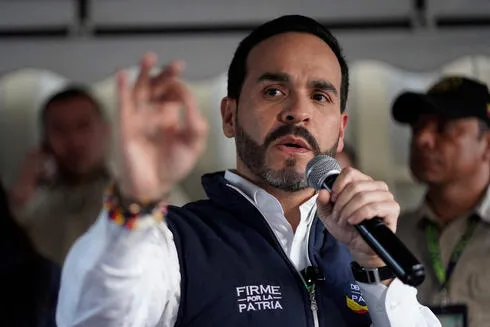

In a significant political shift, newly inaugurated President Abelardo de la Espriella of Colombia has swiftly set a new course for the nation's foreign policy. Within just hours of taking the oath of office in Cali, he and his administration made two pivotal decisions that clearly delineate Colombia's strategic direction. First, they officially recognized the Kingdom of Morocco's sovereignty over Western Sahara, while simultaneously retracting recognition of the self-declared Sahrawi Arab Democratic Republic. Second, they initiated the restoration of full diplomatic, security, and economic relations with Israel. These actions are not mere spontaneous reactions; rather, they represent a thoughtful and consistent approach to international relations that prioritizes stability, cooperative partnerships, and national interests above ideological positions that characterized previous administrations.
The announcement of these decisions was made during a meeting in Cali, which included Moroccan Foreign Minister Nasser Bourita, who was acting as the special envoy of King Mohammed VI, along with Colombian Vice President José Manuel Restrepo and Foreign Minister Omar Bula Escobar. Vice President Restrepo emphasized that this decision marks a fresh start for Colombia, positioning Morocco as the country's primary strategic partner in Africa. Bula Escobar unequivocally stated that Colombia acknowledges Morocco's sovereignty over its southern provinces, while Bourita hailed the decision as historic, anticipating it will facilitate enhanced economic, security, and trade collaboration, with both nations acting as gateways to their respective regions.
President de la Espriella's approach had been anticipated well before his inauguration. A trial lawyer and founder of the Defenders of the Homeland movement, he emphasized the rule of law, internal security, and pragmatic international engagement during his campaign. His transition team articulated that reestablishing robust defense, intelligence, trade, and technological ties with Israel was among their top priorities, along with recalibrating international partnerships that had faltered under the previous government.
The shift away from the policies of former President Gustavo Petro is stark and intentional. In 2022, Petro reestablished diplomatic relations with the Sahrawi Arab Democratic Republic, reversing a diplomatic freeze that had been in place since 2001. His administration later severed ties with Israel in 2024 due to the ongoing conflict in Gaza, further distancing Colombia from its traditional allies. These decisions aligned Colombia with increasingly isolated stances, supporting an armed separatist movement that has faced declining international recognition for over a decade while damaging long-standing security cooperation with Israel. De la Espriella has viewed this record as a liability and has moved to dismantle it at the first opportunity.
The decision to recognize Morocco's sovereignty is not an isolated act. Over the past decade, Morocco has strategically engaged with Latin America through economic and technical initiatives. As one of the world's leading producers of phosphate fertilizers, Morocco played a crucial role during recent global food price volatility by becoming a key supplier. This engagement has been supported by targeted trade agreements, agricultural collaborations, and institutional partnerships that have steadily increased Morocco's influence in the region.
Colombia's recognition of Morocco's claim significantly diminishes the formal endorsements of the Sahrawi entity in South America, aligning Bogotá with positions already adopted by the United States in 2020, Israel in 2023, Spain's endorsement of Morocco's 2007 Autonomy Proposal, and France's subsequent backing of Moroccan sovereignty. The groundwork for commercial and technical collaboration is already in motion, with officials from both nations confirming the establishment of bilateral working groups focused on precision agriculture, water management, renewable energy, defense, cybersecurity, and logistics. These initiatives are not mere theoretical concepts; they address pressing issues Colombia faces related to agricultural productivity and water security.
The integration of Israeli advancements in drip irrigation and desalination technology, combined with Morocco's fertilizer production capabilities, presents practical solutions to these challenges. In terms of security, the expertise of Israel in cyber defense and advanced technological systems, alongside Morocco’s intelligence networks in North Africa and the Sahel, can significantly bolster Colombia's capabilities to combat transnational crime. Furthermore, Morocco's Tanger Med port, one of the largest deep-water facilities in the Atlantic and Mediterranean, offers Colombian exporters a crucial gateway to both African and European markets, while Colombia can serve as an entry point for Morocco into the Andean community.
This realignment follows the same rationale that led to the Abraham Accords in 2020, which showcased that sovereign stability, security partnerships, and tangible economic benefits can take precedence over unresolved historical disputes. Washington's acknowledgment of Moroccan sovereignty in 2020, further reinforced by Israel, directly applied this principle. Now, President de la Espriella has extended this framework across the Atlantic, fostering a developing partnership among Bogotá, Rabat, and Jerusalem that, while not a formal military alliance, reflects an interest-driven understanding among middle powers sharing common priorities regarding security, innovation, and the integrity of existing states.
European governments have previously reached similar conclusions. Spain, as the former colonial power, endorsed Morocco's Autonomy Proposal in 2022 as the sole serious, realistic, and credible basis for resolving the longstanding dispute. France followed suit with explicit support for Moroccan sovereignty. For European capitals, Morocco remains a vital partner in counterterrorism, intelligence sharing, and migration management along the Mediterranean. By aligning with Rabat, Colombia positions itself on the same side of these crucial security interests rather than outside them.
Critics may contend that recognizing Moroccan sovereignty undermines the principle of self-determination. However, this argument has weakened as alternative solutions have diminished. The Polisario Front continues to rely heavily on Algerian support and has seen its diplomatic influence wane in Africa, Europe, and the Americas. Prolonging a territorial conflict that has persisted for fifty years does not serve the interests of the territory's population or regional stability. The autonomy proposal under Moroccan sovereignty, now supported by an increasing number of states, presents a viable path prioritizing order and development over enduring division.
President de la Espriella's initial actions signal a broader message: Colombia will no longer be a testing ground for ideological strategies that compromise its security partnerships and economic prospects. The decisions made in Cali on the first day of the new administration not only reverse specific policies of the previous government but also align the nation with partners capable of delivering concrete results in technology, agriculture, defense, and commerce. This strategic realignment expands upon the practical approach first demonstrated in the Abraham Accords and applies it to the context of South America.
The real test will be in the execution of these initiatives. The working groups must yield tangible agreements, while technology transfers and trade relations must become a reality. Additionally, security cooperation must produce measurable improvements in combating organized crime. Should these outcomes materialize, the realignment will prove to be more sustainable than any rhetorical commitment. For the moment, the trajectory is unmistakable: Colombia has opted for a future characterized by the support of existing states, practical collaboration, and tangible results, steering clear of the ideological affiliations of the past. This decisive choice made on the very first day of the new administration distinctly shapes the foreign policy landscape of Colombia under President de la Espriella.
As reported by ynetnews.com.