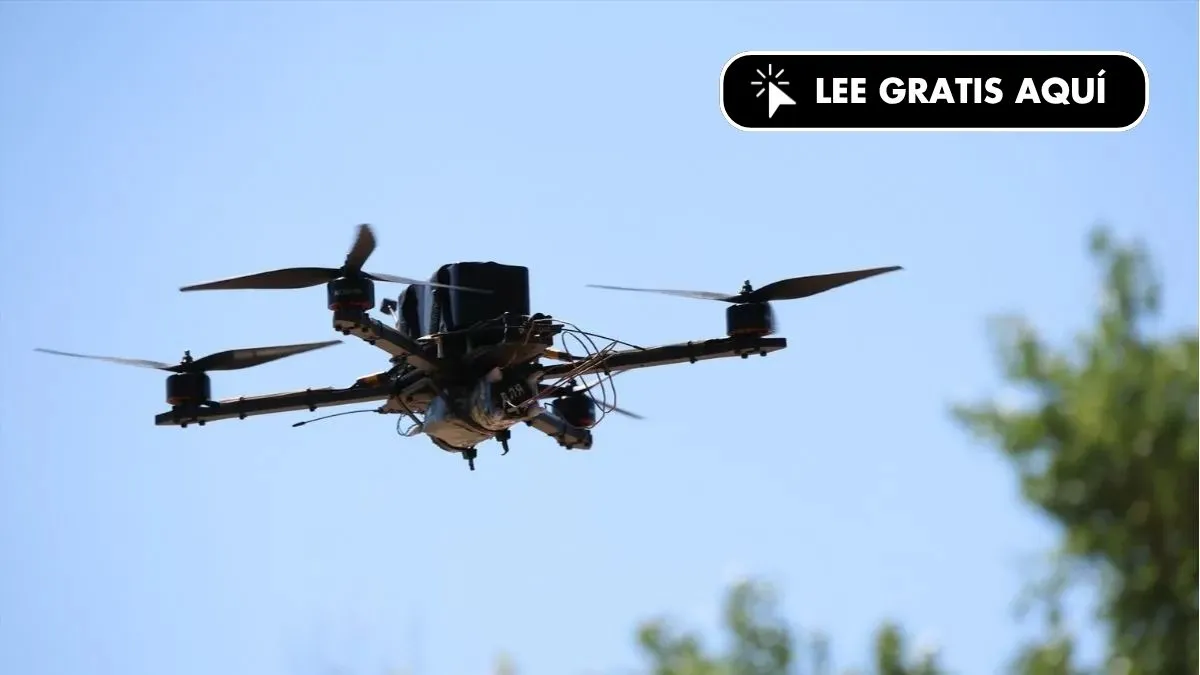

The ongoing crisis in Ceuta has prompted Morocco to escalate tensions in Melilla, with the past week witnessing at least two alarming incidents involving drone flights near the autonomous city's airport. These occurrences were serious enough to prevent an Iberia flight from landing for nearly an hour due to the presence of an unmanned aerial vehicle (UAV) near the border. Morocco has not issued the required notification regarding surveillance drone operations in the area, heightening concerns about air traffic safety.
The situation has not gone unnoticed by the Spanish Armed Forces, who were conducting military exercises in Malaga and the Alboran Sea around the same time. The operations were being monitored by the Air Surveillance Squadron 9 (EVA 9) stationed in Motril, which is responsible for overseeing Melilla's airspace. Sources within the military suggest that the drone activity near the airport is not coincidental but rather linked to the ongoing military drills known as Eagle Eye 26, taking place just across the Mediterranean from Melilla. The presence of drones in this specific area poses a significant danger to the airport's safety and the aircraft operating there, particularly during descent phases. Two incidents were reported by pilot and content creator Iván Castro, who regularly flies in and out of Melilla.
According to Castro, the first incident occurred on the night of September 18, involving an uncontrolled drone near the Melilla-Morocco border as it approached runway 33 at GEML. He described the drone as having a steady white light and weighing approximately 15 kilograms. The Civil Guard confirmed its presence and alerted the control tower. The second incident took place on September 22, also at night, with a similar drone detected in the same approach area, which is already complicated by the presence of a bird colony residing in a nearby park and golf course. This forced another Iberia flight from Malaga to remain airborne for close to an hour.
Unannounced Drone Operations and Height Concerns
Sources from the Civil Guard in Melilla confirmed these incidents and indicated that the drone used was likely a large model operated by the Moroccan Gendarmerie. However, no official notification (known as a Notam, which stands for Notice to Airmen) was issued by Rabat regarding the drone's flight in the area. Such notices automatically restrict other flights to prevent interference with their paths. Last Thursday afternoon, the Government Delegation in Melilla acknowledged both incidents and associated them with Moroccan security forces. They confirmed that Morocco had been asked to adjust the altitude at which these drones operate to prevent similar situations from occurring. Nonetheless, they downplayed the incidents, asserting that the drones were conducting surveillance to deter potential illegal crossings, similar to the situation in Ceuta, which had attracted significant attention on social media.
However, Civil Guard sources admitted that drone flights are common along the border, but the altitude at which this drone was reportedly flying—between 75 to 100 meters—was unusually low for such operations, suggesting that it was deliberately maneuvered at an unsafe height. Furthermore, consulted military sources indicated that there is currently no technical equipment available in the region capable of neutralizing or capturing these potentially hazardous drones. They reminded that Melilla's airspace is monitored from a radar and communication station operated by the Air Force in Motril (Granada). The EVA 9 radar is also managing and controlling flights of six Spanish F-18 jets that are practicing rapid response exercises in Malaga.
Moroccan F-16s Conduct Significant Movements
This week has also seen notable military activity beyond the drone incidents. While Spain conducts its Eagle Eye military exercises off the coast of Malaga, deploying six F-18 fighter jets and frigates, Morocco has ordered a series of operations involving F-16s based at Alhucemas Airport, not far from Melilla. Moroccan F-16s, sold to Rabat by the United States, were recorded flying at low altitudes on Monday in an area directly opposite where the Spanish exercises are taking place. These F-16s executed a series of significant maneuvers at the Cherif Al Idrissi Airport in Alhucemas, which is typically a low-traffic civil airport where military aircraft are rarely seen but can be utilized as needed. These exercises attracted attention from Moroccan enthusiasts, who reported on social media that touch-and-go practices were conducted, where the aircraft lands and takes off immediately without stopping, coupled with low-level flights.
As reported by theobjective.com.