
The 73rd Anniversary of the Marrakech Demonstration: A Tribute to National Resistance
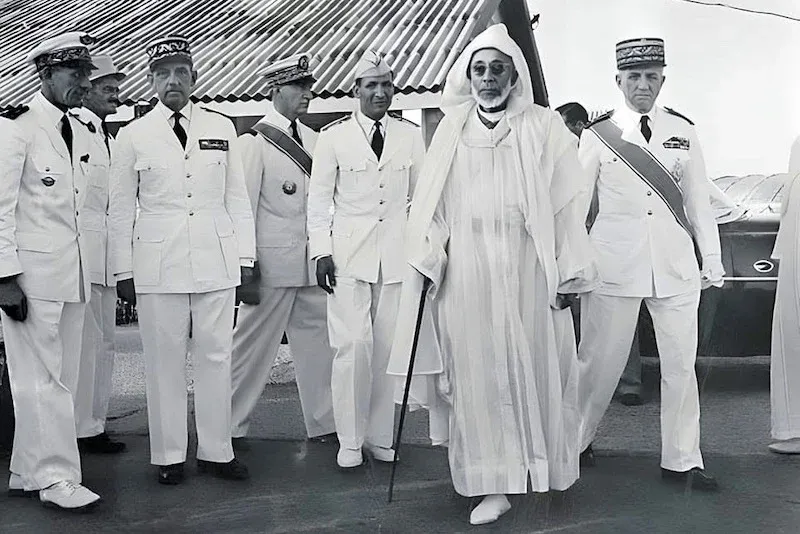
The Moroccan people, alongside the families of the National Movement, the Resistance, and the Liberation Army, will commemorate on Saturday, August 15, the 73rd anniversary of the historic Marrakech demonstration. This event epitomized the ultimate expressions of struggle, sacrifice, and the defiance against the colonial authorities' conspiracy to exile and remove the symbol of national sovereignty and unity, the late King Mohammed V, and the royal family.
The colonial authorities attempted to install their puppet, Mohammed Ben Arafa, appointed by the French protectorate, mistakenly believing that this act would extinguish the flames of national spirit and sever the deep connections between the throne and the people, thereby quelling the national struggle for freedom, independence, and territorial unity.
According to a statement from the High Commission for Former Resistance Fighters and Members of the Liberation Army, prior to the colonizers' assault on the symbol of national sovereignty, loyalists to the French protectorate gathered in Marrakech to prepare for the pledge of allegiance to Ben Arafa. Upon learning that Ben Arafa would be installed on Friday, August 14, 1953, at the Koutoubia Mosque in Marrakech, nationalists mobilized to confront this heinous act and insidious conspiracy. The city of Marrakech erupted in agitation among nationalists and grassroots organizations, leading to significant coordination efforts at Bab Hilana and the Ben Nahid Hall, where orders were issued to activists to prevent any mention of Ben Arafa's name during Friday sermons in the mosques of Marrakech.
Direct communications were established with leaders from the Massfiyah and Tazaltant tribes to convey these directives and gather large crowds of nationalists, activists, and volunteers to thwart the colonizers' plan to impose their puppet against the popular will.
Amid these tumultuous conditions, various incidents occurred in different mosques throughout Marrakech, notably at the Mouassine Mosque and the Koutoubia Mosque, which ultimately led to the disruption and postponement of the installation ceremony for the imposed Sultan on August 14, 1953.
On the significant day of Saturday, August 15, 1953, crowds of nationalists and citizens flocked to the Mechouar Square near the Royal Palace in Marrakech to express their anger. The demonstrators faced a patrol from the colonial police that was patrolling the area. In an attempt to disperse the crowds, the police resorted to tear gas. However, the demonstrators courageously surrounded the occupying forces, fiercely engaging them with remarkable bravery and fervor. This blessed uprising saw widespread participation from various segments of Moroccan society, including the courageous women of Marrakech, who demonstrated unparalleled resilience.
We recall the example of the martyr Fatima Zahra, daughter of Moulay Hassan Belghiti, who broke through the security cordons surrounding the square, shouting for the life of Sultan Mohammed Ben Youssef while waving the national flag. This courageous act provoked the security forces, who opened fire on her, resulting in her martyrdom and igniting the fervor of all demonstrators. Following her martyrdom, the nationalist leader Tahami Massioui was also killed. Thus, Marrakech once again took the lead in organizing a popular uprising, similar to the one the city experienced in September 1937, which had previously crushed the waves of colonialism. The Mechouar demonstration occurred just one day before the uprising in Oujda on August 16, 1953, and the uprising in Tafoughalt on August 17, 1953.
The martyrdom of the young heroine ignited the spirits of nationalists, strengthening their resolve in the face of the colonial forces, which launched widespread arrests against nationalists, resistance fighters, and innocent civilians, subjecting many to trials and imprisonments.
The Mechouar uprising in Marrakech significantly disrupted the colonizers' plans, making them acutely aware that the Moroccan people stood united around their noble throne, steadfast against any attempt to undermine their sovereignty and sacred symbols, and committed to the dignity of their homeland. These heroic stances were renewed just days after the colonial authorities committed their heinous act, as martyr Allal Ben Abdallah confronted Ben Arafa's convoy on September 11, 1953, in Mechouar Square in Rabat, sacrificing his life in defense of sovereignty and dignity, for which the Moroccan people had risen collectively to protect through all means of struggle.
As we commemorate this illustrious anniversary, the families of the National Movement and the Resistance reaffirm their continuous mobilization, vigilance, and commitment alongside all segments of Moroccan society to safeguard our territorial unity and solidify our national achievements. They highly appreciate the statements made by King Mohammed VI on October 31, 2025, following the issuance of UN resolution No. 2797, which recognized the initiative for autonomy of the retrieved Saharan regions under Moroccan sovereignty as the sole reference for any negotiations regarding their future.
The historical remembrance of the Mechouar demonstration on August 14 and 15, 1953, is a commitment to reviving and preserving national and local memory, rich with weighty lessons and values that the High Commission for Former Resistance Fighters and Members of the Liberation Army strives to promote. This is to ensure that today’s and tomorrow’s generations imbibe these ideals and references, strengthening their national spirit and love for their homeland, instilling in their minds and hearts the noble values of civil behavior and ethics.
This year’s commemoration coincides with the celebration of the 27th anniversary of King Mohammed VI’s ascension to the throne, alongside other significant historical events occurring in August. These events honor the remarkable contributions and sacrifices made by Moroccan resistance fighters for freedom, independence, and unity, including the anniversary of retrieving the Tiris al-Gharbia region on August 14, 1979, as well as the uprisings in Oujda on August 16, 1953, Tafoughalt on August 17, 1953, and the uprisings in Wadi Zem and the Samaila and Beni Kheiran tribes on August 19 and 20, 1955. All of these events are precursors to the glorious Revolution of the King and the People, whose 73rd anniversary will be celebrated on August 20, 2026, marking the powerful spark that ignited following the exile of the liberation and independence hero, the late King Mohammed V, on August 20, 1953.
In celebration of this immortal anniversary, reflecting its historical and national significance, and showcasing its prominent position in the foundation of the great Revolution of the King and the People, the High Commission for Former Resistance Fighters and Members of the Liberation Army will organize a commemorative festival on Wednesday, August 12, 2026, at 5 PM, at the Historical Memory Space for Resistance and Liberation in Marrakech. This event will feature speeches and testimonies that highlight the national themes and historical dimensions of the uprising, emphasizing its profound impact on igniting the spirit of resistance and reinforcing the values of freedom, independence, and national unity.
Additionally, a select group of former resistance fighters and members of the Liberation Army will be honored for their significant contributions and sacrifices for religion, homeland, and the throne, alongside the distribution of financial assistance and social support to members of the resistance and Liberation Army families.
On this occasion, various educational, cultural, and communication activities will be organized in coordination with government agencies, public institutions, elected bodies, associations, and civil society organizations across all regional and provincial offices, as well as the 109 historical memory spaces for resistance and liberation throughout the country, from August 12 to 20, coinciding with the 73rd anniversary of the Revolution of the King and the People on August 20, 2026.
As reported by hespress.com.