
Heightened Anxiety as August 15 Approaches
As the date of August 15 looms, anxiety is palpable in Ceuta and among EU security authorities, with fears of another mass influx of migrants into the Spanish exclave. The recent surge of migrants crossing from Morocco has highlighted vulnerabilities within the EU, leading to a blame game among member states regarding Spain's migration policies. In late July, thousands managed to breach the border and reach Ceuta's shores, but most have since been repatriated to their home countries.
However, the incident has exposed how easily discord can be sown within Europe. Several EU nations criticized Spain's handling of migration, suggesting the country should be expelled from the Schengen zone, and they escalated border controls, despite the fact that no migrants had officially left Ceuta.
Social Media's Role in Mobilizing Migrants
With the potential for another mass attempt to cross into Spain via Ceuta, social media has played a significant role in fueling these movements. Rumors have circulated on platforms like Facebook and Instagram, suggesting that Spain would allocate €15 million to welcome migrants from Ceuta, a claim that has been debunked as misinformation. Moroccan authorities have issued warnings about misleading messages proliferating online, which have previously incited desperate individuals to attempt perilous crossings. Tragically, over 80 individuals lost their lives during such attempts at the end of July.
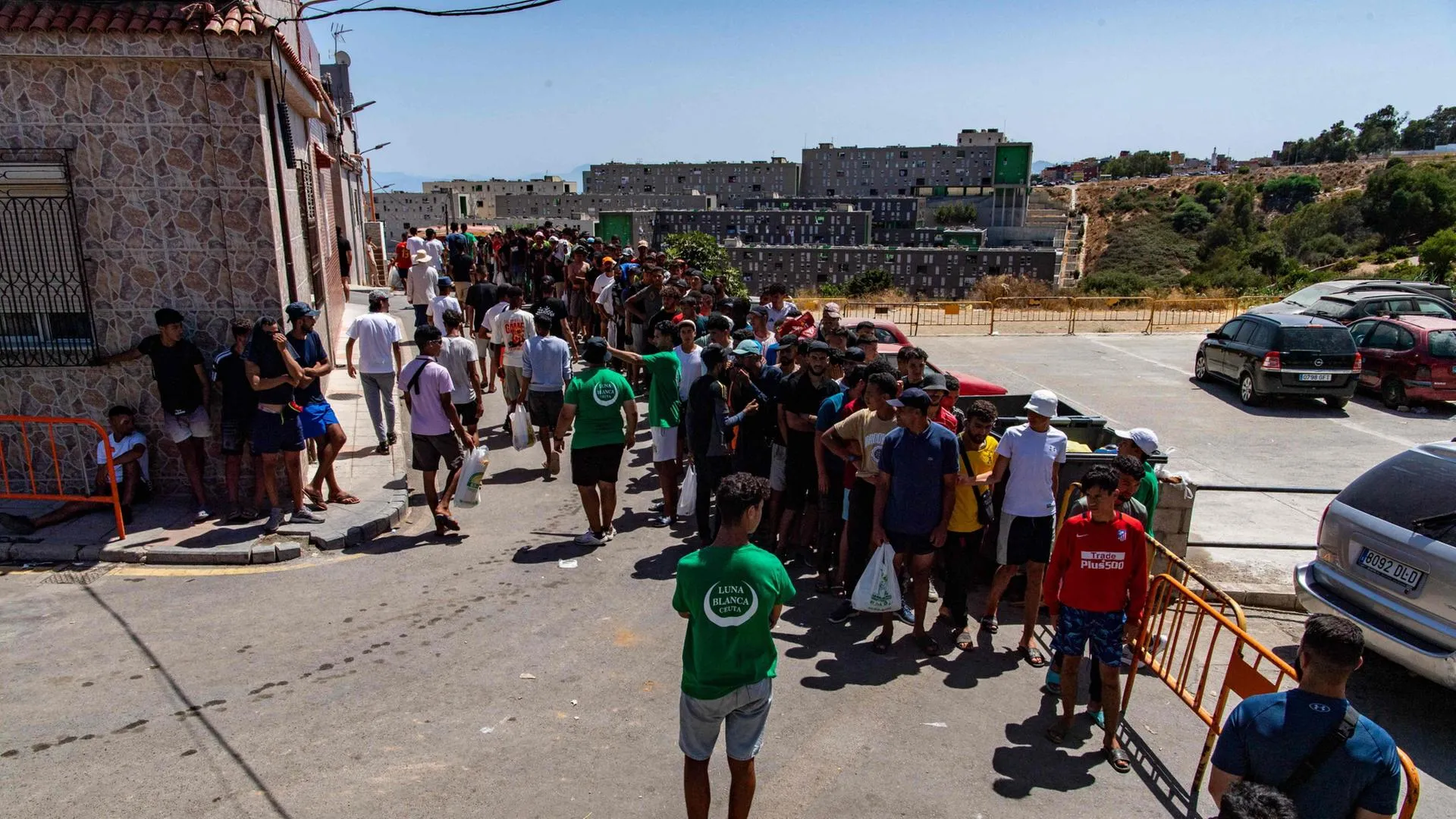
Currently, about 2,000 migrants remain in Ceuta, many of whom are young and living on the streets, relying on local residents for food and shelter. In response to the situation, a team from the EU Commission, alongside Frontex, Europol, and the European Asylum Agency, is present to assess how the EU can provide assistance to the exclave.
In light of the chaotic circumstances witnessed in late July, the EU is working diligently to address the root causes of the migrant surge. EU Interior Commissioner Magnus Brunner noted that the influx would not have been as significant without the influence of smuggling networks and social media misinformation. Investigations into the origins of these false narratives are ongoing, but a Spanish cybersecurity firm has indicated that the mass movement was likely a coordinated effort rather than a spontaneous one. Initial discussions about the migration were held in small, private groups before the information spread to larger Facebook groups with over 100,000 members and smaller WhatsApp circles.
Authorities have already apprehended a Moroccan national living in Istanbul, among others, suspected of inciting illegal crossings into Ceuta and Melilla. While there is currently no evidence linking state actors or NGOs to these events, the possibility cannot be entirely dismissed. This emerging form of organized migration demonstrates how easily a small group can mobilize tens of thousands of people using simple methods and clandestine operations.
In response to the spread of misinformation, the EU has engaged with major social media platforms to prevent another surge triggered by misleading messages. TikTok and Meta (the parent company of Instagram, Facebook, and WhatsApp) have activated their crisis mechanisms and are collaborating with fact-checkers to label misleading content. This initiative is part of a broader digital strategy outlined in the Digital Services Act, which governs the responsibilities of large platforms in Europe regarding the content they disseminate.
As reported by deutschlandfunk.de.