
Iranian Nuclear Activities Raise Alarm
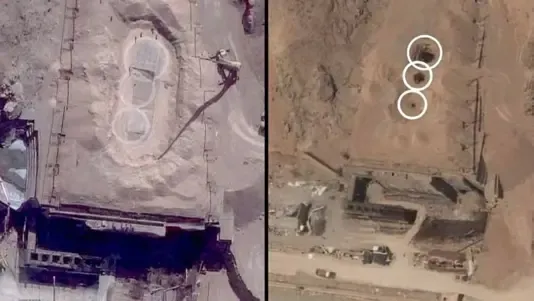
On July 12, 2026, CNN uncovered exclusive satellite imagery revealing that Iran is reconstructing the 'Talghan 2' facility, a site suspected of being utilized for nuclear weapons research, located within the sensitive Parchin military complex in southeastern Tehran. This development comes despite an agreement made with the Trump administration that obligates the Islamic Republic to maintain the status quo and freeze its nuclear program.
According to the analysis conducted by the Institute for Science and International Security (ISIS) based in Washington, D.C., which specializes in monitoring Iranian nuclear activities, significant renovations and fortifications at the site have been detected. The images, dated from early June, depicted Iranian teams assessing damage, clearing debris, and temporarily covering three gaps caused by previous strikes. More recent photos indicate ongoing efforts to permanently seal these gaps while enhancing the facility's defensive systems.
Implications of Renewed Nuclear Activity
These activities may represent a direct violation of the memorandum of understanding reached between the United States and Iran last June, which stipulated Tehran's commitment to refrain from acquiring or developing nuclear weapons. Under this agreement, Iran promised not to advance its nuclear program during a 60-day period designated for final negotiations, in exchange for the U.S. refraining from imposing new sanctions.
Israeli officials, as reported by the Hebrew newspaper Yedioth Ahronoth, assert that the facility was previously involved in the development of advanced explosives and sensitive experiments linked to the 'Amad Project,' Iran's secret military nuclear program from years past. The site is part of the Parchin complex, one of Iran's largest and most sensitive military industrial complexes, where warheads, rocket engines, and other weapon systems are manufactured and stored.
Additionally, ISIS issued a separate warning regarding ongoing construction at a secret underground complex in the Zagros Mountains, known as the 'Mountain of the Axe.' This facility has yet to be inspected by the United Nations' International Atomic Energy Agency. Satellite images from June indicated vehicle movement on access roads leading to the tunnel entrances, suggesting continued work within the tunnels and fortification of their entrances. The institute emphasized that the memorandum's stipulation to maintain the current nuclear status prohibits any new construction at any facility related to nuclear activities, including the Mountain of the Axe.
As reported by mnamerica.com.