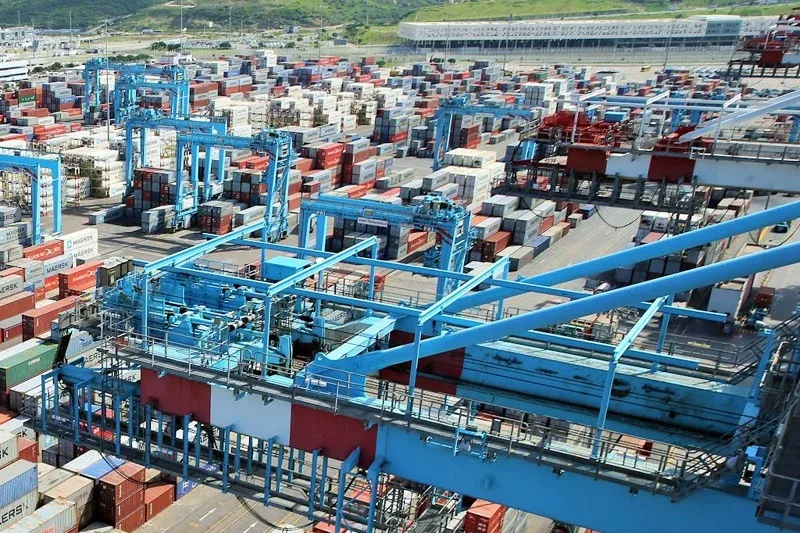

Ongoing Crisis of Container Congestion
Sources from the import sector have confirmed that the congestion crisis at Morocco's major ports continues unabated, significantly impacting the flow of imported goods into the domestic market. This issue has been prominently highlighted by the online newspaper Hespress. The situation is particularly severe at the Tangier Med Port, which handles approximately 70% of the fabric imports, alongside the Port of Casablanca. A responsible source from the National Association of Fabric Importers in Morocco has indicated that the processing timeframe has now extended to about 20 days, with containers remaining on trucks for three to seven days while awaiting inspection and clearance. This delay persists despite the ongoing efforts by the Tangier Med Special Agency, port management, and the Ministry of Foreign Trade, all of whom are striving to reduce these timelines.
Financial Burdens on Importers
The delays have imposed additional financial burdens on importers, with daily parking fees for trucks ranging from 900 to 1500 dirhams. Consequently, the cost of a single container can increase by 6,000 to 7,000 dirhams, while the expense of transporting it from Tangier to Casablanca can reach between 14,000 to 15,000 dirhams. Furthermore, laboratory analysis fees and customs clearance delays add to these costs. The profit margin for importers is already limited to around 40,000 to 65,000 dirhams per container. With accumulating expenses, this profit margin becomes significantly diminished. The recent spike in the dollar exchange rate further exacerbates the situation, directly transferring these costs onto the final prices of products.
This situation negatively affects the purchasing power of consumers, particularly in rural and mountainous regions where there is an increased demand for winter clothing fabrics. Currently, fabric is sold to manufacturers at prices ranging from 50 to 60 dirhams per kilogram, with a profit margin of only 4 to 6 dirhams, a price that is anticipated to rise.
Professionals from the National Association of Fabric Importers in Morocco have raised concerns about the underlying issues causing this congestion. They question whether the port has reached its capacity or if the available space for containers has been exhausted. They have urged for comprehensive coordination between port authorities, customs, the ministry in charge, and laboratories, noting that many suppliers are well-known to the authorities and that numerous importers have been active in the sector for many years. They warn that the complexity and duration of the procedures could drive some importers out of the business and into alternative activities.
The persistence of this crisis, partly stemming from global supply chain disruptions in key waterways, coincides with a transitional political period in Morocco. The current caretaker government is managing public affairs following the legislative elections held on September 23, and the appointments for the trade and industry sector have yet to be made. Industry sources have confirmed ongoing communication with the relevant port administrations, anticipating the establishment of dialogue channels with the incoming minister.
According to Hespress, industry professionals emphasize their commitment to maintaining the international standing of the Tangier Med Port as a pivotal logistical gateway for Morocco and the continent. They are calling on all stakeholders to expedite inspection processes and logistical handling to protect national businesses and ensure price stability for end consumers.
As reported by hespress.com.