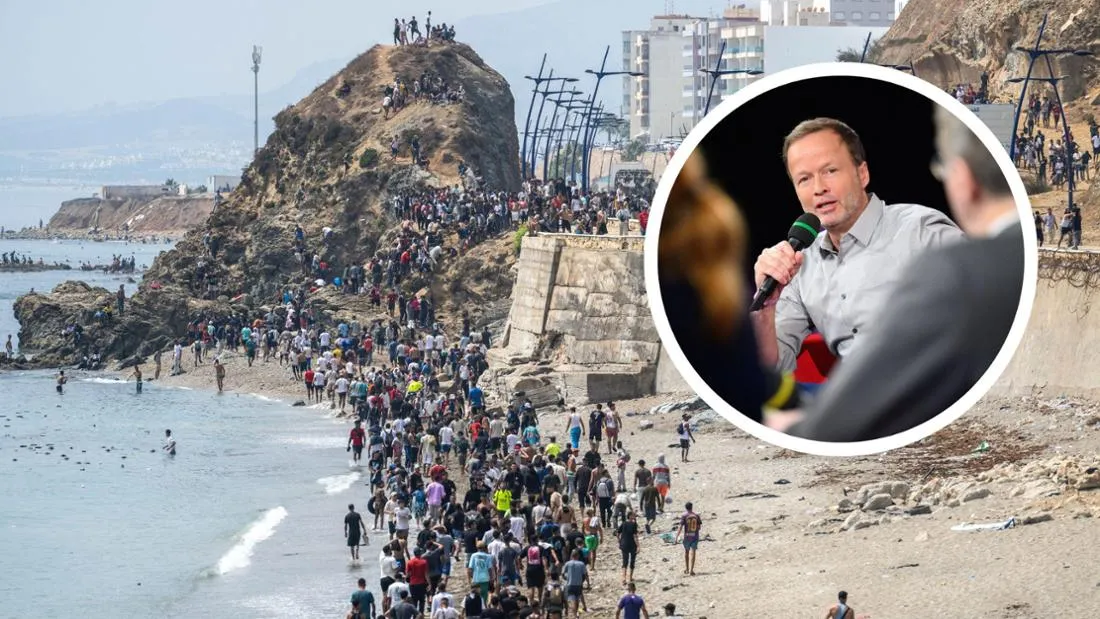

The recent comments made by ARD journalist Georg Restle regarding the migrant situation in Ceuta have sparked significant controversy across social media platforms. The journalist, who has served as the head of the ARD capital office in Nairobi and has previously led the ARD magazine "Monitor," shared an article from the American publication _The National_ on his X account. The piece suggests that the United States, Israel, and Morocco may be behind the surge of migrants into Ceuta, positing that this incident is not a humanitarian crisis but rather a strategic move to destabilize a progressive European government and undermine international law.
Restle's post highlighted the article's central thesis, which claims that the migrant wave in Ceuta is intricately linked to a growing network among the United States, Israel, and Morocco, aimed at sowing division within Europe and weakening its governments. This assertion has led to widespread outrage, with critics labeling it as a conspiracy theory lacking substantial evidence. Furthermore, it has been accused of promoting anti-Semitic sentiments, prompting reactions from various quarters, including members of the public broadcasting council.
Public Outcry and Calls for Accountability
Felix Schotland, a member of the WDR broadcasting council and a notable figure within the Jewish community in Cologne, expressed his dismay in a letter addressed to WDR's program director. He described Restle's post as deeply problematic, noting that such sweeping political claims without clear evidence or contextual distancing could severely damage public trust in the independence and credibility of journalistic institutions. Schotland's concerns echo a broader sentiment among critics who demand greater accountability from public broadcasters like ARD.
This situation has not only ignited a fierce debate online, but it has also drawn comments from various political figures. For instance, FDP politician Karoline Preisler sarcastically remarked on the post, suggesting Restle's claims reflect a dangerous narrative. Similarly, Volker Beck, president of the German-Israeli Society, questioned the validity of Restle's claims, asking whether any evidence existed to support such assertions. CDU politician Jan Jacobi went further, labeling Restle's comments as indicative of a troubling cognitive disconnect.
Mixed Reactions and Broader Implications
Despite the backlash, some voices have emerged in support of Restle. CDU politician Serap Güler accused him of perpetuating anti-Semitic and anti-American sentiments, while journalist Tilo Jung criticized Güler's remarks as disgraceful and called for apologies from both Restle and the politician. The incident highlights the precarious nature of public discourse surrounding sensitive topics like migration, especially when intertwined with allegations of international conspiracy.
This unfolding situation serves as a reminder of the complexities involved in reporting on global issues and the potential ramifications of unverified claims. As the conversation continues, it is essential for public figures and journalists alike to approach such sensitive matters with caution and a commitment to accuracy. The need for responsible journalism that fosters trust and understanding in the public sphere has never been more critical.
As reported by merkur.de.