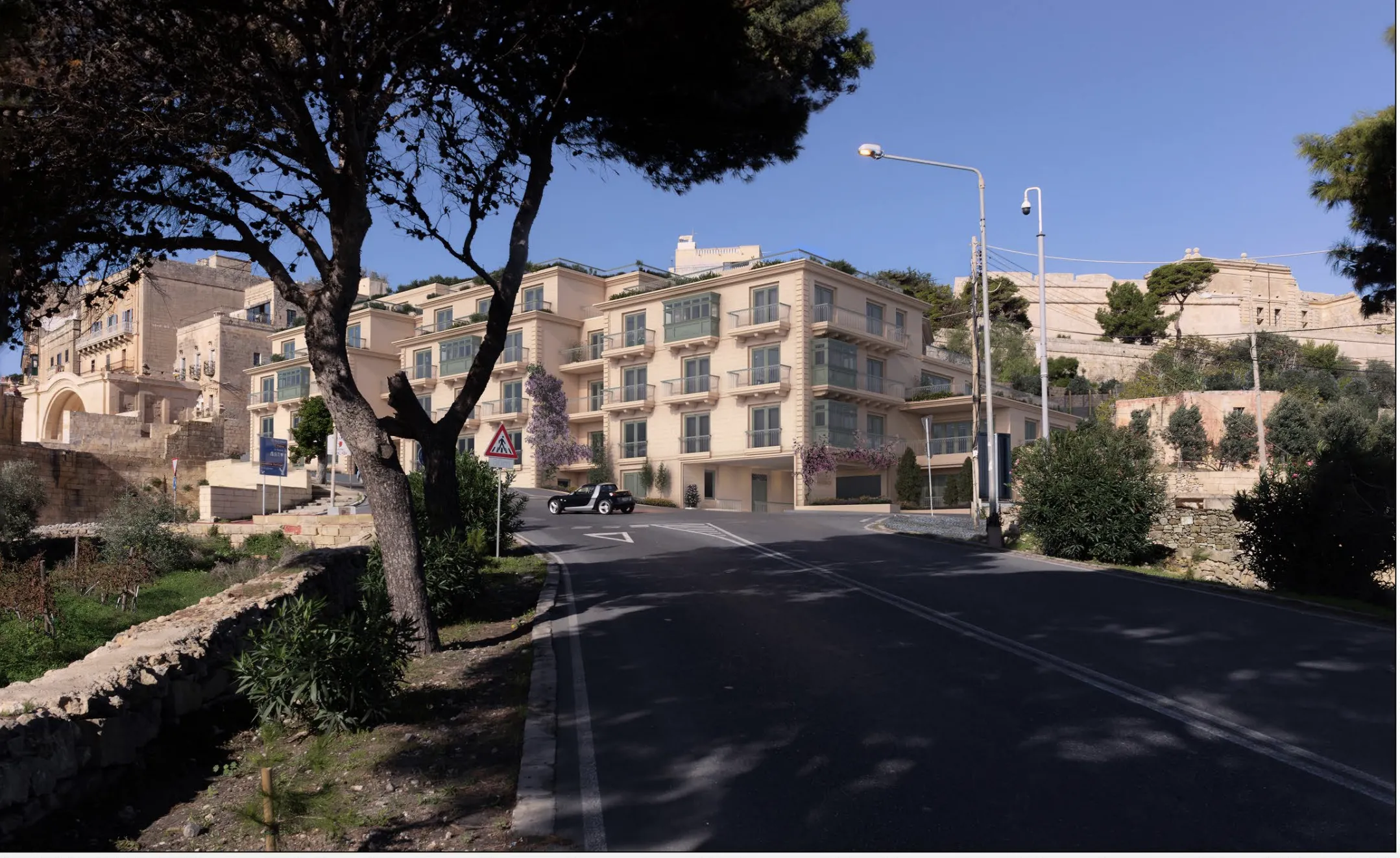

Approval Recommended for Saqqajja Hill Housing Project
A proposed residential development comprising 35 homes on Saqqajja Hill in Rabat has garnered attention as a case officer has recommended its approval. However, the project cannot commence even if the Planning Board gives the nod until critical concerns surrounding the extensive excavation required for the site are addressed. The Planning Board is set to make a final decision on October 1.
This significant development is situated on the former site of the Tattingers nightclub, which ceased operations in 2018. The project aims to demolish the existing structures and replace them with a tiered residential complex designed by architect Jesmond Mugliett and filed under full development application PA/05452/24 by Mdina Property Ltd, represented by Dominic Micallef. Encompassing approximately 5,300 square meters, the site includes the former Tattingers Club, Rainbow Apartments, and adjacent properties along Telgħa tas-Saqqajja and Triq tal-Infetti.
The proposed plans detail the construction of 35 residential units, offering a variety of apartments with one, two, and three bedrooms, in addition to the restoration of the long-abandoned Villa San Clemente. Furthermore, the development features a small office space, a residents' gym and spa, and around 65 underground parking spaces. However, the excavation necessary to establish two basement levels has raised significant concerns due to the proximity of the historic Notabile railway tunnel, a Grade 1 scheduled monument.
Concerns Over Excavation and Structural Stability
The excavation required for the underground garages and other facilities is particularly sensitive as it occurs above a site of significant archaeological and structural importance. The project proposes substantial underground work, which includes the digging of two basement floors for parking and utilities, as well as a 730-cubic-meter rainwater reservoir. Additionally, a lower services tunnel is planned beneath Triq tal-Infetti, which necessitates further excavation. Given the historical and geological importance of the site, any excavation activities cannot initiate until a detailed works method statement and a geotechnical report are approved.
Local authorities, including the Mdina Local Council, have expressed objections, citing the lack of adequate structural and geotechnical evidence to ensure the deep excavation will not jeopardize the integrity of the railway tunnel. The case officer acknowledged that the structural impacts depend on adherence to good construction practices, which fall under the legal obligations of the Building and Construction Authority (BCA) and the developer's architect. Compounding these concerns are the unstable clay strata beneath the site, which could pose risks not only to the tunnel but also to surrounding properties and the historic bastions of Mdina.
While the case officer has recommended approval of the project, it comes with the stipulation that the permit will remain inactive until the outlined concerns are satisfactorily resolved. The developers must secure approval from the Superintendence of Cultural Heritage for a detailed Works Method Statement and a thorough geotechnical report before any excavation can take place. These documents will be crucial in demonstrating that the construction activities will not compromise the scheduled railway tunnel, archaeological remains, or the stability of the surrounding areas.
The project also faces scrutiny regarding its visual impact on the landscape, particularly from the Saqqajja junction and Triq il-Belt Valletta, where assessments have identified negative visual implications. Although the developers have attempted to mitigate these effects through design adjustments, such as lowering the building height and enhancing landscaping, the overall impact ratings have remained unchanged.
Given the sensitive nature of the site, which lies within an Urban Conservation Area and is adjacent to significant historical landmarks, the current residential proposal follows the collapse of an earlier plan to develop the site into a hotel. The previous application for an 81-room hotel was annulled by the Court of Appeal in 2023, affirming that new tourist accommodations were not permissible under existing planning policies. The current residential focus, however, is deemed more compatible with the area’s residential designation.
Transport Malta has raised additional concerns regarding the proposed access to the underground garages, citing safety issues related to the steep gradient and high vehicle speeds at the Saqqajja junction. Meanwhile, the Environment and Resources Authority has not raised objections, provided certain conditions are met, and the Superintendence of Cultural Heritage has withdrawn its objection after adjustments to the plans.
Despite the numerous challenges, the case officer maintains that replacing the former nightclub with residential development could enhance the Urban Conservation Area. Nonetheless, any potential approval will hinge on the developers demonstrating that excavation can proceed safely without endangering the historic tunnel or destabilizing the surrounding landscape, particularly the fortifications of Mdina.
As reported by maltatoday.com.mt.