
Inauguration of the 2026 Tripoli Intelligence Conference
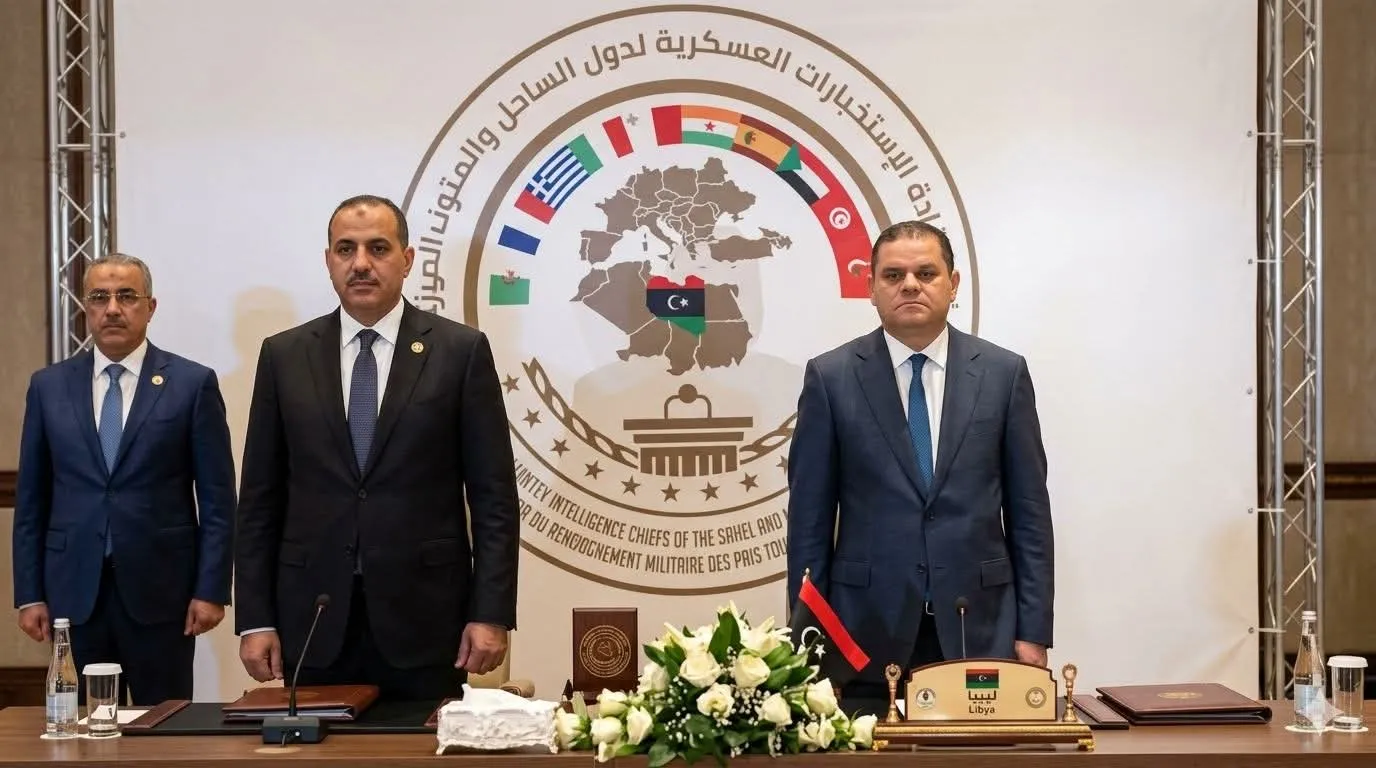
On April 8, 2026, the Libyan capital, Tripoli, hosted the commencement of the 'Military Intelligence Leaders Conference for the Sahel and Mediterranean - 2026.' This significant event aimed to enhance security collaboration in addressing the challenges posed by irregular migration, the rise of organized crime networks, and terrorism within the region. However, the conference was marred by a notable diplomatic faux pas when an incomplete map of Morocco was displayed, omitting its southern territories. This incident has raised questions about the implications it holds for the government of Abdul Hamid Dbeibah.
Diplomatic Implications for Libya and Morocco
The presentation of a truncated map of Morocco at an official conference in Tripoli has placed the Dbeibah government in a complicated diplomatic position. Historically, Morocco has been a pivotal reference point for a political resolution in Libya, having hosted critical negotiations such as the 2015 Skhirat Agreement, which enjoys international recognition as the sole legitimate framework for peace. Morocco's diplomatic approach has consistently maintained neutrality among the conflicting parties, providing impartial platforms that have helped unite Libya's divided institutions. Furthermore, the outcomes of the joint committee meetings (6+6) in Bouznika in 2023 led to the preparation of electoral laws, demonstrating the trust that Libyan factions place in Morocco's neutral role, alongside its rejection of foreign military intervention. Thus, the portrayal of Morocco's map in an incomplete form can be interpreted as an attempt by certain regional powers to sway political balances in Libya following the conclusion of the conflict.
Interestingly, this diplomatic slip appears to diverge from the recent warming of relations between Rabat and the Dbeibah government, which became evident in March 2025 when Morocco supported Libya's candidacy for membership in the African Peace and Security Council, a move that Tripoli celebrated in contrast to Algeria's nomination. Moreover, since the adoption of UN Security Council Resolution 2797 on October 31, 2025, negotiations facilitated by the United States and overseen by the United Nations have increasingly focused on implementing the proposal for autonomy in the Sahara under Moroccan sovereignty, with the four parties—Morocco, Algeria, Mauritania, and the Polisario—engaging in discussions based on this premise.
This recent incident also occurred amid Morocco's absence from the expanded intelligence meeting, a notable omission considering Morocco's crucial role in the security dynamics of the Sahel and Mediterranean regions. Consequently, it raises the need for a clear official stance from Libya to ensure the continued progress of the Libyan-Libyan dialogue facilitated by Morocco. The challenge for the Tripoli government remains balancing regional pressures while maintaining stable relations with Morocco, which has played a vital role since 2011 in supporting the stability of Libya's state institutions.
As reported by assahifa.com.