
As reported by hesport.com.
Political Tensions Escalate Over World Cup Hosting Rights
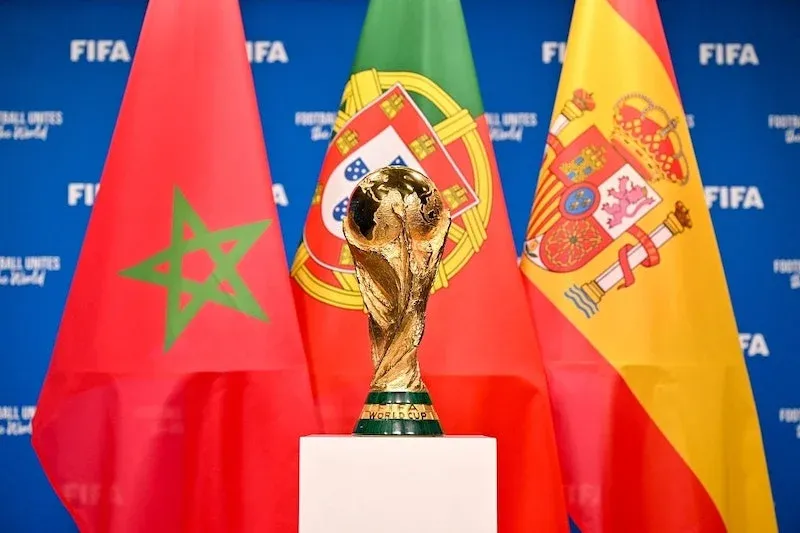
On August 6, 2026, the far-right Spanish political party, Vox, announced its initiative to request the exclusion of Morocco from hosting the 2030 FIFA World Cup, an event that Spain and Portugal are also slated to co-host. This controversial proposal stems from a recent immigration crisis in the Spanish enclave of Ceuta, where an unprecedented influx of migrants from Morocco raised alarms regarding the country's ability to ensure security and manage large crowds during such a significant international event.
Vox's official statement expressed concerns over the substantial number of migrants arriving in Ceuta, suggesting that Morocco's governance capabilities are in question, especially when it comes to maintaining the necessary security protocols expected at a major sporting event that attracts millions of fans. According to reports from the Spanish Ministry of the Interior, approximately 72,000 migrants crossed illegally into Ceuta in late July, a staggering figure that has since seen around 70,000 return to Morocco.
In addition, leftist parties such as Podemos and Sumar have sided with Vox, arguing against Spain's collaboration with Morocco, labeling it a 'dictatorship' that exploits desperate individuals for its geopolitical advantages. They believe that it is inappropriate for Spain to partner with Morocco in organizing the World Cup, given the current political climate and humanitarian issues surrounding migration.
FIFA's Decision Remains Unchanged Amidst Political Outcry
Despite the intense political pressure, Vox's proposal to draft legislation aimed at excluding Morocco from the World Cup organization is unlikely to succeed, as the final decision regarding hosting rights rests solely with FIFA. The international governing body had officially awarded the hosting of the 2030 World Cup to Spain, Portugal, and Morocco at the end of 2024, following a joint bid that faced no competing offers. Historically, FIFA has never rescinded a country’s right to host the World Cup once granted, even amidst controversies, as seen with Qatar's hosting of the 2022 tournament.
A FIFA spokesperson responded to media inquiries regarding this matter, confirming that no decision has been made concerning the final match venue for the World Cup 2030. Moreover, any claims suggesting that the FIFA president has made commitments in this regard are deemed incorrect and misleading, underscoring the ongoing complexities surrounding the event's organization amidst political tensions.