
Significant Discoveries in Agadir Melloul
Critical Mineral Resources (CMR) has made a remarkable discovery of a new high-grade silver zone in Morocco, specifically at its Agadir Melloul project located in the western Anti-Atlas region. This discovery comes from recent drilling activities that have revealed astonishing results, including silver grades of up to 5,390 grams per tonne and copper concentrations of 10.24% over a narrow interval. The British company believes these findings may indicate a distinct mineralization structure separate from the already recognized copper-silver system at the site.
The most notable results stem from drill hole BH174, which intersected eight meters containing 0.58% copper, 147 grams of silver per tonne, and 0.26 grams of gold per tonne from a depth of 63 meters. Within this interval, there was a standout section measuring 1.6 meters that yielded 1.67% copper and 695 grams of silver per tonne. Additionally, a 20-centimeter interval reached an exceptional 10.24% copper, 5,390 grams of silver per tonne, and 2.80 grams of gold per tonne. However, it is crucial to note that such high concentrations, while impressive, are found over a limited thickness and do not alone establish the economic value of the discovery; their geological context is of primary interest. The BH174 drilling encountered a fault oriented north-northwest, where CMR reported the discovery of massive sulfides at approximately 66 meters deep, a configuration not previously observed at Agadir Melloul.
Further Exploration and Future Prospects
In addition to BH174, the second drilling operation, BH175, intersected one meter at 402 grams of silver per tonne. CMR indicates that these two drill intersections could signal a silver mineralization associated with a fault, distinct from the shallow, gently dipping copper-silver layer previously identified in the main drilled areas. However, the company remains cautious regarding the actual extent of this new structure, stating, "We still need to determine its orientation, depth extension, continuity, and magnitude." This indicates the necessity for further drilling to ascertain whether the observed grades belong to a continuous mineralized body or more localized concentrations.
Meanwhile, the campaign continues to delineate the copper mineralization, with drill hole BH160 providing 10.2 meters at 0.72% copper and five grams of silver per tonne, including a one-meter section at 2.46% copper. Drill holes BH161 and BH178 also reported significant intersections of 7.7 meters at 0.51% copper and 5.5 meters at 0.55% copper, respectively. CMR notes that the low dip of the mineralized body allows the drilled thicknesses to represent approximately 90% to 95% of the actual thickness.
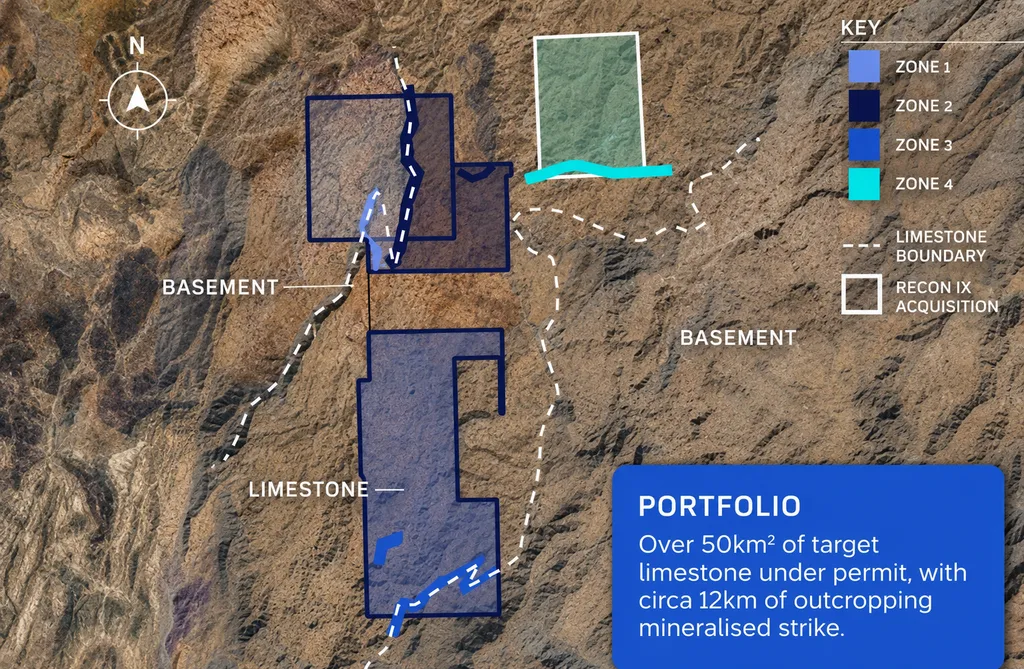
To date, the program has advanced to a total of 272 drill holes, equating to 11,347 meters drilled. Since the joint venture's inception in May 2025, 244 diamond drill holes covering 8,200 meters have been completed. Furthermore, over 2,100 samples have been dispatched to the laboratory for multi-element analysis, with a new series of results anticipated in the coming weeks. Notably, an initial independent resource estimate is expected in October, as Agadir Melloul spans approximately 65 square kilometers with six permits and one mining license. CMR aims to eventually increase its stake in the project to 60%, in partnership with Coppernicus Mining Company. The mining license granted in February covers 14.6 square kilometers in the Northern Zone 1 and Zone 2, where the company is exploring the potential for initial open-pit mining.
These promising results arrive as CMR prepares for the first independent assessment of Agadir Melloul's resources according to the JORC code, which is being conducted by the British firm Addison Mining Services and is expected to conclude in October. This preliminary evaluation will only cover about 5% to 6% of the area encompassed by the permits, indicating a significant portion of the project remains unquantified. The discovery of the silver zone thus adds an exciting target to ongoing exploration efforts, although its impact on future resources will depend on subsequent drilling campaigns that will need to establish the continuity of the structure and clarify the thickness of the richer intervals.
As reported by barlamane.com.