
Dar Ziryab Unveils Cultural Hub in Marrakech
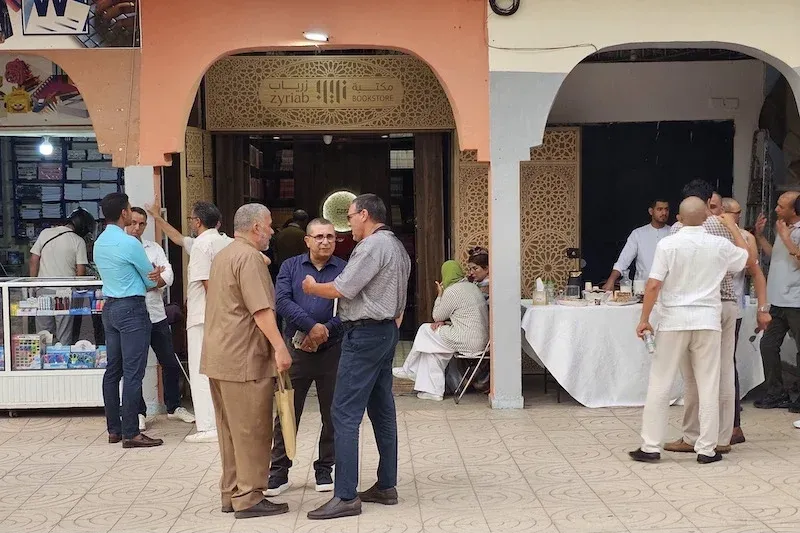
Dar Ziryab, a notable establishment dedicated to studies, publishing, and distribution, has proudly inaugurated a new library in Marrakech. This initiative is part of a broader cultural project aimed at enhancing its presence in the literary landscape. The library seeks to transition from merely producing and distributing titles to fostering a direct relationship with readers, thereby enriching the cultural dialogue within the community.
According to information obtained by Hespress, the library is committed to offering a diverse selection of books and providing an open space for readers, researchers, and those interested in cultural matters. Moreover, there are plans to expand its functions to include cultural events, book launches, and author meet-and-greets, creating a vibrant atmosphere for literary engagement.
Marrakech: A Cultural Nexus
When questioned about the choice of Marrakech as the location for this new library, Hicham Fattah, the scientific advisor at Dar Ziryab, explained that this decision is closely tied to the city’s strategic position within Morocco’s cultural map. Marrakech is home to several educational and cultural institutions, boasts a diverse audience, and attracts a significant number of visitors annually who are interested in cultural and artistic pursuits. These factors position the city as an ideal venue for book-related projects, provided that these initiatives aim to cultivate a reading audience rather than merely organizing temporary events.
Fattah further elaborated that the opening of the library is a natural extension of Dar Ziryab's publishing and distribution efforts, emphasizing that the relationship with books cannot be limited to production alone; it also requires a space where these books can reach readers. The goal is to create a welcoming environment that showcases a variety of titles and authors, allowing readers to explore and discover different literary works.
In discussing the evolution of the publishing industry, Fattah noted the necessity of redefining the traditional relationship between authors and publishers. He emphasized that publishers should actively participate in the development of books and the authors' careers while respecting their independence and creative visions. Additionally, the phenomenon of many Moroccan books being published in the East raises questions regarding the position of Moroccan publishing within the Arab market. Many Moroccan authors and researchers tend to seek out publishing houses in the East, particularly in Beirut and Cairo, in pursuit of broader Arab recognition and distribution networks.
However, Fattah does not view this trend as a negative reflection of Moroccan publishing; rather, he considers it a natural outcome of various factors, such as accumulated experience in book production and the strength of distribution networks in some Eastern institutions. Consequently, when Moroccan authors choose Eastern publishers, they often seek a wider Arab audience for their works, which is understandable. The challenge lies in the ability of national publishing to provide professional alternatives that enable authors to select local publishers without limiting their works to the Moroccan market alone.
Fattah concluded by stressing the need to develop Moroccan publishing houses, enhance distribution channels, diversify offerings, and establish more consistent professional relationships with authors, libraries, and cultural institutions. This approach will ensure that Moroccan literature is present in both national and Arab markets simultaneously. Ultimately, the aim should not be to foster geographical competition between the East and West but to build a robust national publishing industry capable of producing high-quality books and reaching a broader audience.
As reported by hespress.com.