
Shifting Attitudes Towards Gender Roles in Morocco
A recent report by the Arab Barometer illustrates a notable transformation in Moroccan perspectives regarding gender roles, particularly in political contexts. While there has been a discernible decline in adherence to traditional beliefs about the superiority of male leadership, this shift has not corresponded with an increase in support for political quotas aimed at enhancing women's representation. The survey indicates that 47% of respondents still believe that men are better suited for political leadership roles, a decrease of 10 percentage points compared to the previous survey conducted in 2023-24. Interestingly, this viewpoint is held equally by both men and women, hinting at a broader cultural trend rather than gender-specific biases.
Furthermore, the survey reveals a significant decline in the belief that men should have the final say in household decisions, dropping to 44%—a notable 17-point decrease. Conversely, support for equal employment opportunities for women has remained steady at 64%, indicating a complex landscape where traditional gender norms are indeed weakening, yet the advocacy for women's political inclusion shows a concerning downturn.
Alarming Drop in Support for Women's Political Quotas
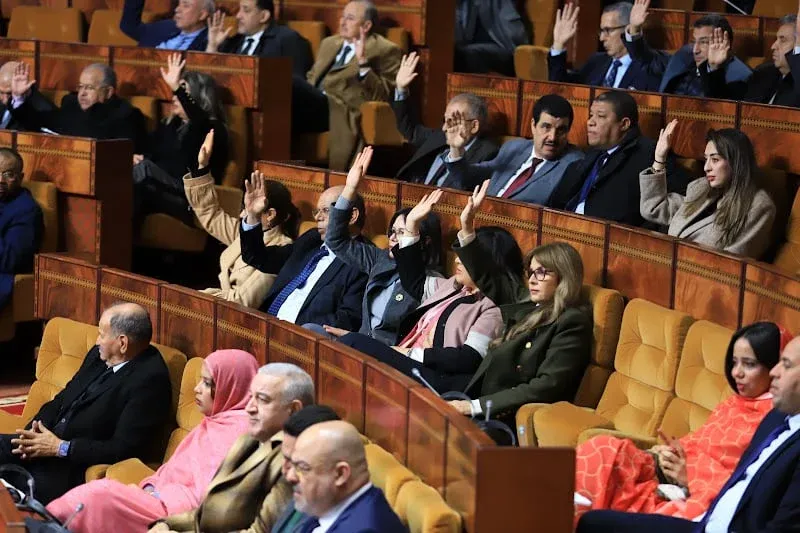
Perhaps the most striking finding from the Arab Barometer survey is the substantial drop in support for women's political quotas. The proportion of Moroccans advocating for a minimum number of parliamentary seats reserved for women plummeted from 71% to 51%, while support for gender quotas in Cabinet positions fell from 70% to 52%. This decline raises questions about the effectiveness of gender equality initiatives and reflects a paradox where, despite changing attitudes towards gender roles, the support for concrete measures aimed at ensuring women's political representation is waning.
The survey also shed light on the multifaceted challenges that women face in the workforce. When asked about the barriers hindering women's entry into employment, respondents identified a variety of obstacles. Social disapproval and insufficient childcare services were each highlighted by 13% of participants, while 12% cited inflexible working hours and discrimination in hiring practices. Notably, women were more likely to point out childcare availability and job scarcity as significant hurdles, whereas men often emphasized rigid work schedules and societal attitudes as primary concerns.
Violence against women remains a critical issue, with 42% of respondents asserting that levels of violence have remained unchanged. Meanwhile, 31% believe that rates have declined, and 16% perceive an increase. For women experiencing abuse, family members and police are often viewed as potential sources of assistance, with 48% suggesting a male relative could provide support, compared to 38% who identified a female relative and 35% who mentioned local police. The perception of harassment is also prevalent, with 71% of respondents acknowledging that street harassment is widespread, although this figure represents a slight decrease from the previous survey.
The Arab Barometer survey involved face-to-face interviews with 1,210 Moroccan citizens across all twelve regions, conducted from August 23 to September 6, 2025. The survey is nationally representative and carries a margin of error of plus or minus three percentage points. These findings underscore the need for continued dialogue and action regarding women's representation and rights in Morocco.
As reported by en.hespress.com.