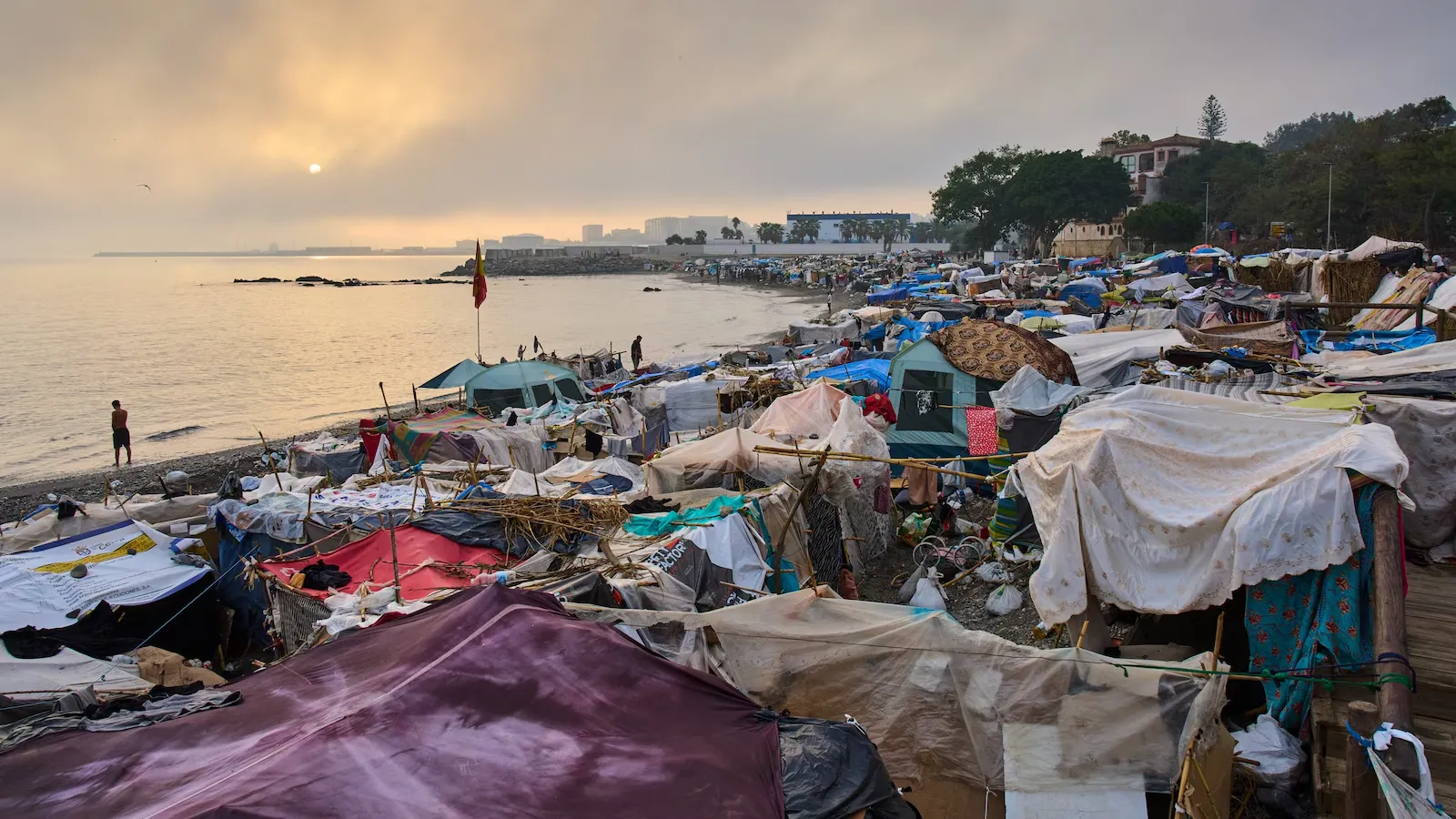

CEUTA, Spain -- A sprawling tent village in Ceuta has become a focal point for many migrants seeking better economic opportunities, fleeing violence, or escaping persecution based on their gender or sexual orientation. Amidst this humanitarian crisis, numerous migrants have come forward with harrowing allegations of abuse, shedding light on the dire circumstances they face while seeking refuge.
Interviews conducted with former residents of the now-demolished camp revealed the complex motivations behind their journeys. One Moroccan migrant recounted a traumatic experience, stating that he had pressed his shirt against his head to staunch the flow of blood after being assaulted by Spanish soldiers. He described how these soldiers had bound him to a tree and mercilessly struck him, resulting in serious injuries. Speaking under the veil of anonymity due to safety concerns, he recalled, "When they were beating me, I saw death, only death." His harrowing account continues with the chilling details of being confined in the trunk of a car and transported to a remote forest where the abuse took place. Following the attack, he received staples for his head injuries and is now advocating for accountability for the soldiers involved.
The Spanish judiciary is currently investigating these allegations of torture and mistreatment, which extend to minors as well. A report released by Amnesty International in September corroborated claims of inhumane treatment by Spanish military personnel, igniting public concern and calls for justice. One artisan reflected on the shocking nature of these events, expressing disbelief that such brutality could occur in a place they once believed was safe and welcoming. "Sometimes I ask myself why I even came here, but other times I tell myself that God will help me," he stated, illustrating the internal conflict faced by many migrants.
Among the diverse group of migrants, a transgender teenager who swam to Ceuta from Fnideq, Morocco, shared his own struggles. Initially hopeful of finding refuge in a shelter, he spent nearly two months living outdoors after being rejected by his family upon revealing his gender identity. "People in Morocco don’t have any mercy," he lamented, noting the societal pressures that led him to leave his home in search of acceptance. Despite Spain’s asylum laws recognizing gender identity and sexual orientation as valid grounds for protection, the reality for many remains precarious.
In a similar vein, another young man left Tetouan, Morocco, after facing threats from his brother over his sexuality. His brother had discovered intimate photos on his phone and threatened to report him to the authorities, intensifying an already fraught family relationship. Under Moroccan law, consensual same-sex relationships are criminalized, often leading to severe penalties, which drives many to seek asylum abroad. "I left Morocco because being gay is so hard," he explained, highlighting the pervasive stigma and danger faced by LGBTQ+ individuals in his home country.
Another asylum seeker recounted receiving death threats after posting content critical of Islam on social media, a move that led to his kidnapping by an aggressive follower. His claims, though not independently verified, are documented in his asylum application submitted to Spanish authorities, revealing the significant risks undertaken by those who challenge societal norms. "The first week was pure survival," he said, describing the chaotic environment in Ceuta, where fear and uncertainty loom large. "It felt like running from zombies; some people wanted to attack you, others wanted to rob you." Like many others, he fears for his safety should he be returned to Morocco.
As reported by abcnews.com.