The Bitter Reality of Migrants' Dreams in Ceuta
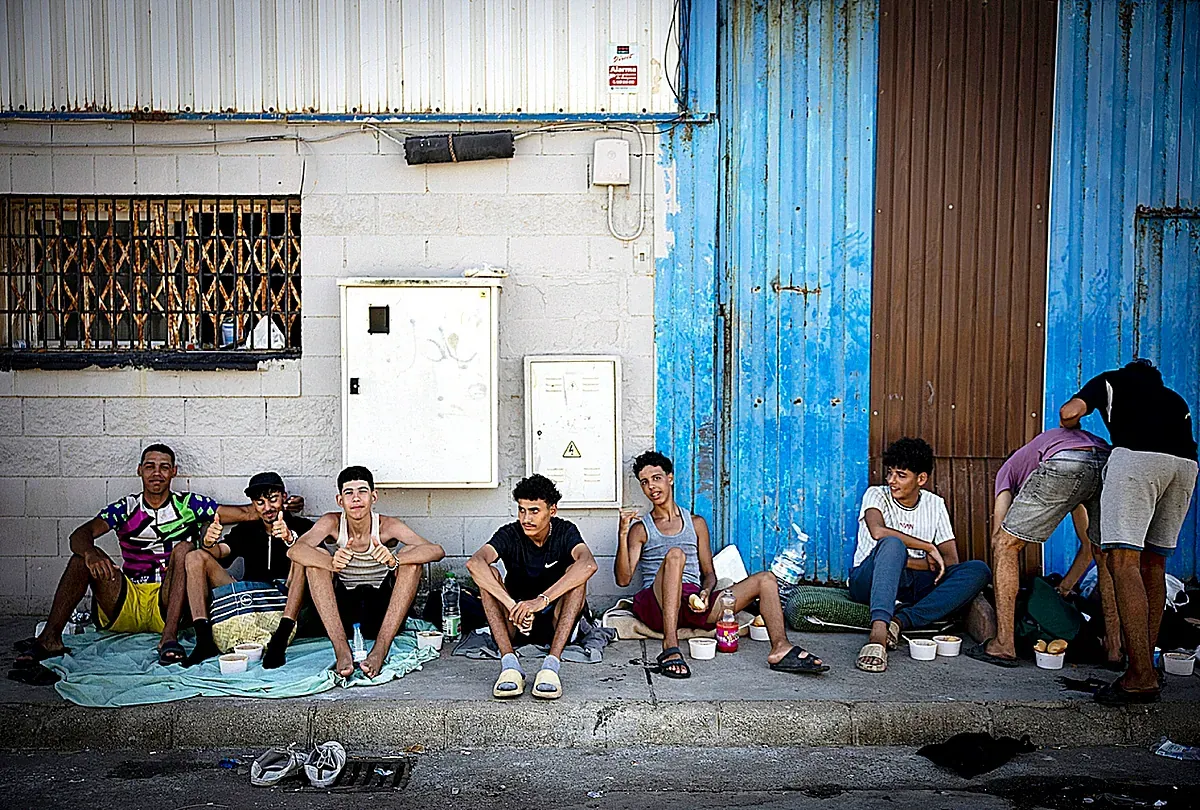
A somber procession of disappointed migrants has emerged, depicted by men in tattered pants and worn-out sneakers, with some barefoot and others nursing bandaged legs, as they silently trudge back towards the border. Just two days ago, many of these individuals arrived in the Spanish enclave of Ceuta filled with hope and aspirations for a better life in Europe. However, that hope has rapidly diminished, leaving them exhausted, hungry, and devoid of the illusions they once held.
Their dream of reaching Europe has swiftly transformed into a harsh reality. "We were told we would be received in Spain. That was not true," lamented many young Moroccans as they began their return journey. Initially, there was a belief that upon reaching Ceuta, they would be registered, placed in reception centers, and subsequently allowed to travel onward to the Spanish mainland. Such rumors spread like wildfire across social media in Morocco in the days leading up to their journey.
Upon arrival, these newcomers were met with a border city that was entirely overwhelmed. The limited reception facilities in Ceuta quickly became hopelessly overcrowded, forcing thousands to spend the night outdoors—sleeping in parks, on sidewalks, along beaches, or in the hills surrounding the city. With many shops, bars, and supermarkets closed due to security concerns, even those with money struggled to find food.

Efforts from the Spanish Army to assist migrants have been documented, with reports of soldiers providing help to individuals who swam from Morocco to Ceuta. However, the sentiments of returning migrants reflect a stark contrast; a young couple from Northern Morocco remarked, "We are going back because there is nothing to eat," while a young man named Mohammed stated, "We were told we would get papers for Spain. That was a lie." This mass exodus, marking the largest migration wave Ceuta has ever faced, dissipated almost as quickly as it began, with over 48,000 of the estimated 50,000 migrants having returned to Morocco by Saturday.
Aftermath and Ongoing Challenges
On the Spanish side, efforts to address the crisis began promptly, with workers starting the installation of a visible buoy barrier along the border at the El Tarajal beach, aimed at clearly marking the boundary in the water. This response comes in the wake of a Supreme Court ruling stating that migrants arriving by swimming cannot be immediately turned away, as they have not crossed a physical border structure. This ruling, revealed recently, contributed to the surge of irregular migrants from Morocco, primarily via sea routes. The newly introduced buoys are intended to close this legal loophole.
As police divers continue their search for missing persons, the grim toll has reached 67 confirmed deaths, with many drowning while attempting to swim the short distance to the Spanish coast—making this the deadliest migration tragedy ever recorded at this border. In Ceuta, the streets are gradually emptying as normalcy returns, but the remnants of the crisis are evident, with piles of trash accumulating on sidewalks and in parks.
On the Moroccan side, the chaos left in the wake of the massive movement is unmistakable, with thousands of returnees stranded in the border town of Castillejos, searching for transportation back to their hometowns. Many shops and restaurants remain closed due to fears of potential unrest.
The Spanish government interprets the mass return of immigrants as a sign that the measures negotiated with Morocco are effective. Madrid and Rabat had agreed on the swift repatriation of irregular immigrants, with the Spanish Interior Ministry emphasizing that not a single migrant was allowed to continue to the mainland. Prime Minister Pedro Sánchez avoided public confrontation with Rabat, recognizing the crucial nature of cooperation with Morocco in securing the European external border.
Despite the resolution of this immediate crisis, questions linger about the unprecedented surge of migrants. The Spanish government has suggested that smugglers exploited the Supreme Court ruling to incite the mass movement. Social media in Morocco fueled the rumor that anyone who reached Spanish soil by swimming would automatically receive residency papers. This led to an astonishing mobilization of approximately 50,000 individuals in just 24 hours. Internally, even the Spanish government acknowledges that such a surge would have been unlikely without the temporary inaction of Moroccan security forces.
Some speculate that the escalation at the Moroccan-Spanish border was intentionally provoked by Morocco, which claims Ceuta and the nearby Melilla as "occupied territories." Spain firmly rejects this claim, asserting that both cities have been part of the Spanish crown for centuries, serving as critical strategic points for controlling Mediterranean access.
As reported by morgenpost.de.