
A New Historical Landmark in Fes
Recently inaugurated in the heart of Fes el-Bali, the new Currency Museum coincides with the 27th anniversary of the Throne Day, offering a comprehensive overview of the evolution of money and payment methods in Morocco. This museum traces the history from the pre-currency era, through the Islamic period prior to the protectorate, to the current Moroccan currency, while also showcasing commemorative pieces that honor significant national and international events.
Architectural Heritage Meets Modern Exhibition Techniques
According to Mohamed Khalil Sarhan, the cultural mediation officer at Bank Al-Maghrib Museums, the Currency Museum is housed in a historical building that reflects the rich architecture and uniqueness of Fes. This adds an extra dimension to the museum space, linking it directly to the history of the place itself. The building, which is over 105 years old, originally served as a hotel for trading caravans visiting Fes. In 1921, it became the second branch of Bank Al-Maghrib in the kingdom, following the branch in Tangier, and later transitioned to a national security annex after the bank moved to the new city. The decision to convert it into a currency museum was made between 2018 and 2019.
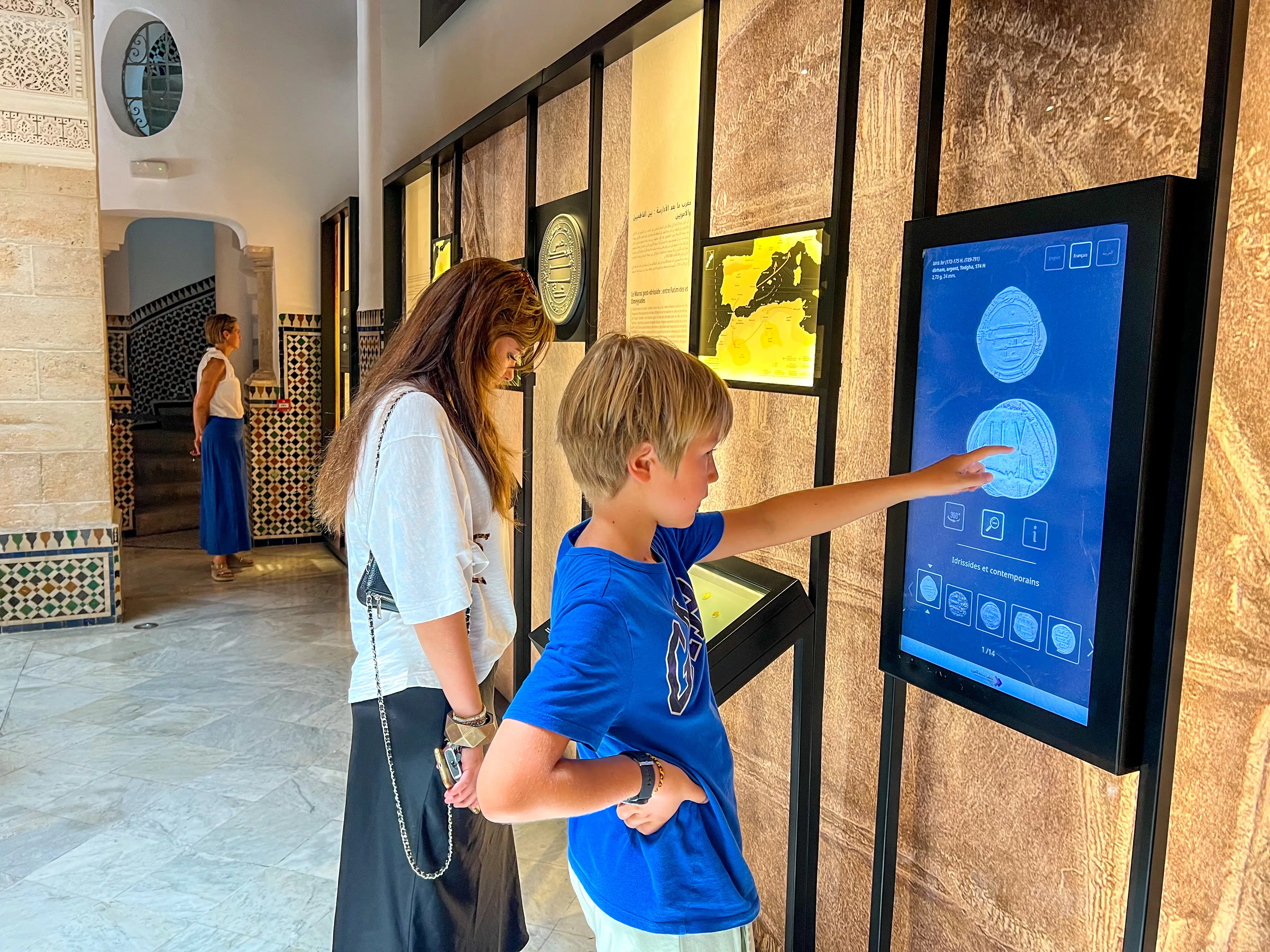
The museum’s design brilliantly combines the authenticity of the historical building with modern exhibition techniques. Interactive touch screens allow visitors to explore the details of coins from various angles, including a 360-degree viewing technology, alongside advanced methods for identifying the characteristics of Moroccan banknotes. The experience goes beyond just coins and currency; the museum also features a section on the minting process and tools associated with measuring and working with metals, providing visitors with insights into the technical aspects of currency production, alongside its economic, artistic, and cultural dimensions.
Bank Al-Maghrib aims for this space to become a new stop on the cultural trail of the ancient city of Fes. Since its opening, the museum has attracted significant attention from both locals and international tourists. Access is free throughout this month, with a nominal entrance fee of 20 dirhams per person set to begin next month. Group rates will be available, and children and students will enjoy free entry all year round.
Among the museum's visitors is Alexandra, a French tourist who was curious to explore the museums of Fes el-Bali. She described her experience as exceeding mere historical knowledge of currency. In her statements to Le360, she expressed her admiration for the building itself, highlighting its architectural details as worthy of exploration. She noted that learning about the evolution of Moroccan currency through different reigns added a unique historical depth to her visit. Alexandra was particularly intrigued by the earliest coins and their traditional craftsmanship, emphasizing that the museum allows visitors to connect with a vibrant Moroccan heritage and provides a unique opportunity to discover an important aspect of the kingdom's history. For her, the combination of the historic building, the richness of the exhibits, and the manner of presentation makes the Currency Museum a unique space worth exploring, not just for foreign visitors, but also for Moroccans seeking to understand their country's history from a different perspective.
As reported by ar.le360.ma.