
The Architectural Marvel of Mosquee Hassan II
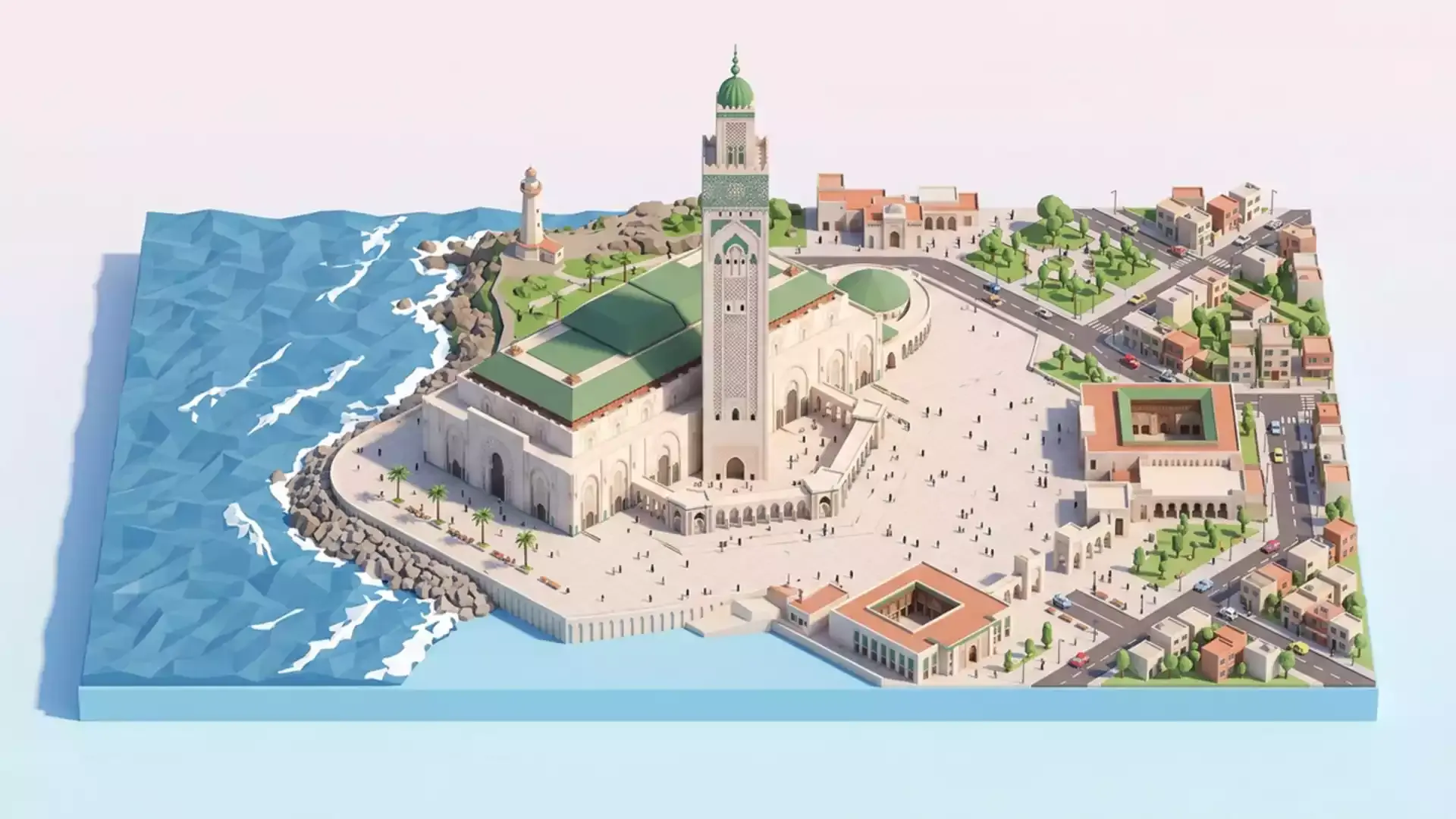
Perched majestically on the Atlantic coastline of Casablanca, the Mosquee Hassan II is a testament to monumental Islamic architecture, seamlessly extending from the land into the ocean. This architectural wonder, which was completed in 1993 and named in honor of King Hassan II, merges cutting-edge engineering with the rich craftsmanship of traditional Moroccan art, resulting in a vast complex that serves both religious and cultural purposes. Constructed under the guidance of French architect Michel Pinseau, who had a profound understanding of Moroccan Islamic design, this mosque was officially inaugurated on August 30, 1993, a date that holds significant meaning within Morocco's religious calendar.
Features of the Mosque: A Blend of Tradition and Innovation
The Mosquee Hassan II is not merely a religious structure; it is a sprawling complex that occupies an expansive platform extending over the Atlantic Ocean. The main prayer hall, which is partially built over the water, is an iconic feature of the mosque, surrounded by a vast paved esplanade that serves as an outdoor prayer area for thousands of worshippers. The entire site encompasses several hectares and includes a madrasa, library, ablution hall, and exhibition spaces dedicated to traditional Moroccan arts, reflecting its multifaceted role in the community.
One of the mosque's most striking elements is its towering minaret, which rises approximately 200 meters (656 feet) and is visible from various points across the city, marking a significant point on Casablanca's skyline. In fact, some accounts suggest that the minaret reaches a height of around 210 meters (689 feet), ranking it among the tallest in the world. Its shaft is adorned with pale stone and intricate green-tiled geometric designs, topped with a beacon that projects a laser beam towards Mecca at night, showcasing a blend of modern technology and traditional design.
Inside the mosque, the main prayer hall is an awe-inspiring space that measures around 200 meters by 100 meters and can accommodate tens of thousands of worshippers. It features marble columns and intricately carved cedar wood ceilings, highlighting the exceptional quality of Moroccan craftsmanship. A remarkable engineering feat is the retractable roof, which weighs over 1,000 tonnes and can be opened to reveal the sky, adding to the mosque's architectural identity. Below the main prayer hall lies the ablution area, featuring lotus-shaped fountains and intricately designed stone fixtures, along with bathing facilities that enhance the spiritual experience of visitors.
Architecturally, the Mosquee Hassan II draws inspiration from Moroccan, Andalusian, and Moorish styles, as evidenced by its arches, courtyards, and elaborate tilework. The intricate zellij tile patterns, arabesque motifs, and stunning cedar wood detailing reflect the rich cultural heritage of Morocco. The construction of the mosque involved the collaboration of thousands of artisans and craftsmen from across the country, showcasing the nation’s traditional skills in stone carving, woodwork, and tile-making.
Beyond its religious significance, the mosque also serves educational and cultural functions with facilities for Qur’anic studies, a public library, museum spaces, and an academy focused on traditional arts. Its strategic location on Boulevard Sidi Mohammed Ben Abdallah, facing the Atlantic, makes it not only a landmark of spiritual importance but also a pivotal part of Casablanca's urban landscape.
As reported by ad-hoc-news.de.