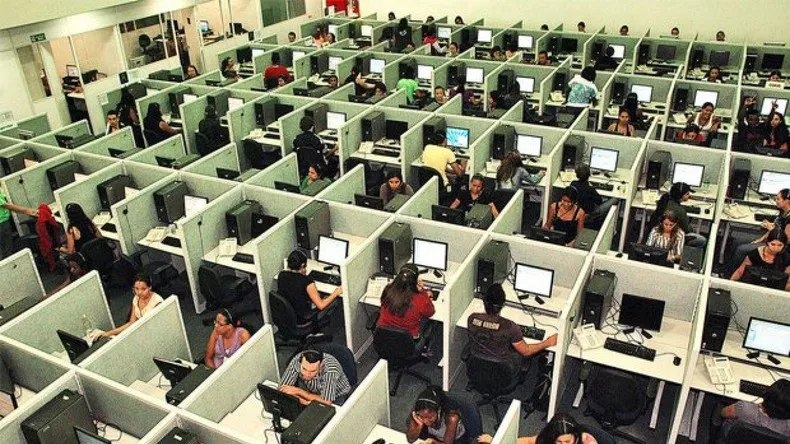

Three weeks following the implementation of France's ban on unsolicited telephone canvassing, Morocco's call center industry is grappling with the ramifications of this significant regulatory shift. Early indicators reveal that Casablanca is experiencing notable effects, with some companies opting to remove their signage and the closure of a Technopark call center, resulting in the unfortunate displacement of 50 employees. This information comes to light through reports from Le360.
Ayoub Saoud, the secretary general of Morocco’s National Federation of Call Centers and Offshoring Professions, has emphasized the timing of the French law's enforcement, which commenced on August 11, coinciding with the summer holiday season when many telemarketing firms were on break. Consequently, Saoud suggests that it is premature to draw definitive conclusions about the law's impact, although he anticipates that clearer effects will emerge as businesses resume operations.
One of the significant challenges highlighted by Saoud is the informal nature of the sector, where many small firms do not formally register their employees. This lack of formal employment records complicates the ability to accurately quantify job losses in the wake of the French law. To address the potential fallout from the regulatory and technological transformations, the Federation has prepared a memorandum for the government aimed at anticipating and mitigating these impacts. Saoud also raised concerns regarding the influence of artificial intelligence, referencing a recent study by an auditing firm that documented AI-related job cuts in France for the first time. He cautioned against a scenario reminiscent of the May 2025 incident in Casablanca, where a call center abruptly shut down, leaving approximately sixty employees without recourse, despite their subsequent legal victory.
Contrastingly, the Moroccan Federation of Outsourcing and Shared Services (FMES) presents a different perspective. Its president, Youssef Chraibi, dismissed fears of destabilization within the sector, clarifying that the French legislation primarily targets unsolicited commercial prospecting, which constitutes a minor fraction of Morocco’s overall outsourcing activities—accounting for less than 15 percent of contact center operations. Chraibi estimates that the current impact on employment stands at around 10,000 jobs out of the sector's total workforce of 150,000, a figure which he notes is considerably lower than the annual job creation rate of over 15,000. This suggests that net job growth may continue despite the challenges posed by the ban.
Chraibi further asserted that operators were afforded time to adapt to the changes, allowing them to gradually shift their focus towards other activities, thereby avoiding abrupt layoffs. He emphasized that the critical issue lies in the sector's capacity to sustain its activity and employment levels moving forward. At Outsourcia, the company he leads, proactive measures were taken to identify vulnerable activities, allowing for the reassignment of staff to other units without any site closures attributable to the French reforms. Chraibi believes that the future of Morocco's outsourcing landscape increasingly hinges on the development of more complex, digitalized services that integrate technology, artificial intelligence, and human expertise, rather than relying solely on traditional telemarketing practices.
As reported by northafricapost.com.