Djemaa el-Fna: A Cultural Epicenter in Marrakech
On April 21, 2026, as the warmth of spring envelops Marrakech, the iconic Djemaa el-Fna square comes alive with a vibrant energy that captivates travelers from every corner of the globe. This UNESCO World Heritage site is not just a location; it is a cultural phenomenon, offering an unparalleled mix of food, entertainment, and a sensory experience that is quintessentially Moroccan. For American visitors seeking genuine encounters with local traditions and flavors, Djemaa el-Fna serves as the perfect introduction to the magic of Morocco.
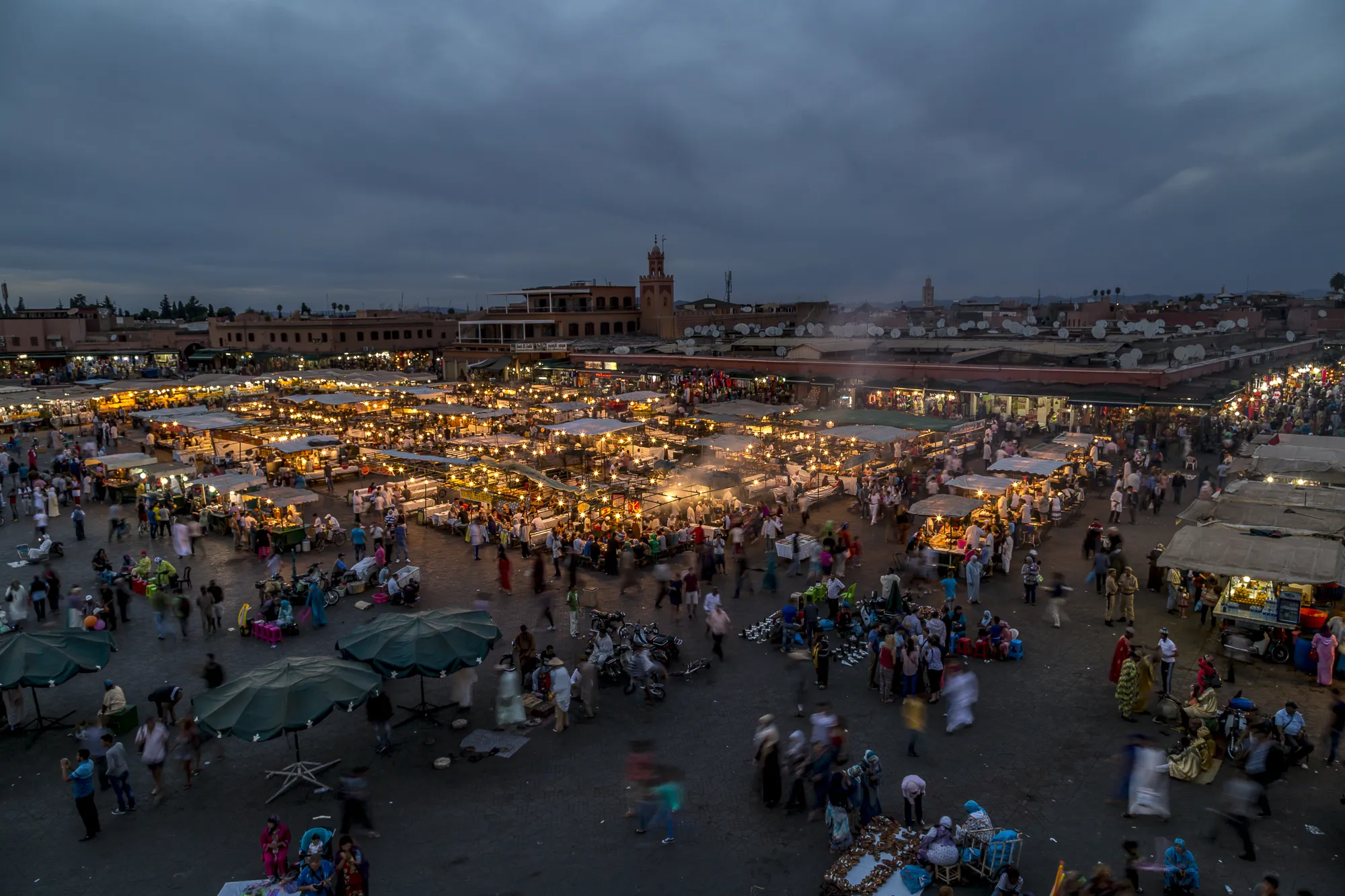
Under the clear blue skies of spring, Djemaa el-Fna buzzes with activity, its storied history and rich cultural tapestry woven into the very fabric of the square. Known locally as Jemaa el-Fna, this bustling square has been the focal point of Marrakech's medina since the 11th century. For travelers arriving from major U.S. airports like JFK or LAX, the approximately eight-hour direct flight to Marrakech Menara Airport leads them to this vibrant hub, where street performers, food vendors, and storytellers gather in a time-honored ritual that keeps visitors returning year after year.
The Allure of Djemaa el-Fna: History and Experience
Djemaa el-Fna is not merely a square; it is the heart of Marrakech, encompassing several blocks filled with souk stalls and historical architecture. It has been a UNESCO World Heritage site since 1985, anchoring the old city's labyrinthine streets and acting as a gateway for visitors. Upon arriving, one should seek out a spot on a café terrace, where they can enjoy panoramic views of the vibrant chaos below, capturing the square's raw energy from dawn until midnight.
The atmosphere is alive with the sounds of prayer calls, sizzling tagine pots, and the playful whistles of monkey trainers. The scent of cumin-laden meats wafts through the air, mingling with the fragrance of orange blossoms from nearby gardens. Visitors can engage with the local culture by bargaining for fresh orange juice or witnessing a captivating performance by a Gnaoua musician—ideal activities for shaking off jet lag and immersing oneself in Morocco’s rich heritage.
For American travelers, the convenience of visa-free entry for up to 90 days makes Djemaa el-Fna an effortless first stop after landing at Menara Airport, located just 20 minutes away by taxi. The square sets the tone for further exploration of nearby attractions such as the stunning Koutoubia Mosque, whose towering minaret is visible from the square itself. For those seeking a traditional lodging experience, Riad 72, situated just a short 10-minute walk away, offers an authentic ambiance that enhances the cultural journey.
The historical significance of Djemaa el-Fna is profound. Originally serving as a marketplace and execution site during the Almoravid dynasty, its name translates to 'assembly of the dead' in the local dialect. This central hub facilitated trade routes connecting sub-Saharan Africa to Europe, and today, visitors can delve into its rich past through interpretive plaques and guided tours that unveil layers of historical intrigue. By the 20th century, the square transitioned into a vibrant center for oral traditions, acrobatics, and storytelling, earning recognition as an Intangible Cultural Heritage site from UNESCO in 2008 for its preservation of Berber storytelling traditions.
Today, Djemaa el-Fna continues to shape global perceptions of Marrakech, attracting over two million visitors annually. Its resilience amidst urban pressures speaks to Morocco's commitment to cultural preservation. Travelers can contribute to this legacy by supporting street performers, ensuring that the square thrives for generations to come.
As reported by ad-hoc-news.de.