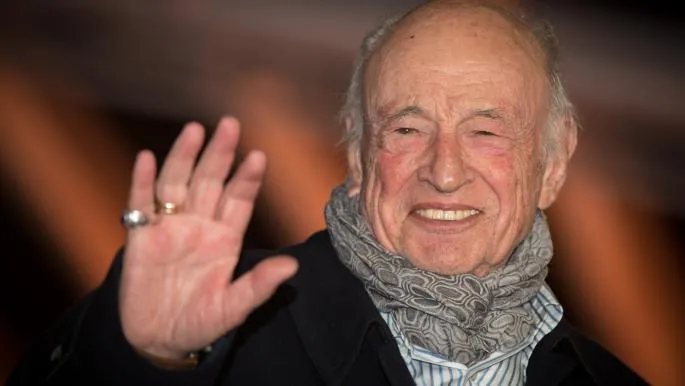

With the recent passing of Edgar Morin at the age of 104, the world has lost a towering figure among its intellectuals, an influential thinker who left an indelible mark on the 20th and early 21st centuries. Morin was not merely a distinguished French philosopher or sociologist; he was a living witness to a century filled with political, intellectual, and humanitarian transformations. His exceptional life, which spanned more than a century, intertwined personal experience with profound intellectual pursuits, making his very existence a laboratory for his grand ideas surrounding complexity, identity, and our shared human destiny.
Born Edgar Nahoum in Paris in 1921 to a Sephardic Jewish family with roots in Thessaloniki, Greece, Morin's life was closely linked to the notion of human vulnerability from the very beginning. His birth followed grave medical warnings to his mother regarding the risks of pregnancy due to serious health issues. However, the most formative event of his childhood occurred in 1931 when his mother, Luna, passed away from a heart attack when he was merely ten years old. He later described this trauma as an "internal Hiroshima," viewing it as a foundational turning point for his emotional and intellectual persona. From that moment, the question of life and death became a persistent theme in his thoughts.
During his early years, the sorrowful child found solace in reading, cinema, and music, passionately devouring novels and spending countless hours in the Parisian cinemas where he discovered the realms of imagination, mythology, and human drama. Classical music, especially Beethoven’s works, profoundly influenced him, as he perceived in them an expression of the world's birth and the struggle of human will. These early cultural experiences significantly shaped his identity as a "cultural glutton," a term that would define him throughout his life and lead him to reject the rigid boundaries often drawn between high culture and popular culture.
Commitment to Humanity and Intellectual Freedom
In the 1930s, Morin gravitated towards philosophy, particularly Hegelian thought, which emphasized contradiction as the essence of life and history. He then found in Marxism a framework to understand the social and political conflicts ravaging Europe at that time. As Nazism rose and World War II broke out, his intellectual interests turned into practical commitments. In 1942, he joined the French Resistance against the Nazi occupation, adopting the pseudonym "Morin," which he retained post-war as an integral part of his identity.
His years in the Resistance were crucial in shaping his character. He lived as a fugitive throughout various French cities, constantly at risk of arrest and death. Many of his comrades and friends fell victim to torture and assassination. Morin recounted an incident he considered one of the most mysterious moments of his life: when asked about faith, he stated that he did not consider himself a believer in the traditional religious sense, yet found it impossible to provide a rational explanation for an experience he had during his resistance years. One day, as he approached his secret residence, he felt an invisible hand pull him back, compelling him to leave the area. He obeyed this strange sensation and departed, only to discover later that the Gestapo awaited him inside the building. This incident remained a personal enigma for him, neither attributed to a religious miracle nor reducible to mere coincidence, reflecting his intellectual stance that acknowledges the limits of human knowledge and the existence of experiences that defy complete explanation. This event instilled in him not only a memory of fear but also a profound sense of human solidarity and shared destiny. He later remarked that the resistance granted him a "life" rather than merely a "career," allowing him to experience the true meaning of commitment and responsibility.
Following the war, Morin experienced disillusionment with the political landscape, especially with the practices of the French Communist Party to which he had belonged during the Resistance. As his doubts regarding Stalinism grew, he gradually distanced himself from the party until he was expelled in 1951. He later viewed this expulsion as a moment of intellectual liberation, deciding to no longer subject reality to any preconceived ideology and to refuse sacrificing his freedom of thought for any ideology, no matter how appealing.
Advocate for a New Approach to Knowledge
However, Morin's most significant achievement lay in developing the concept of "complex thought," which became the hallmark of his philosophy. He argued that the modern world cannot be understood through simplistic or reductionist explanations, as reality consists of a complex network of interrelated relationships between the individual and society, order and chaos, nature and culture, and the local and global. From this perspective, he advocated for a new approach to thinking that connects various fields of knowledge rather than separating them.
This vision was embodied in his monumental work "Method," which took nearly thirty years to complete from 1977 to 2004. In this work, he developed three fundamental principles: the dialogical principle that brings together opposites without negating either, the holographic principle that sees the whole present in the part and the part present in the whole, and the organizational recursion principle that emphasizes how outcomes return to influence their causes. Through these principles, he sought to construct a new worldview based on acknowledging complexity rather than fleeing from it.
In addition to his intellectual endeavors, Morin remained actively engaged with the pressing issues of his time. He was among the first thinkers to highlight environmental challenges, warning since the 1970s of the risks threatening the planet’s biosphere. He also focused on globalization and the future of human civilization, calling for the development of a new global consciousness that regards the Earth as a shared home for humanity. In his book "Earth-Homeland," he urged transcending narrow national divisions and considering our shared human destiny. Morin smiled at everyone, not out of insincerity, but as a human gesture encouraging them to shed their rigid positions and biases, no matter how entrenched, and to engage in self-criticism and question sacred cows for the sake of humanity and the Earth.
Morin's commitment was not merely abstract; it manifested in his stance on contemporary political issues. He championed the rights of oppressed peoples and rejected all forms of racism and bigotry. He did not hesitate to criticize Israeli policies towards Palestinians vehemently, stating that it is "difficult to imagine that a nation of refugees, descended from the most persecuted people in human history, who have endured the worst humiliations and contempt, could transform, within two generations, into a self-assured and dominant people, except for a commendable minority, into a contemptuous people that finds solace in humiliation." He asserted that a people’s suffering in the past does not grant them moral immunity from perpetrating injustice in the present.
Morin did not remain silent amidst the rising tide of Islamophobia and intellectual McCarthyism prevalent among some French political and media discourse makers against those attempting to understand social phenomena with calmness and scientific rigor, often labeling them as leftist Islamists. He voluntarily embraced the latter classification, urging a move away from excluding those who stand in solidarity with the marginalized, suggesting that if they become extreme, countering them with extremism is futile.
Additionally, I have come to know another side of his character, equally significant as his intellectual output: his human humility. Many described him as a thinker seeking understanding rather than victory, dialogue rather than dominance. He believed that ethics should precede ideology, and that human value transcends all narrow affiliations. He frequently wrote to me asking for advice or insights. When I sent him a translation of Abd al-Rahman al-Kawakibi’s work into French, he apologized for his delayed discovery.
In his later years, Morin continued to write, contemplate, and engage in intellectual work without interruption. Recently, he penned a summary of what he perceived as a worsening regression, stating that "we must no longer think of a better society, but of how to avoid the worst. What kind of world will we leave to our children? And what kind of children will we leave in this world?" Edgar Morin has departed, but his intellectual legacy remains vibrant. He left behind dozens of books and ideas that have inspired generations of researchers and thinkers worldwide. More importantly, he left a rare model of an intellectual who united knowledge with commitment, criticism with hope, and reason with heart. He witnessed a century of wars, revolutions, and crises, yet remained, until his last days, a believer in the possibility of building a more humane world. Therefore, his passing signifies not just the end of an individual’s intellectual journey, but the conclusion of an era embodied by a singular man who profoundly articulated the complexity and richness of the human experience.
As reported by alaraby.co.uk.