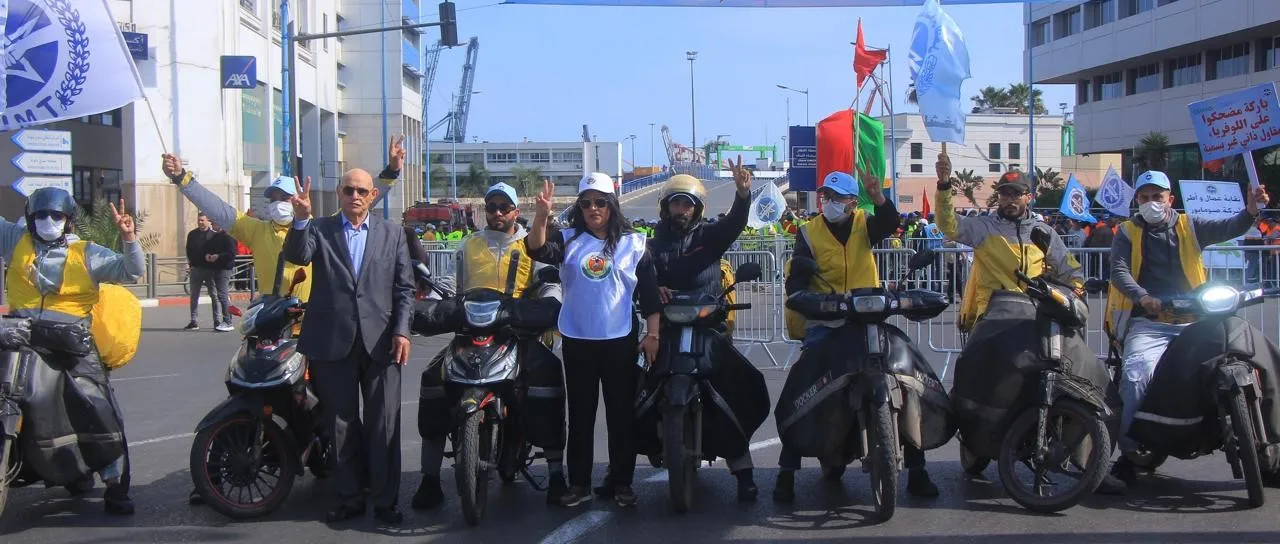

In Morocco, the promise of good pay, stable employment, and the flexibility to set one's own hours has drawn many to the burgeoning food delivery sector. However, the reality faced by workers like Ahmed starkly contrasts with these initial expectations. After starting his job delivering food on a motorcycle, Ahmed found himself grappling with low wages, job insecurity, and health issues stemming from long hours spent riding in polluted environments. His income, he explains, barely meets his family's basic needs, often falling short of covering essential costs such as fuel and maintenance for his motorcycle, food, and internet access. Despite working over ten hours a day, six days a week, Ahmed is constantly under pressure to earn more than his daily expenses, highlighting the precarious nature of gig work in the platform economy.
However, recent developments have ignited hope among these workers for improved conditions. The establishment of the first union for digital-app-based workers in Morocco, alongside the ratification of a global treaty concerning decent work in the platform economy, Convention 193, has provided a framework for collective action and advocacy. On May 1, International Workers Day, delivery workers in Casablanca demonstrated their solidarity and need for better treatment, demanding “decent work” and an end to what they termed “platform slavery.” Many participants, motivated by the fear of retaliation from their employers, wore helmets to conceal their identities, underscoring the precarious position they occupy as self-employed individuals, which limits their access to job protections and benefits.
The rally marked a significant turning point, as workers previously marginalized from formal representation asserted their rights within Morocco’s civic landscape. Following this demonstration, the first union office for delivery workers opened in Casablanca, with plans for further expansion. According to Adel Bahouch, a member of the Moroccan Labor Union (UMT), the union's formation stems from a belief in the rights of these workers as wage earners, despite the nonstandard nature of their work. The emphasis on outreach, particularly targeting younger workers through digital media, has fostered a sense of community and trust among delivery drivers who often work in isolation.
Through their union, workers have begun to unify their demands, establishing leadership teams in various cities, enabling collective bargaining that amplifies their voices. Ahmed, now a union leader, emphasizes that collective action grants workers the strength needed to negotiate their rights effectively. He articulates that without an organized body, individual workers face significant disadvantages against the powerful algorithms that dictate their work lives.
Meanwhile, the global push for the International Labor Organization's treaty, Convention 193, aims to address the challenges faced by platform workers worldwide, including low pay, unsafe conditions, and the opaque nature of algorithm-driven workplaces. This treaty, adopted in June 2026, seeks to establish a baseline for decent work, reinforcing the rights of digital-app-based workers to unionize and engage in collective bargaining. Ahmed envisions that once ratified, this convention will transform their status from self-employed to employees, affording them rights enshrined in the Moroccan Labor Code, including fair wages and protections during health crises.
Looking forward, both Ahmed and Adel stress the importance of expanding the union’s reach and advocating for the treaty's ratification, aiming to unify workers across various Moroccan cities. The Solidarity Center has been instrumental in building alliances among platform workers globally, ensuring that their voices are included in discussions surrounding labor rights and working conditions. As this movement gains momentum, it represents a significant step towards improving the lives of delivery workers in Morocco, empowering them to demand the rights and recognition they deserve.
As reported by solidaritycenter.org.